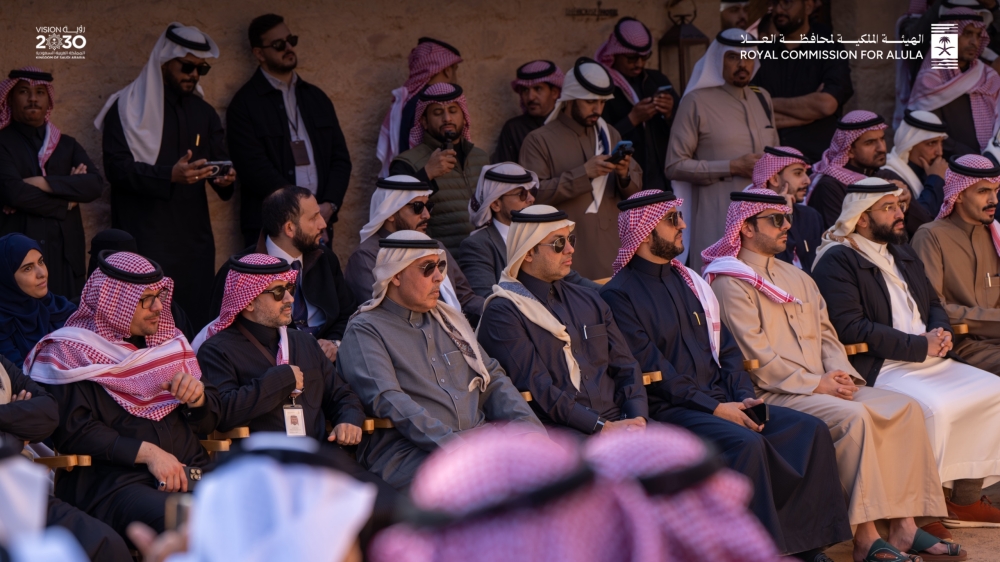
Today, the celebration of the “Al-Tantoura” event was launched by the residents of AlUla in the Old Town. This event is one of the most prominent inherited cultural traditions in the region and has been a crucial cornerstone for organizing agricultural life and determining the onset of the winter season for decades.
“Al-Tantoura” represents a historic sundial that the people and residents of AlUla relied on in the past to know the changing of seasons and the arrival of agricultural periods. This made it a pivotal element in organizing the agricultural work cycle and daily life in the oasis across successive generations.
Cultural Heritage
The event was attended by a number of AlUla residents and visitors, in an atmosphere that evoked the memory of the place, reflected the local community’s connection to its cultural heritage, and showed visitors’ interest in learning about one of the most prominent manifestations of intangible cultural heritage in the region.
The event included a number of cultural and heritage activities that highlighted the historical value of Al-Tantoura and its role in documenting the relationship between humans and their agricultural environment. This was alongside heritage displays, experiences with traditional crafts, informative segments on the history and uses of Al-Tantoura, and activities that revived features of the old life in AlUla.
The Importance of Al-Tantoura
Reviving this occasion contributes to raising awareness of the importance of Al-Tantoura as a cultural witness to the seasonal practices that shaped the lifestyle of the people, especially its connection to announcing the beginning of winter and the accompanying agricultural preparations for the winter season. The Royal Commission for AlUla is keen to partner with the residents in reviving these inherited cultural practices and supporting their presence as an authentic part of the local identity.
The continued celebration of the “Al-Tantoura” event embodies the keenness of AlUla’s residents to preserve and pass on their cultural heritage and enhance its presence in the cultural scene. This contributes to providing an authentic experience that enriches visitors’ understanding of the value of local heritage and the depth of its connection to place and time.