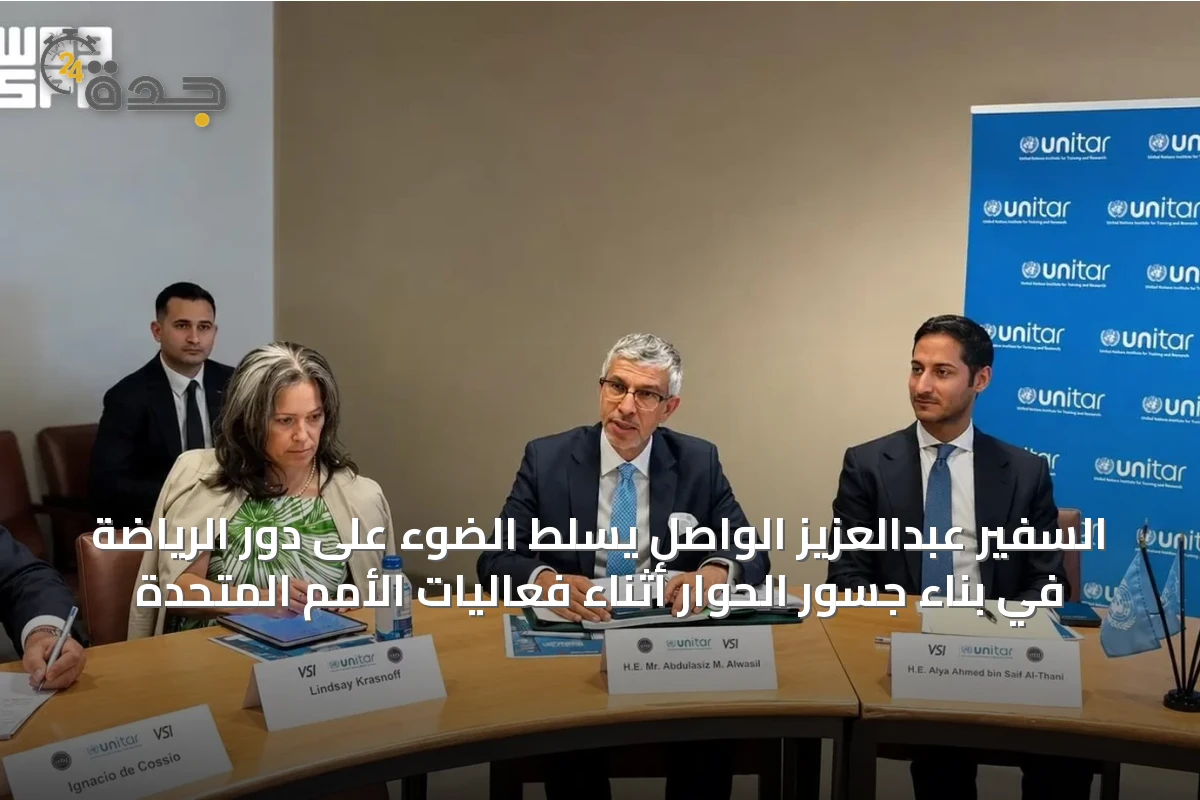
The Permanent Representative of the Kingdom of Saudi Arabia to the United Nations, Ambassador Dr. Abdulaziz bin Mohammed Al-Wasil, met today at the UN headquarters in New York City with a group of officials and experts at an event dedicated to exploring the impact of sports in promoting dialogue among peoples.
Sports as a Universal Language
During his speech, Ambassador Al-Wasil emphasized that sports form a common language that transcends linguistic and cultural barriers, playing a pivotal role in building bridges of understanding and strengthening values of cooperation and peace among nations.
Transformations in the Saudi Sports Sector
The ambassador highlighted the tangible qualitative developments in the sports field in the Kingdom, based on Saudi Vision 2030, which drives improved performance and expanded international participation. He noted the significant increase in the presence of Saudi teams and sports on global stages.
Preparations for the 2034 World Cup
Al-Wasil explained that Saudi Arabia is preparing to host the FIFA World Cup in 2034, noting that this hosting has been officially confirmed and will provide a platform to showcase the Kingdom’s organizational and sporting capabilities on the international stage.
The Kingdom’s Commitment to Advancing Football Globally
The ambassador concluded his speech by affirming the Kingdom’s determination to actively contribute to the development of football worldwide, leveraging its vast resources and the enthusiasm of its people, aiming to spread messages of love, peace, and tolerance through sports.
United Nations headquarters
The United Nations headquarters is an iconic complex located in New York City, serving as the official workplace for the United Nations since its completion in 1952. Designed by an international team of architects led by Wallace Harrison, the site was built on land donated by John D. Rockefeller Jr. and symbolizes global cooperation after World War II. The headquarters hosts the UN’s main decision-making bodies, including the General Assembly and Security Council, making it a vital center for international diplomacy.
New York City
New York City is a major global hub for finance, culture, and commerce, originally settled by the Dutch as New Amsterdam in 1624 before being taken over by the English and renamed in 1664. As a key entry point for immigrants through Ellis Island in the late 19th and early 20th centuries, it grew into a diverse metropolis known for landmarks like the Statue of Liberty, Times Square, and Central Park. Today, it remains a vibrant center of art, fashion, and innovation, shaped by centuries of immigration and economic development.
Saudi Arabia
Saudi Arabia is a vast desert kingdom on the Arabian Peninsula, known as the birthplace of Islam and home to its two holiest cities, Mecca and Medina. Founded in 1932 by King Abdulaziz Al Saud, the country unified various tribal regions and has since transformed from a largely nomadic society into a global oil powerhouse. Today, it balances its deep religious heritage with ambitious modernization efforts under the Vision 2030 plan.
FIFA World Cup
The FIFA World Cup is the premier international football (soccer) tournament, organized by the Fédération Internationale de Football Association (FIFA). First held in 1930 in Uruguay, it has since become the most widely viewed and followed sporting event in the world, occurring every four years. The tournament has a rich history, marked by legendary players, iconic matches, and cultural moments that have shaped global sports and national pride.