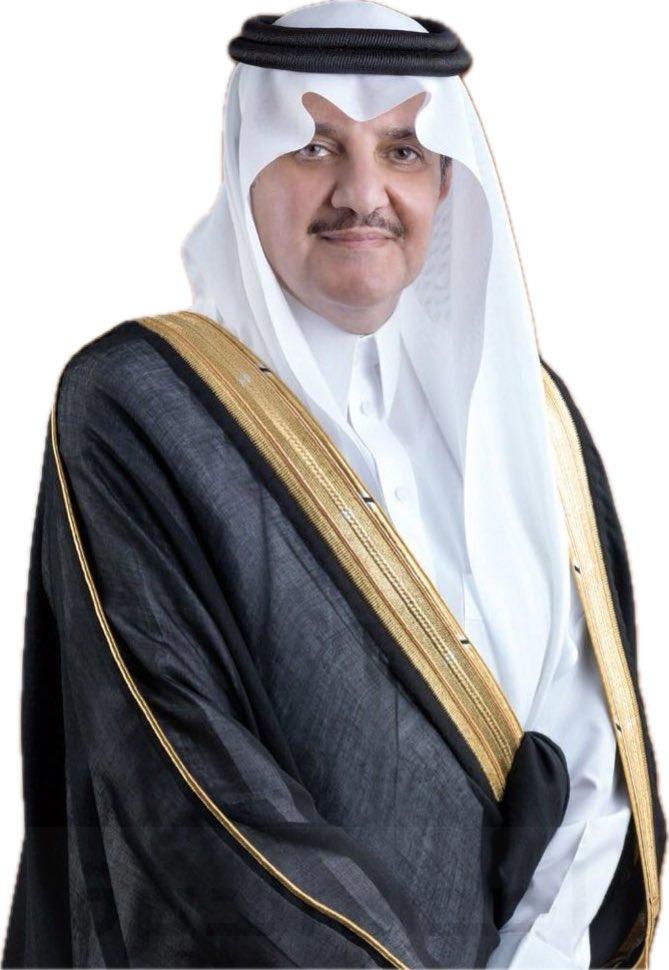
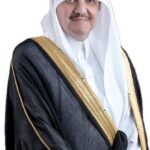
The Prince of the Eastern Province congratulates the leadership on Eid al-Adha.
The Governor of the Eastern Province extends congratulations to the leadership on the occasion of the blessed Eid al-Adha.
The Governor of the Eastern Province extends congratulations to the leadership on the occasion of the blessed Eid al-Adha.
His Royal Highness Prince Saud bin Nayef bin Abdulaziz, Governor of the Eastern Province, on his own behalf and on behalf of the region’s residents, conveyed the highest expressions of congratulations and blessings to the Custodian of the Two Holy Mosques, King Salman bin Abdulaziz, and to His Royal Highness Prince Mohammed bin Salman bin Abdulaziz, Crown Prince and Prime Minister, may God preserve them, on the occasion of the blessed Eid al-Adha.
His Highness said: “It is my pleasure to extend to the esteemed leadership, on my own behalf and on behalf of the residents of the Eastern Province, the warmest congratulations and blessings on this occasion, asking God to grant you abundant health and well-being and to bring this occasion back to the Arab and Islamic nations with goodness and blessings.”
His Highness also prayed to God Almighty to bestow upon the Kingdom the blessing of security and stability, to protect the Custodian of the Two Holy Mosques and His Highness the Crown Prince, to guide them toward everything that elevates the nation and ensures its prosperity, and to accept the pilgrimage from the pilgrims and the righteous deeds from everyone.
Custodian of the Two Holy Mosques
The title “Custodian of the Two Holy Mosques” is a royal honorific used by the kings of Saudi Arabia, signifying their responsibility for protecting and managing the two holiest sites in Islam: the Grand Mosque in Mecca and the Prophet’s Mosque in Medina. The title was first adopted in 1986 by King Fahd, replacing the traditional “His Majesty,” to emphasize the kingdom’s religious role. It reflects the Saudi monarchy’s longstanding duty to oversee these sacred places and ensure the safety and comfort of millions of pilgrims who visit each year.
Eastern Province
The Eastern Province of Saudi Arabia is the country’s largest province by area and its primary center for the oil industry, home to the world’s largest oil field, Ghawar. Historically, it was a key region for the ancient Dilmun civilization and later became a strategic trading hub, with its modern development surging after the discovery of oil in the 1930s. Today, it features a mix of cultural heritage and rapid urbanization, with cities like Dammam, Dhahran, and Al Khobar forming a major industrial and commercial corridor.
Grand Mosque in Mecca
The Grand Mosque, or Masjid al-Haram, in Mecca, Saudi Arabia, is the holiest site in Islam, housing the Kaaba, which Muslims face during prayer. Its history dates back to the time of the Prophet Abraham and Ishmael, who are believed to have built the Kaaba, and it has been expanded significantly over centuries, especially under Saudi rule. The mosque can accommodate millions of pilgrims, particularly during the annual Hajj pilgrimage.
Prophet’s Mosque in Medina
The Prophet’s Mosque in Medina, Saudi Arabia, is one of the holiest sites in Islam, originally built by the Prophet Muhammad himself in 622 CE after his migration from Mecca. It served not only as a place of worship but also as a community center and school, and it has been greatly expanded over the centuries, now housing the Prophet’s tomb under its iconic Green Dome.
<div
Grand Mosque in Mecca
The Grand Mosque, or Masjid al-Haram, in Mecca, Saudi Arabia, is the holiest site in Islam, encompassing the Kaaba, which Muslims face during prayer. Its history dates back to the time of the Prophet Abraham, who is believed to have built the Kaaba, and it has been expanded significantly over centuries by various Islamic rulers. Today, it can accommodate millions of pilgrims, especially during the annual Hajj pilgrimage.
Prophet’s Mosque in Medina
The Prophet’s Mosque in Medina, Saudi Arabia, is one of the holiest sites in Islam, originally built by the Prophet Muhammad in 622 CE after his migration from Mecca. It served as his home, a community center, and a place of worship, and has since been expanded over centuries into a massive complex that houses his tomb. Today, it is a major pilgrimage destination, attracting millions of visitors annually.
Kaaba
The Kaaba is a cube-shaped structure located in the center of the Grand Mosque in Mecca, Saudi Arabia, and is the most sacred site in Islam. According to Islamic tradition, it was originally built by the Prophet Abraham and his son Ishmael as a house of monotheistic worship, and it has since been a focal point for Muslim prayers and the annual Hajj pilgrimage. Over centuries, the Kaaba has been reconstructed and renovated multiple times, with its current form dating back to 1629 during the Ottoman era.