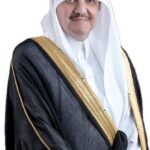
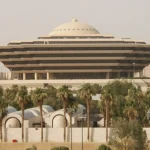
His Royal Highness Prince Saud bin Naif bin Abdulaziz, Governor of the Eastern Region, received in his office at the Emirate Palace on Thursday, the Mayor of Al-Ahsa Governorate, Engineer Essam Al-Mulla, accompanied by a number of officials from the Regional Network for Social Responsibility, on the occasion of Al-Ahsa Governorate being selected as the “Arab City for Social Responsibility 2026”.

The Governor of the Eastern Region highlighted Al-Ahsa’s developmental, social, and cultural presence, and the community initiatives, volunteer work, and developmental contributions of its residents, reflecting a spirit of cooperation and responsibility. He affirmed that this selection is an extension of the governorate’s qualitative efforts and initiatives that have enhanced quality of life and solidified concepts of social responsibility and sustainability through effective partnerships and initiatives with a positive impact on society.

Engineer Essam Al-Mulla presented to the Governor of the Eastern Region an overview of the key efforts and initiatives that contributed to this achievement, including community programs and projects that strengthened Al-Ahsa’s presence regionally and internationally in the field of social responsibility. Engineer Al-Mulla expressed gratitude to the Governor for his support and interest, affirming continued work to enhance developmental and community initiatives that contribute to achieving the goals of Saudi Vision 2030.

Emirate Palace

The Emirate Palace, often referring to the Emir’s Palace in various regions such as Kazakhstan or the Middle East, is a historic royal residence that served as the seat of power for local rulers. Built in the 19th or early 20th century, these palaces often blend traditional Islamic architecture with European influences, reflecting the cultural exchanges of their time. Today, they stand as museums or government buildings, preserving the legacy of the emirates’ political and cultural history.

Al-Ahsa Governorate

Al-Ahsa Governorate, located in eastern Saudi Arabia, is a historic oasis region renowned for its vast date palm groves and natural springs. It has been inhabited for thousands of years and was a key stop on ancient trade routes, later becoming part of the Ottoman Empire before joining Saudi Arabia. In 2018, Al-Ahsa Oasis was designated a UNESCO World Heritage site, recognized for its unique cultural landscape and agricultural heritage.

Emirate Palace

The Emirate Palace, also known as the Presidential Palace or Qasr Al Watan, is a cultural landmark in Abu Dhabi, United Arab Emirates. Completed in 2017, it serves as the official residence and workplace of the UAE’s president and also houses a grand library, exhibition halls, and stunning architectural displays that showcase the nation’s heritage and governance. The palace opened to the public in 2019, allowing visitors to explore its opulent interiors and learn about the UAE’s history and traditions.

Al-Ahsa Governorate

Al-Ahsa Governorate, located in eastern Saudi Arabia, is a historic oasis region known for its vast date palm groves and natural springs. Its history dates back thousands of years, serving as a key stop on ancient trade routes and a center for agriculture and culture. In 2018, the Al-Ahsa

Emirate Palace

The Emirate Palace, often referring to the Emir’s Palace in various historical contexts, typically denotes a grand residence built for a ruling emir or prince. Its history often involves serving as the political and administrative center of a region, showcasing traditional Islamic architecture with intricate designs, courtyards, and gardens. Today, many such palaces have been preserved as museums or cultural landmarks, offering insight into the region’s royal heritage and governance.

Al-Ahsa Governorate

Al-Ahsa Governorate, located in eastern Saudi Arabia, is a UNESCO World Heritage site renowned for its vast oasis, the largest in the world, with over 2.5 million palm trees. Historically, it has been a vital cultural and trade hub for millennia, inhabited since prehistoric times and serving as a crossroads for caravans linking Arabia to Mesopotamia and the Indian subcontinent. The region features ancient archaeological sites, such as the Jawatha Mosque (one of the oldest in Islam), along with natural springs and historic fortresses that reflect its rich heritage.

Al-Ahsa Oasis

Al-Ahsa Oasis, located in eastern Saudi Arabia, is one of the largest natural oases in the world, featuring over 2.5 million palm trees and numerous springs. Its history dates back thousands of years, serving as a vital stop on ancient trade routes and a center for agriculture and culture. In 2018, UNESCO designated it a World Heritage Site, recognizing its unique blend of natural beauty and human heritage.

UNESCO World Heritage site

A UNESCO World Heritage site is a landmark or area recognized by the United Nations Educational, Scientific and Cultural Organization as having outstanding cultural, historical, or natural significance. The program, established in 1972, aims to preserve and protect these irreplaceable treasures for future generations. Examples include the Great Wall of China, the Pyramids of Egypt, and the Grand Canyon.

Presidential Palace

The Presidential Palace in Nicosia, Cyprus, serves as the official residence and workplace of the country’s president. Originally built in the early 20th century during British colonial rule, it has undergone several reconstructions, most notably after being destroyed during the 1974 coup d’état. Today, it stands as a symbol of Cypriot governance and history.

Qasr Al Watan

Qasr Al Watan, located in Abu Dhabi, United Arab Emirates, is a majestic presidential palace that opened to the public in 2019. It serves as a working governmental building and a cultural landmark, showcasing the nation’s heritage, governance, and architectural brilliance. The palace also houses exhibits that highlight the history of the UAE’s leadership and its commitment to diplomacy and knowledge.

Abu Dhabi

Abu Dhabi is the capital of the United Arab Emirates, located on a T-shaped island in the Persian Gulf. Its history dates back to the 18th century when it was a small fishing village inhabited by the Bani Yas tribe, but it transformed dramatically after the discovery of oil in the 1950s. Today, it is a modern metropolis known for its cultural landmarks like the Sheikh Zayed Grand Mosque, as well as its role as a major global economic and political hub.

Saudi Vision 2030

Saudi Vision 2030 is a strategic framework launched in 2016 to diversify Saudi Arabia’s economy and reduce its dependence on oil. It aims to develop public service sectors like health, education, and tourism, while also empowering social and cultural reforms. The plan represents a historic shift for the kingdom, focusing on modernization and global integration under the leadership of Crown Prince Mohammed bin Salman.