Holidays at Imam al-Jawad Mosque in al-Munayzila are times for devotion, unity, and reviving the values of the Ahl al-Bayt.
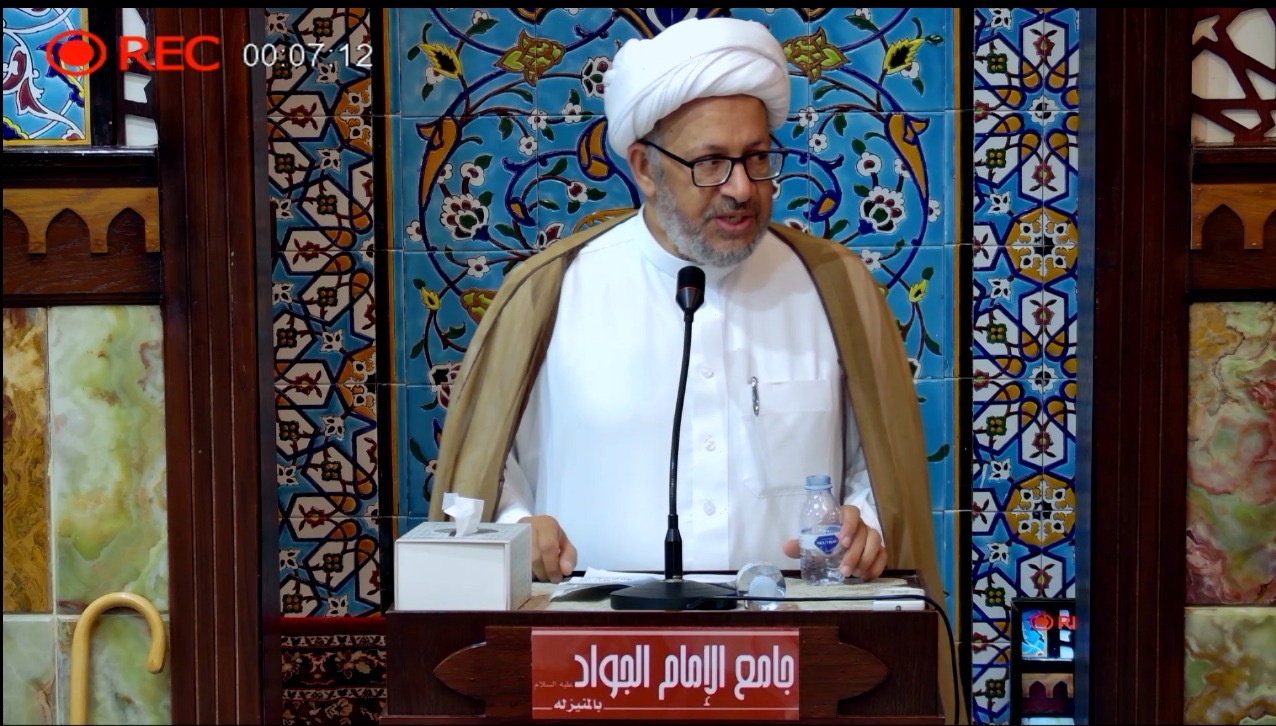
The Imam al-Jawad Mosque in al-Munayzila hosted the Eid al-Adha morning prayer with a large congregation. The prayer was led by Sheikh Habib al-Ahmad, who delivered two Eid sermons covering the spiritual and social aspects of this blessed occasion, emphasizing the values of solidarity, loyalty, and preparation for upcoming religious events.
In the first sermon, Sheikh Habib al-Ahmad stated that Eid al-Adha represents a school of obedience and submission to God, drawing inspiration from the Prophet Abraham’s profound meanings of sacrifice and sincerity. He pointed out that the true spirit of the holiday lies in mercy, compassion, and bringing joy to the hearts of the needy, orphans, and the poor.
He also stressed the importance of social solidarity and serving the faithful, citing narrations from the Household of the Prophet about the virtue of fulfilling people’s needs and bringing them happiness.
The preacher expressed gratitude and appreciation to the “Aman” Association, and to all donors, benefactors, and supporters who contributed to the Eid clothing project and the distribution of sacrificial meat, commending their humanitarian and social efforts in bringing smiles to the faces of modest families and orphans, affirming that these works embody the authentic values of the Household of the Prophet’s school.
In the second sermon, Sheikh Habib al-Ahmad addressed the importance of preparing for the glorious Eid al-Ghadir, explaining that the Day of Ghadir represents the completion of religion, the perfection of grace, and the declaration of the guardianship of the Commander of the Faithful, Imam Ali ibn Abi Talib. He called for reviving this blessed occasion by spreading the virtues of the Household of the Prophet and strengthening the meanings of loyalty and belonging.
He also mentioned the approaching month of Muharram, emphasizing the necessity of spiritual and educational preparation to commemorate the memory of Imam Hussein, through repentance, self-reform, and promoting Husseini values in society, explaining that the uprising of Imam Hussein was a project of reform, dignity, and revival of religion.
The two sermons concluded with prayers for the pilgrims to have their deeds accepted, for the faithful to have security and faith, that God may return these blessed occasions to the Islamic nation with goodness, honor, and victory, and that He may protect our lands from all harm.
Imam al-Jawad Mosque
The Imam al-Jawad Mosque is a significant Shia Islamic site located in the city of Kazimayn, Baghdad, Iraq. It is named after the ninth Shia Imam, Muhammad al-Jawad, who is buried there alongside the seventh Imam, Musa al-Kadhim. The mosque, which dates back to the Abbasid era, has been a major pilgrimage destination for centuries and has undergone several reconstructions, most notably after damage during conflicts in the early 2000s.
al-Munayzila
Al-Munayzila is a historic village in the Eastern Province of Saudi Arabia, known for its traditional mud-brick architecture and agricultural heritage. It was once a thriving oasis settlement along ancient trade routes, with a history dating back centuries, though it has largely been abandoned in modern times. Today, the site offers a glimpse into the region’s pre-oil era lifestyle and is valued as a cultural landmark.
Eid al-Adha
Eid al-Adha, also known as the “Festival of Sacrifice,” is one of the two major Islamic holidays celebrated worldwide. Its history commemorates the willingness of the Prophet Ibrahim (Abraham) to sacrifice his son as an act of obedience to God, who ultimately provided a ram to sacrifice instead. The
Imam al-Jawad Mosque
The Imam al-Jawad Mosque is a significant Shia Islamic site located in the Kazimayn district of Baghdad, Iraq. It is dedicated to Imam Muhammad al-Jawad, the ninth Shia Imam, who lived in the early 9th century and is revered for his piety and knowledge. The mosque, part of a larger shrine complex, has been rebuilt and expanded over centuries, serving as a major pilgrimage destination and a symbol of Islamic heritage.
al-Munayzila
Al-Munayzila is an archaeological site in northeastern Jordan, known for its well-preserved early Islamic-era settlement and mosque dating back to the Umayyad period (7th–8th centuries CE). It features a large rectangular enclosure, a bathhouse, and intricate mosaic floors, reflecting the region’s agricultural and trade activity during that time. The site provides valuable insight into early Islamic urban planning and rural life in the Levant.
Eid al-Adha
Eid al-Adha, also known as the “Festival of Sacrifice,” is a major Islamic holiday commemorating the Prophet Ibrahim’s willingness to sacrifice his son as an act of obedience to God. According to tradition, God provided a ram to sacrifice instead, and the holiday honors this devotion through prayer, charity, and the ritual sacrifice of an animal. It occurs annually during the Islamic month of Dhu al-Hijjah, coinciding with the conclusion of the Hajj pilgrimage to Mecca.
Eid al-Ghadir
Eid al-Ghadir is a significant Islamic festival celebrated by Shia Muslims, commemorating the event of Ghadir Khumm, where the Prophet Muhammad is believed to have designated Ali ibn Abi Talib as his successor. This event, which took place in 632 CE shortly before the Prophet’s death, is based on a sermon delivered at a oasis called Ghadir Khumm. The holiday emphasizes themes of leadership, loyalty, and spiritual authority within Islam.
Imam Ali ibn Abi Talib
Imam Ali ibn Abi Talib (600–661 CE) was the cousin and son-in-law of the Prophet Muhammad, and is revered as the first Imam in Shia Islam and the fourth Caliph in Sunni Islam. He is known for his deep wisdom, eloquence, and justice, with his sermons and letters compiled in the famous book *Nahj al-Balagha* (Peak of Eloquence). His shrine in Najaf, Iraq, is one of the holiest sites for Muslims, attracting millions of pilgrims annually.
month of Muharram
Muharram is the first month of the Islamic lunar calendar and is considered one of the four sacred months in Islam. Its most significant observance is Ashura, the 10th day, which marks the martyrdom of Imam Hussein, the grandson of the Prophet Muhammad, at the Battle of Karbala in 680 CE. For Shia Muslims, this period is a time of mourning and remembrance, involving processions and reenactments, while Sunni Muslims often observe it through fasting.
Imam Hussein
Imam Hussein is a central figure in Islam, particularly revered by Shia Muslims as the grandson of the Prophet Muhammad and the third Shia Imam. He is best known for his martyrdom at the Battle of Karbala in 680 CE, where he and his small group of followers were killed by the Umayyad caliph Yazid’s forces after refusing to pledge allegiance. This event is commemorated annually during the month of Muharram, especially on Ashura, and symbolizes the struggle against tyranny and injustice.
Kazimayn
Kazimayn is a historic district in Baghdad, Iraq, best known for housing the Al-Kadhimiya Mosque, one of the holiest sites in Shia Islam. It was established in the 8th century and contains the tombs of the seventh and ninth Shia Imams, Musa al-Kadhim and Muhammad al-Jawad, after whom the area is named. The site has been a major center of pilgrimage and learning for centuries, surviving periods of conflict and reconstruction.