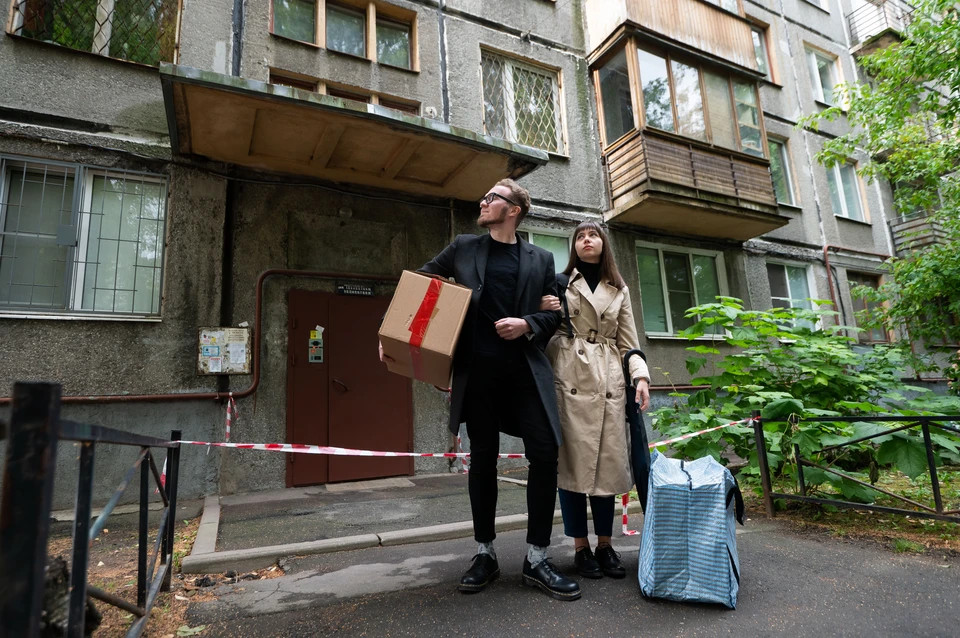
The governor explained how residents of Khrushchyovka buildings designated for demolition should proceed.
The law on the Comprehensive Development of Territories (CRT) in St. Petersburg is not planned to be canceled.
According to the city head, the authorities have already gone through a difficult path related to this high-profile and initially ambiguous project. Amending the federal law turned out to be the most difficult part of the issue. But at the moment, it has been possible to protect the interests of St. Petersburg residents.
– Previously, the threat of worsening housing conditions was real. If a meeting of owners was not held, the building was included in the CRT, but we disagreed with this approach. Now, a building is included in the program only if two-thirds of the owners voted for it at a meeting. If you don’t want to, don’t vote.
The governor noted that before voting, residents will be provided with a roadmap from the investor so they have the opportunity to assess the benefits of the new conditions. According to the law, St. Petersburg residents who agree to relocate will receive new housing within the boundaries of their familiar municipal district or a neighboring municipality. In short, within the same district.
– And the mortgage will be registered for the new housing without paying fees, the law provides such an opportunity, – was added regarding mortgages.
A person or family relocating under the CRT will pay monthly installments, but for the new housing instead of the old one.
It was previously reported that the moratorium on the CRT law will not be extended in 2026. It also became clear that the resettlement of Khrushchyovka buildings will be handled by a separate operator. Its participation in the state structure will be 50 percent.
ALSO READ:
Resettlement of Khrushchyovka buildings in St. Petersburg will be handled by a 50% state-owned company
Deputies of the St. Petersburg Legislative Assembly approved in the first reading a law on the CRT operator.