Why Japan is Opening Visa Centers in Russia

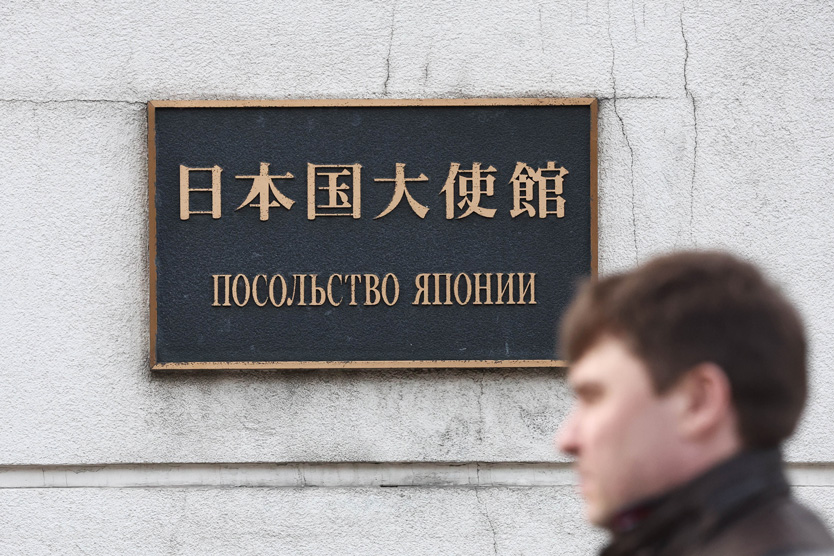
The Japanese Embassy plans to open visa centers in Russia. This decision is due to a sharp increase in applications from Russian tourists: throughout 2024, they issued 51,000 visas to the Land of the Rising Sun (2.6 times more than in 2023), and by September 2025, another 60,000 are expected. In the first 9 months of this year, a record 129,200 Russians entered Japan (+104.2% year-on-year). This exceeds even pre-pandemic levels.

In mid-September, media reported huge queues for Japanese visas in Moscow: they are issued in a small room at the embassy with only a few windows, and staff are effectively working overtime. Visa centers are expected to open in early 2026, though the specific cities haven’t been announced yet. They are intended to relieve the Japanese Embassy by handling document collection, data entry, verification, and passport return. However, tourists and experts worry the situation won’t improve: it will be necessary to constantly monitor appointment slots for applications, similar to how it works with other visa centers.

Dealing with visa centers always complicates life. In Japan’s case, the visa will become paid, and processing times will increase. Without direct contact with the consulate, it becomes harder to resolve non-standard issues. Usually, everything is resolved quickly directly at the consulate, but visa centers can’t do that, so they often simply refuse to accept documents. We can only hope the visa refusal rate doesn’t increase.

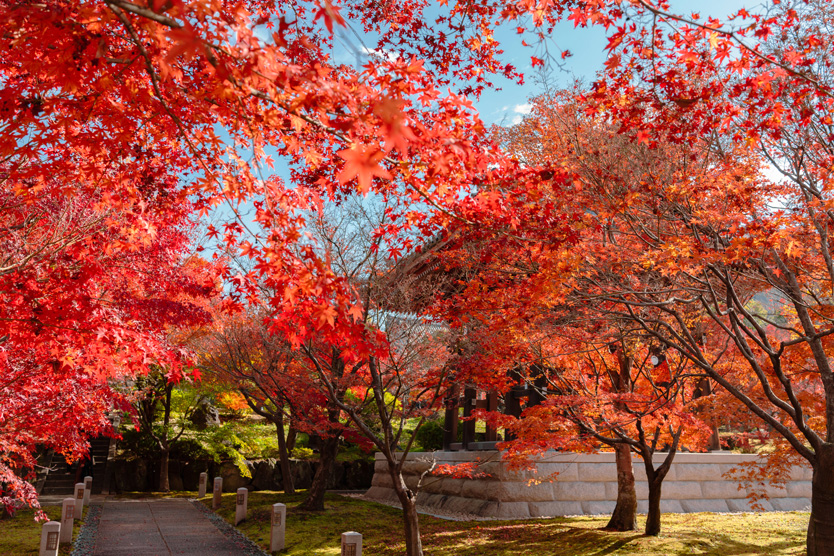
Currently, visas can only be obtained at the Japanese Embassy or Consulate. This requires collecting a set of documents and personally submitting them to staff (no earlier than 3 months before the planned trip). This is free. The busiest seasons are spring, when everyone travels to the Land of the Rising Sun for cherry blossoms, and autumn, the Momiji season. This is what the Japanese call admiring maple leaves as they turn red.
Momiji Season in Japan

What to See in Japan

Cherry Blossom Locations

Mount Yoshino

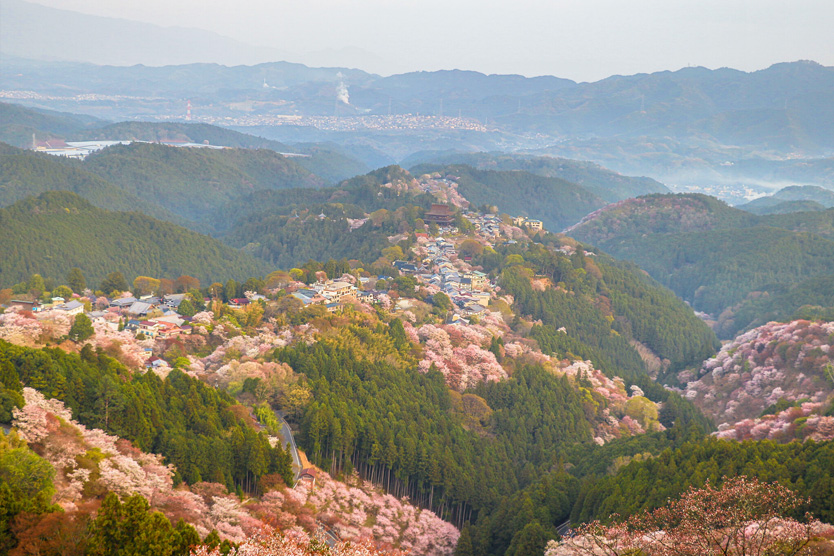
This is perhaps the most popular spot among tourists visiting Japan in spring to admire cherry blossoms. It’s said the first trees on Mount Yoshino’s slopes were planted over a thousand years ago. Today, there are 30,000 of them. The blooming season begins in late March.
Mount Yoshino
  • Mount Yoshino has many ancient temples and shrines, including the Buddhist complex Kinpusen-ji, built in the 7th century. Its center is the Zaō-dō Hall, one of Japan’s largest wooden structures.
  • In Yoshino town, you can walk along tourist trails and relax in hot springs. It’s best to stay overnight for this.

Himeji Castle

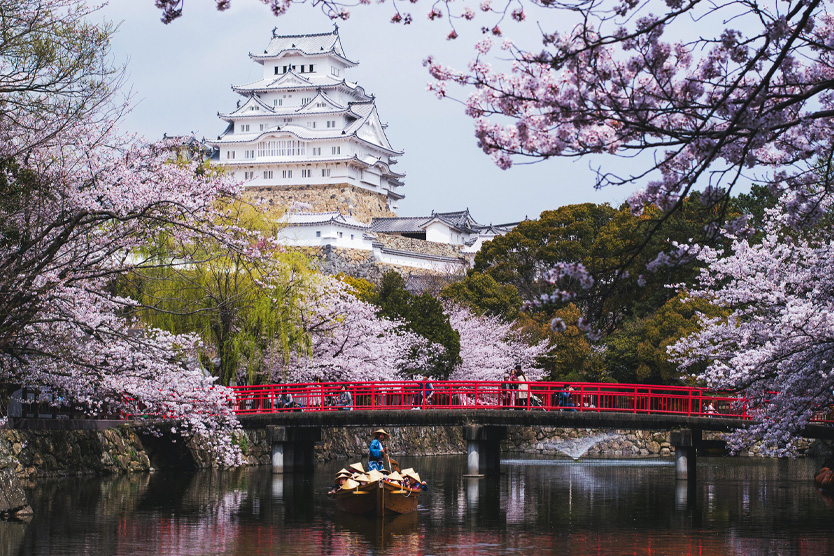
Also known as the White Heron Castle – it’s truly white, and its architectural elements resemble bird wings. It’s a UNESCO World Heritage Site and one of the few Japanese castles preserved in their original state. Its grounds have 1,000 cherry trees. The first flowers usually appear in late March.
Himeji Castle
  • You can enter the main part of the castle and walk along the fortress walls, which offer views of all Himeji and the surrounding area.
  • At the fortress’s base is a small stone called “ubagaishi,” meaning “old woman’s stone.” Legend says a poor resident of Himeji carried it to the castle, inspiring others to follow her example when builders lacked materials to finish the work.


Hirosaki Castle</h4

Japanese Embassy in Moscow

The Japanese Embassy in Moscow has been a key diplomatic presence since the early 20th century, with its current building in the Khamovniki District opening in 1976. It serves as the primary mission representing Japan’s interests in Russia, facilitating political, economic, and cultural relations between the two countries. Throughout its history, the embassy has navigated complex bilateral relations, including periods of tension and cooperation.

Mount Yoshino

Mount Yoshino is a mountain in Nara Prefecture, Japan, renowned as one of the country’s most famous cherry blossom viewing spots. It has a deep history, being the headquarters for the Southern Court during the 14th-century Nanboku-chō period and a sacred site associated with the Shugendō mountain ascetic tradition. The mountain is covered with approximately 30,000 cherry trees of many varieties, which bloom sequentially at different altitudes.

Kinpusen-ji

Kinpusen-ji is a significant Buddhist temple located on Mount Yoshino in Nara, Japan, founded in the 7th century by the mystic En no Gyōja. It serves as the head temple of the Shugendō religion, a unique Japanese tradition combining Buddhist and mountain-worship practices. The temple is renowned for its grand Zāō-dō hall, one of Japan’s largest wooden structures, which enshrines its central deity, Zaō Gongen.

Zaō-dō Hall

The Zaō-dō Hall is the main temple building of Mount Kōya’s Kongōbu-ji, the headquarters of Shingon Buddhism in Japan. Originally founded in the 9th century by the monk Kūkai (Kōbō Daishi), the current hall was rebuilt in the 19th century and enshrines the central deity of the mountain, Zaō Gongen. It serves as a key site for worship and pilgrimage, reflecting the deep spiritual history of the area.

Himeji Castle

Himeji Castle is a hilltop Japanese castle complex located in Himeji, Hyōgo Prefecture, renowned for its brilliant white exterior and resemblance to a bird taking flight, which gives it the nickname “White Heron Castle.” Originally built as a fort in the 14th century, the main keep was constructed in the early 17th century and it is considered the finest surviving example of prototypical Japanese castle architecture. It has survived wars and natural disasters intact and was designated a UNESCO World Heritage Site in 1993.

White Heron Castle

White Heron Castle, also known as Himeji Castle, is a hilltop Japanese castle complex located in Himeji, Hyōgo Prefecture. It was originally built as a fort in 1333, with the main keep completed in the early 17th century. It is renowned for its brilliant white exterior and elegant appearance, which resembles a white heron taking flight, and it is a UNESCO World Heritage Site recognized as the finest surviving example of prototypical Japanese castle architecture.

Hirosaki Castle

Hirosaki Castle is a historic Japanese castle located in Aomori Prefecture, originally constructed in 1611 by the Tsugaru Clan. Although its main keep was destroyed by fire and rebuilt in 1810, it remains one of the few Edo-period castles in Japan. The site is now famous for its beautiful grounds, particularly during the spring cherry blossom festival when over 2,500 trees bloom around the castle.