Planned supply of heat, electricity, and water has been restored in the Belorechensky district. Power supply has been restored in all 11 settlements affected by the snowfall.
In Belorechensk, all boiler houses are operating normally. Issues with heating system imbalances in several buildings remain and are planned to be resolved by the end of the day.
The state of emergency remains in effect in the municipality.
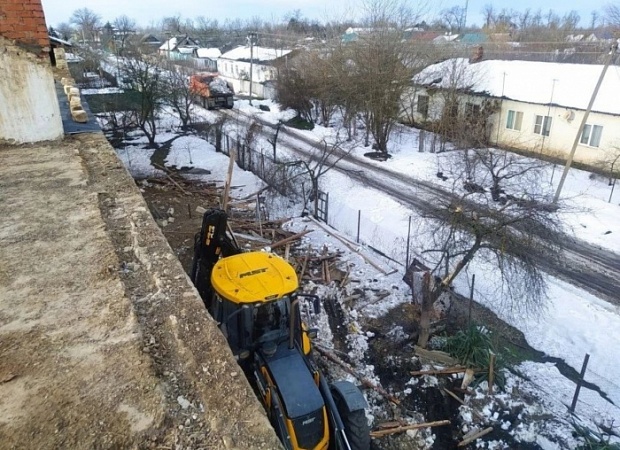
In the Vostochny settlement, where 3 apartment buildings on Molodezhnaya Street were damaged, a commission is working to declare them unsafe. In one of them, the roof collapsed and a wall subsided; in the other two, besides the roof, the foundation is damaged. 10 out of 30 residents remain in temporary accommodation centers, with plans to permanently relocate them.
Two houses with damaged roofs on Shkolnaya Street in the Stepnoy settlement are planned to be restored. At house No. 22, the damaged roof has already been dismantled and debris removed, and the structure has been protected from precipitation. Residents of house No. 24 have already returned. According to inspection results, the building structures do not pose a threat. However, urgent major roof repairs are required.
Belorechensky district
The Belorechensky district is a municipal region in Russia’s Krasnodar Krai, situated along the Belaya River and known for its agricultural and industrial activities. Historically, its development was significantly shaped by the construction of the Armavir-Tuapse railway in the early 20th century, which connected the region’s resources to the Black Sea coast. Today, it is also recognized for natural landmarks like the Khadzhokh Gorge and its proximity to the Caucasus Mountains.
Vostochny settlement
Vostochny is a small urban-type settlement in Russia’s Amur Oblast, established in the 1960s to support the construction and operation of the nearby Svobodny Cosmodrome. Its modern history is directly tied to the 21st-century **Vostochny Cosmodrome**, a major state spaceport whose development, beginning in 2011, transformed the settlement into a key service hub for Russia’s space industry. Today, it primarily functions as a residential and logistical center for cosmodrome personnel and their families.
Molodezhnaya Street
Molodezhnaya Street (meaning “Youth Street”) is a common name for major thoroughfares found in many cities across Russia and other post-Soviet states, rather than one specific cultural site. These streets were typically built or renamed during the Soviet era, often in new residential districts, to symbolize the optimism and future-oriented spirit of the younger generation. As a result, their history is generally tied to the mid-20th century urban expansion and socialist planning, rather than to ancient events.
Stepnoy settlement
The Stepnoy settlement is an archaeological site in Russia’s Volgograd region, representing a fortified settlement of the Srubnaya (Timber-grave) culture from the Late Bronze Age (approximately 18th–12th centuries BCE). It provides key evidence of early sedentary pastoralist communities on the Eurasian steppe, characterized by its defensive earthworks and insights into metallurgy and animal husbandry of the period.
Shkolnaya Street
Shkolnaya Street (School Street) is a common street name found in many towns and cities across Russia and other post-Soviet states, typically indicating a location near an educational institution. Historically, such streets were often named during the Soviet era’s standardized urban planning to signify their proximity to a school, serving a practical, descriptive purpose rather than commemorating a specific event or person. Today, these streets remain a familiar part of the urban landscape, reflecting the centralized naming conventions of their time.