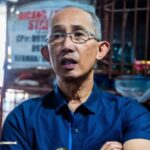
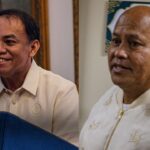
Ombudsman Jesus Crispin Remulla refused to discuss the issue of the so-called “Cabral files” during a press conference on Thursday, January 8, if it would only be used for publicity.
Remulla made the statement following a remark from Batangas 1st District Rep. Leandro Leviste, who suggested the Ombudsman seemed uninterested in the files allegedly given by former Public Works Undersecretary Catalina Cabral to the congressman before her death.
“Others should not claim to know the contents because no one else can verify it except the computer itself which is in our possession,” explained the Ombudsman.
“For what purpose? And in what process will it be used? Because if it’s for publicity, let’s not discuss it,” he emphasized.
Remulla then challenged Leviste to come to his office to see what they are doing with the “Cabral files.”
“He is casting doubt on our integrity here… he is implying a motive as if we are doing nothing when we are here every day,” lamented Remulla.
“He should come here… many people will face him here,” he challenged further.
Last December, it was revealed that they had approached Leviste regarding the alleged files even before Cabral’s death, but instead of submitting all of them to the Ombudsman, he only provided a few files.
According to Remulla, he will speak with Public Works Secretary Vince Dizon and Commission on Audit Commissioner Gamaliel Cordoba next week about the files on Cabral’s computer.
Cabral files
“Cabral files” likely refers to the historical documents and records related to Amílcar Cabral, the influential leader of the independence movements in Guinea-Bissau and Cape Verde. These archives detail his political strategies, writings, and the struggle against Portuguese colonial rule in the mid-20th century. They serve as a crucial resource for understanding the history and ideology of African liberation movements.
Ombudsman
An ombudsman is not a physical place or cultural site, but an official or institution. The role, originating in Sweden in the early 19th century, is an independent investigator who handles complaints from the public against governmental or organizational maladministration. Today, ombudsmen exist worldwide in both public and private sectors to ensure fairness, transparency, and accountability.
Batangas 1st District
The **Batangas 1st District** is a legislative district in the Philippines comprising the city of Tanauan and the municipalities of Talisay, Laurel, Agoncillo, San Nicolas, Santa Teresita, Alitagtag, Cuenca, and Mataasnakahoy. Historically, the area is part of the core Tagalog region and is known for its significant role in the Philippine Revolution and World War II, with Tanauan being the birthplace of revolutionary leader Apolinario Mabini. Today, the district is a key economic zone, featuring industrial centers, agricultural lands, and the renowned Taal Volcano tourism circuit.
Public Works
“Public Works” is a common name for government departments responsible for infrastructure like roads, bridges, and water systems. Historically, such agencies became formalized during the 19th century in many countries to support industrialization and urban growth. Today, the term often symbolizes the foundational civic engineering that enables modern society.
Commission on Audit
The Commission on Audit (COA) is the supreme audit institution of the Philippines, established in its modern form by the 1987 Constitution. It is tasked with examining all government revenue, expenditure, and use of public resources to ensure accountability and transparency. Its origins trace back to the Auditing Office created during the American colonial period in 1899.