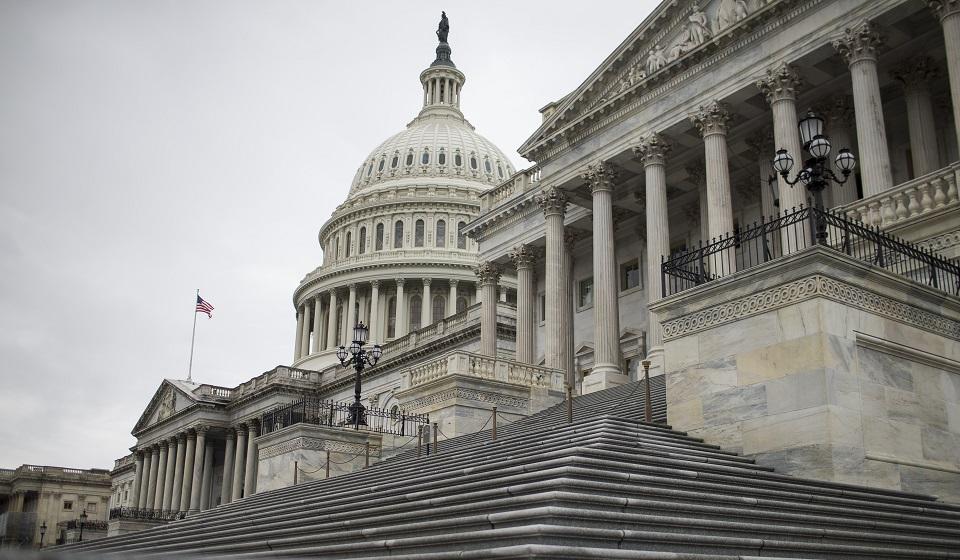
WASHINGTON – The U.S. House of Representatives narrowly defeated a Democratic-led resolution aiming to stop the Iran war until hostilities are authorized by Congress, but the effort to rein in President Donald Trump’s military campaign failed by the closest possible margin.
The House voted 212 to 212 on the war powers resolution, meaning it failed because it needed a simple majority to pass.
It was the third House vote this year on an Iran war powers resolution, and the first since the conflict hit a 60-day deadline on May 1 for Trump to come to Congress about the war. Trump declared then that a ceasefire had “terminated” hostilities against Iran.
The votes have been getting tighter, with Trump’s fellow Republicans holding just a slim majority. The last war powers resolution failed on April 16 by just 213-214, with one member voting “present.”
They also have been getting tighter in the Senate, where a war powers resolution was blocked by 50-49 on Wednesday as three Republicans joined every Democrat except one in voting to advance the measure.
U.S. House of Representatives
The U.S. House of Representatives is one of the two chambers of the United States Congress, established by the Constitution in 1789. Its members are directly elected by the people, with seats apportioned among states based on population, and it holds the sole power to initiate revenue bills and impeach federal officials. Over time, the House has evolved to reflect the nation’s growth, now comprising 435 voting members who serve two-year terms.
Congress
The United States Congress is the legislative branch of the federal government, composed of two chambers: the Senate and the House of Representatives. Established by the U.S. Constitution in 1789, it first met in New York City before moving to Philadelphia and eventually to its permanent home in the Capitol building in Washington, D.C., in 1800. Congress has played a central role in shaping American history, from drafting landmark legislation to overseeing presidential actions and representing the interests of the American people.
Senate
The Senate is a key legislative body in many governments, most famously the upper house of the United States Congress, established in 1789. Its history is rooted in the Roman Republic’s Senate, which advised leaders, but the modern U.S. Senate was designed to provide equal state representation and balance power in the federal government. Today, it plays a crucial role in lawmaking, confirming presidential appointments, and ratifying treaties.
Iran
Iran, historically known as Persia, is a country in West Asia with a rich cultural heritage spanning thousands of years. It was the center of the ancient Persian Empire, including the Achaemenid, Parthian, and Sassanid dynasties, and is home to iconic sites like Persepolis. Today, Iran is known for its Islamic architecture, poetry, and traditions, blending a deep historical legacy with a modern national identity.