WASHINGTON — It is not in the interest of the United States for Russia to be the winner of the Iran war, the German Finance Minister said in Washington.
“It’s not in our interest and it cannot be in the interest of the United States,” he said in a joint statement with the finance ministers of Ukraine and Norway on the sidelines of the International Monetary Fund spring meetings.
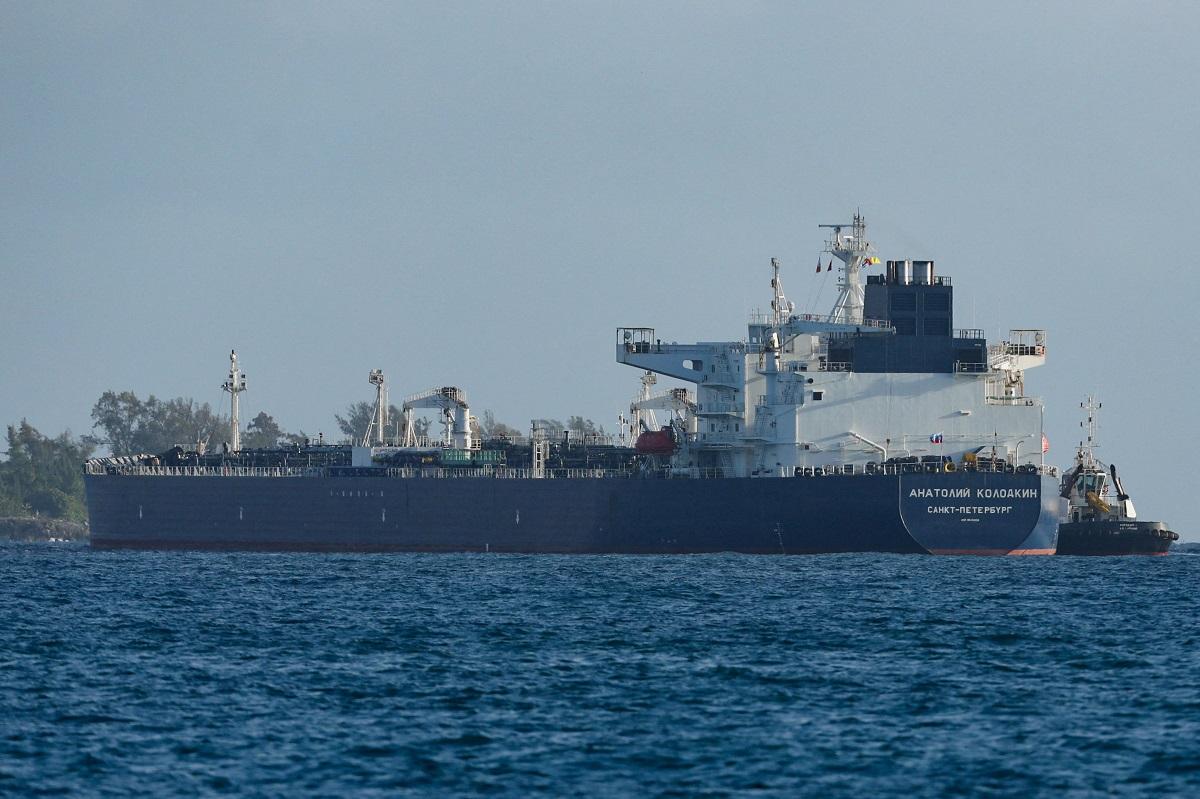
He said the Russian economy is growing thanks to the Middle East conflict and is profiting from the energy situation.
As the conflict in the Middle East dominates this week’s gathering of finance officials at the IMF in Washington, the ministers of Norway, Germany and Ukraine spoke about not forgetting to support Ukraine in its defense against Russia.
“All the meetings here are about the question of what’s happening with the war in Iran, and I think it’s really important that we show solidarity with our friends in Ukraine,” he said.
There was a meeting in support of Ukraine on the sidelines of the IMF meetings in which 15 donor countries participated, including the US.
On Wednesday at a G7 meeting, the US participated, but without the US Treasury Secretary.
Asked about this absence, the minister said the important thing was that the U.S. was at the table.
“When the Ukrainian Finance Minister was describing the situation in Ukraine, I felt there was huge solidarity in the G7.”
The minister also welcomed the election results in Hungary, as the country had been blocking a €90-billion ($106-billion) EU loan package for Ukraine.
“I’m also happy because I see now there’s a way,” he said in reference to the long-awaited loan.
International Monetary Fund
The International Monetary Fund (IMF) is an international financial institution established in 1944 at the Bretton Woods Conference to foster global monetary cooperation and financial stability. Its primary roles are to provide policy advice, financial assistance to member countries facing balance of payments problems, and promote sustainable economic growth.
G7
“G7” does not refer to a specific physical place or cultural site. It is the common name for the **Group of Seven**, an informal forum of seven of the world’s advanced economies: Canada, France, Germany, Italy, Japan, the United Kingdom, and the United States. It was formed in the 1970s in response to major economic crises, such as the oil shock and financial instability, to facilitate coordinated macroeconomic policy among its members.
United States
The United States is a federal republic founded in 1776 after declaring independence from Great Britain, with its modern government established by the Constitution in 1789. Culturally, it is a vast and diverse nation shaped by Native American heritage, waves of immigration, and the blending of numerous global traditions. Its significant historical sites range from Indigenous monuments and colonial settlements to landmarks of the Civil Rights Movement and symbols of its technological and political influence.
Ukraine
Ukraine is a sovereign Eastern European nation with a rich history dating back to the medieval state of Kyivan Rus’, a cultural and political precursor for both Ukraine and Russia. It has endured centuries of foreign rule, most recently as a republic within the Soviet Union before declaring independence in 1991. The country is renowned for its diverse cultural heritage, Orthodox Christian cathedrals like Kyiv’s Saint Sophia, and its central role in contemporary European geopolitics.
Norway
Norway is a Scandinavian nation known for its dramatic fjords, Viking heritage, and deep connection to the sea. Historically, it was unified into a single kingdom around 900 AD and later formed unions with Denmark and Sweden before gaining full independence in 1905. Today, it is celebrated for its stunning natural landscapes, modern cities like Oslo, and cultural traditions ranging from Sami culture to its famous wooden stave churches.
Germany
Germany is a country in Central Europe with a rich and complex history, shaped by the Holy Roman Empire, the Protestant Reformation, and its unification in 1871. Its 20th-century history was defined by two World Wars, the division into East and West Germany during the Cold War, and its peaceful reunification in 1990. Today, it is known for its influential cultural contributions in philosophy, music, and engineering, as well as landmarks like Neuschwanstein Castle, the Brandenburg Gate, and the Cologne Cathedral.
Russia
Russia is a vast transcontinental nation with a rich and complex history, originating from the medieval state of Kievan Rus’ and later evolving into the powerful Tsardom of Russia and the Russian Empire. Its cultural heritage is deeply shaped by Orthodox Christianity, imperial architecture, and influential contributions to literature, music, and ballet. Key historical sites include the Kremlin and Red Square in Moscow, and the historic center of Saint Petersburg, which showcase its imperial past and political significance.
Hungary
Hungary is a landlocked Central European country with a rich history dating back over a millennium, founded by the Magyar tribes in the late 9th century. Its capital, Budapest, is famed for historic sites like the Buda Castle and the Hungarian Parliament Building, reflecting influences from the Ottoman Empire, the Austro-Hungarian Empire, and its own unique Magyar culture. The country is also globally recognized for its thermal spa culture, traditional folk music, and distinctive cuisine.