The Philippine government is extending assistance to 23 Filipino domestic workers affected by the fire in Hong Kong, including one who is currently hospitalized, the Department of Foreign Affairs announced.
One Filipino was reported missing, it added.
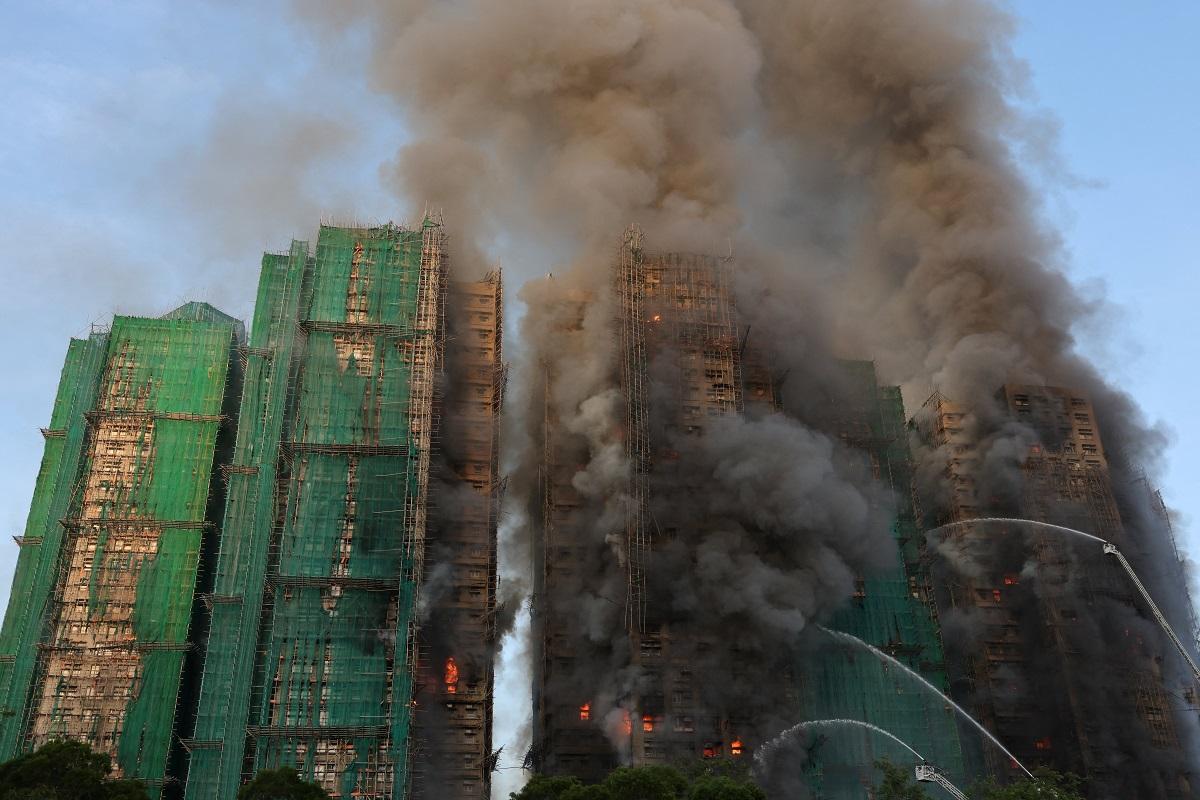
At least 65 were killed and many are still missing after a huge fire engulfed a high-rise residential building in Tai Po district.
The DFA said there are still no confirmed Filipino casualties from the incident.
However, one Filipino is confined at the ICU of a local hospital, the DFA said.
“The consulate will continue to coordinate with Hong Kong’s Police Force, Labor Department and Home Affairs Department to determine the whereabouts of one missing Filipino,” the DFA said, adding it is monitoring the situation in Tai Po closely. “The Department also wishes to thank Hong Kong authorities who are helping locate, identify and assist affected Filipinos,” it added.
Meanwhile, 19 Overseas Filipino Workers (OFW) were rescued from the deadly fire that hit a residential building in Hong Kong, the Overseas Workers Welfare Administration (OWWA) said.
There are 70 to 80 OFWs who have registered addresses in the Wang Fuk Housing Complex.
“Their passports were destroyed, their employment contracts were burned, and the PCG and RMWO are immediately resolving this. We also immediately provided food packs, assistance, dignity kits, and whatever else they needed,” said an OWWA administrator.
The local fire department reported that at least 55 persons died from the fire, the highest number of fatalities due to fire recorded in Hong Kong in recent decades.
Sixteen victims are currently in critical condition in various hospitals.
Meanwhile, more than 300 individuals remain missing per authorities.
Further, one OFW is in the hospital with her employer and a baby. The said OFW is the voice behind the audio recording that went viral while asking for help.
Philippine authorities have yet to confirm if there are still Filipinos trapped inside the burning buildings. Each of the shelters were checked to see if there were Filipinos among them.
“We also don’t want the families in the Philippines to panic, because there is a certain likelihood that they are not there, they might be in another place,” said a Department of Migrant Workers official.
The OWWA and the DMW are already coordinating with the families of the Filipinos affected by the fire in Hong Kong.
Hong Kong authorities said that the fire spread quickly in the buildings due to the use of unsafe materials in the renovation by a construction firm, such as the foam plastic materials in the windows.
The two managers and a consulting engineer of the construction company behind the renovation were arrested.
The fire also spread to the bamboo scaffolding surrounding the buildings, which is commonly used in Hong Kong.
According to the Chief Executive of Hong Kong, a task force has been formed that will focus on the investigation including whether projects using bamboo scaffolding are complying with standards.