Filtered by: Topstories
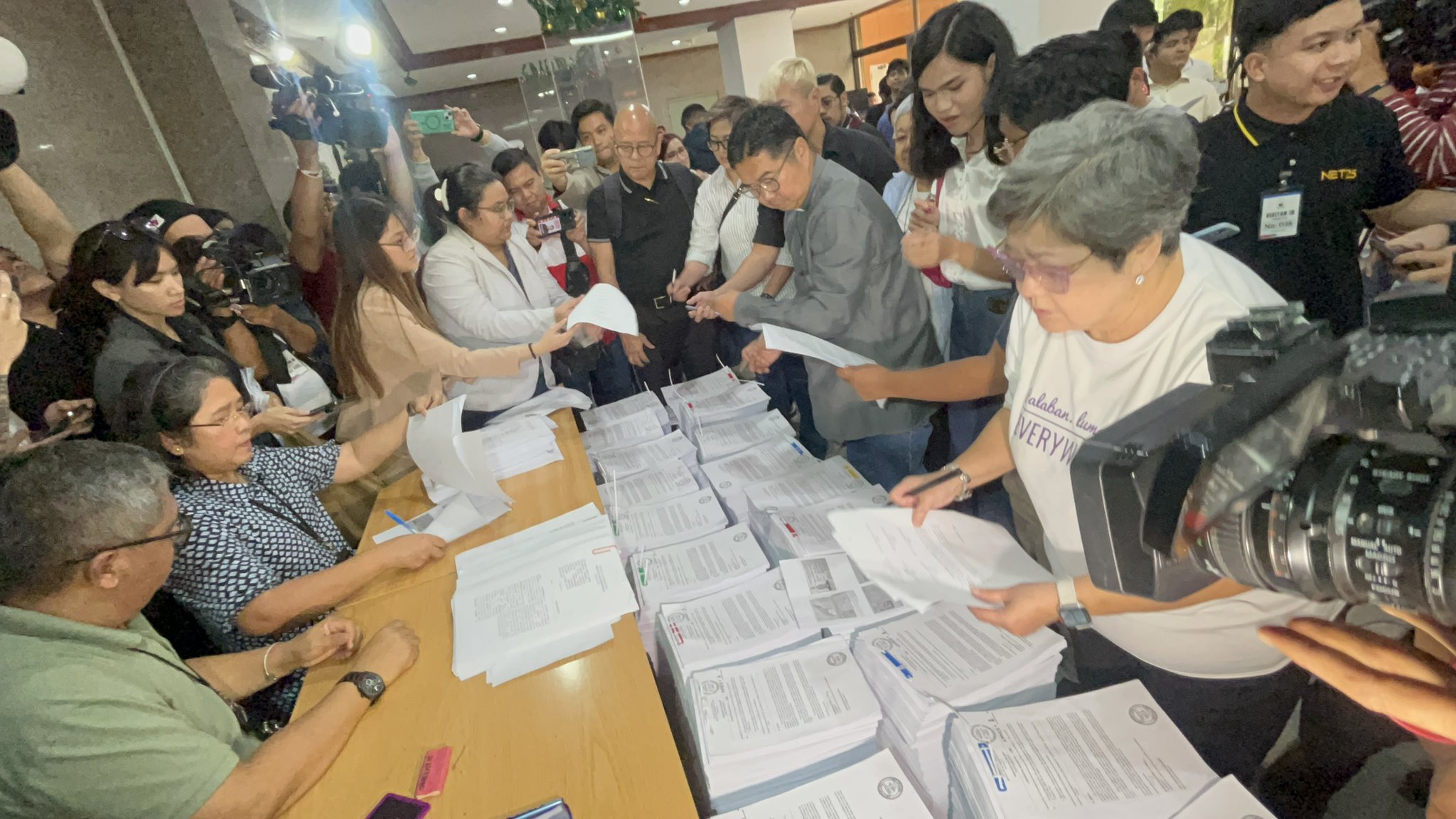
Plunder and graft complaints were filed Friday against Vice President Sara Duterte and 15 other officials of the Department of Education and the Office of the Vice President over the alleged misuse of P612.5-million confidential funds.
Aside from plunder and graft, the complaints also alleged malversation and other related complaints against Duterte over her supposed misuse of confidential funds from 2022 to 2023.
They said that despite lengthy and repeated congressional inquiries, the Vice President has refused to explain where her offices spend such amounts of public funds, a stance which they said betrays the people’s trust.
“In the light of the many calls of the Filipino people for accountability, we should not forget the numerous instances that the second highest officer of the country has skirted away questions and investigations over anomalous use of confidential funds. In the instance of being questioned by the representatives of the people in Congress, the Vice President, Sara Duterte, has blatantly refused her responsibility to answer to the people. She has continuously undermined the very essence of what public service is all about. Her indiscriminate misuse of public funds without fear of accountability is outright criminal and a perfect example of the betrayal of public trust,” one complainant stated.
“Today, we call upon the institution of the Ombudsman to put an end to this mockery of the system of checks and balances as enshrined in our Constitution. We fervently hope that our charges of plunder, conversation, bribery, graft and corruption, betrayal of public trust, and gross violation of the Constitution be upheld against Vice President Sara Duterte, and she, at least, be called upon to account one on hundreds of millions of confidential funds that she plundered. And if she fails to do so, she should no less than be found criminally liable for it,” the complainant added.
Also named respondents in the complaints were the Vice President’s Chief-of-Staff, OVP assistant chief of staff, Director of the OVP Administrative and Financial Services Office, Chief Accountant, OVP Special Disbursing Officer, former commander of the AFP Security and Protection Group (ASPG), former DepEd spokesperson, OVP Strategy Management Office Director, former Education Undersecretaries, DepEd chief accountant, DepEd Special Disbursement Officer, a retired Major General, and a Lieutenant Colonel.
‘Fictitious’ names
In a statement, the complainants said the Vice President designed and directed parallel schemes in the OVP and DepEd to divert and conceal P612.5 million in confidential funds through irregular transactions, unsupported disbursement vouchers, and certifications signed without review.
“Entire cash advances were allegedly handed to unauthorized AFP (Armed Forces of the Philippines) officers personally designated by Duterte, while liquidation was completed using fabricated acknowledgment receipts bearing fictitious names such as ‘Mary Grace Piattos,’ ‘Nova,’ and ‘Oishi.’ The filing argues that these acts reflect deliberate evasion of oversight and systematic abuse of authority, constituting serious violations of the constitutional mandate that public office is a public trust,” they said.
Duterte’s alleged misuse of confidential funds during her vice presidency was among the bases of the impeachment case filed by the House of Representatives against the Vice President.
The impeachment case, however, was dismissed last July 25 for violating the one-year bar rule, or one impeachment complaint filed against an impeachable official per year, and for violating the Vice President’s right to due process.
The House has since appealed the dismissal, saying it should be allowed to perform its exclusive duty to prosecute an impeachable official, and the Senate’s to try the case.
Must be probed
Meanwhile, Malacañang said the plunder and graft complaints against Duterte must be investigated properly.
A Palace Press Officer was asked for reaction on the complaints lodged against the Vice President and 15 other officials regarding the alleged misuse of the confidential funds.
“Again, if they have basis against the Vice President, that depends on the complainants,” the officer said in a briefing.
“Whatever was stated in the complaint, if they attached the pieces of evidence, it would be better if this will be investigated properly,” she added.
Seeking accountability
With the Office of the Solicitor General (