15 foreign-flagged ships with 260 Filipino crew members transit the Strait of Hormuz.
Filtered by: Top Picks
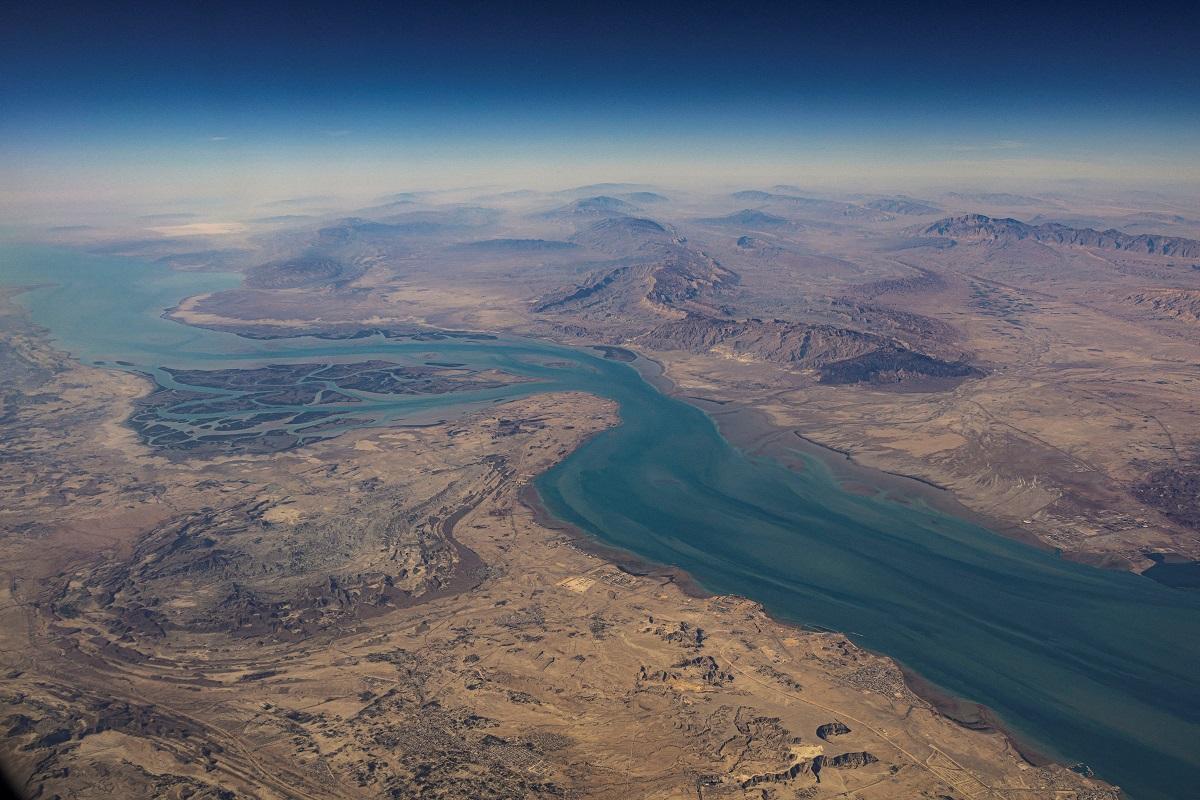
The Department of Migrant Workers (DMW) reported that at least 15 foreign-flagged ships with up to 260 Filipino crew members on board exited the Strait of Hormuz hours after Iran temporarily reopened the critical waterway.
It was confirmed that several of these ships were already traveling off the coast of Africa while others were already in Southeast Asia.
Over 4,000 Filipino seafarers aboard some 500 foreign-flagged vessels are still at the strait.
It was unclear if others have also been able to depart the area, but the DMW expressed hope that tensions would continue to ease and that sea vessels can freely transit the strait.
The development comes exactly seven weeks since fighting erupted between US-Israeli forces and Iran. As part of its retaliation, Iran blockaded the Strait of Hormuz, the maritime transit route of about 20% of the world’s oil supply, as hundreds of cargo ships remained there. The United States later implemented its own blockade at the strait amid attempts to reach a peace deal.
Iran reopened the strait following a ceasefire agreement in Lebanon, but warned that it could close the waterway again if the US Navy blockade of Iranian ports continued.
Missile attack survivors
At least 10 Filipino seafarers onboard an oil tanker struck by an Iranian missile attack in the Strait of Hormuz are back in the Philippines.
The report said the vessel did not exit through the Strait of Hormuz, but found another way to escape.
It was stated that the crew members were already safe and receiving assistance.
Their vessel, the oil tanker MT Aqua 1, was struck by an Iranian cruise missile in the Persian Gulf near Qatar.
The remaining Filipino crew members were likewise reported as safe and are expected to return to the Philippines.
It was said that coordination was underway to ensure the safe passage of Filipino seafarers through the Strait of Hormuz.
Strait of Hormuz
The Strait of Hormuz is a strategically vital maritime chokepoint connecting the Persian Gulf with the Gulf of Oman and the wider Indian Ocean. Historically, it has been a key trade route for centuries, but in the modern era, its significance is defined by the transit of about one-fifth of the world’s oil supply. Its geopolitical importance has made it a focal point of regional tensions and international security concerns for decades.
Iran
Iran, historically known as Persia, is a country in Western Asia with one of the world’s oldest continuous major civilizations, dating back to the Elamite kingdoms of the 4th millennium BCE. It is home to numerous UNESCO World Heritage Sites, including the magnificent ruins of Persepolis, the capital of the Achaemenid Empire founded in the 6th century BCE. Today, Iran’s rich cultural heritage is reflected in its Islamic architecture, poetry, and intricate arts, shaped by a history of empires, the 1979 Islamic Revolution, and its enduring national identity.
Qeshm
Qeshm is an island in the Strait of Hormuz, Iran, and is the largest island in the Persian Gulf. Historically, it has been a strategic trading and maritime hub for centuries, with a history influenced by various powers including the
Strait of Hormuz
The Strait of Hormuz is a strategically vital narrow waterway between the Persian Gulf and the Gulf of Oman, forming a crucial global chokepoint for maritime oil shipments. Historically, it has been a significant trade route for centuries, with control contested by regional empires and foreign powers. Today, its security and freedom of navigation remain a persistent geopolitical issue for the surrounding nations and the world.
Iran
Iran, historically known as Persia, is a country in Western Asia with one of the world’s oldest continuous civilizations, dating back to the Elamite kingdoms of the 4th millennium BCE. It is home to numerous UNESCO World Heritage sites, including the ancient ceremonial capital of Persepolis and the magnificent architecture of Isfahan’s Naqsh-e Jahan Square, reflecting its profound influence on art, science, and governance through empires like the Achaemenid, Sassanian, and Safavid. Today, Iran’s rich cultural heritage is woven into its Islamic republic identity, seen in its poetry, intricate handicrafts, and vibrant traditions.
Qeshm
Qeshm is Iran’s largest island, located in the strategic Strait of Hormuz. Historically, it has been a significant trading and maritime hub for centuries, influenced by various powers including the Portuguese, who built forts there in the 16th century. Today, it is known for its unique natural attractions, such as the Hara mangrove forests and the Valley of Stars, as well as its distinct local culture.
Persian Gulf
The Persian Gulf is a historically significant body of water in Western Asia, serving as a vital trade route for ancient Mesopotamian, Persian, and Arab civilizations. Its strategic and economic importance, particularly due to vast oil and gas reserves, has made it a focal point of global commerce and geopolitical interest for centuries. The name “Persian Gulf” itself is rooted in antiquity, derived from the region’s long association with various Persian empires.
Persepolis
Persepolis was the ceremonial capital of the Achaemenid Empire, founded by Darius I around 518 BCE in modern-day Iran. It served as a grand complex for royal receptions and festivals until its destruction by Alexander the Great’s army in 330 BCE. Today, its impressive ruins, including monumental stairways and columns, are a UNESCO World Heritage Site, symbolizing the height of ancient Persian art and architecture.
Achaemenid Empire
The Achaemenid Empire, founded by Cyrus the Great in the 6th century BCE, was the first great Persian Empire, stretching from the Balkans to the Indus Valley. It is renowned for its monumental architecture, such as the palaces at Persepolis, and for its innovative administrative system that governed diverse peoples through a network of satrapies. The empire fell to the conquests of Alexander the Great in 330 BCE, leaving a lasting legacy on subsequent civilizations.
UNESCO World Heritage Sites
UNESCO World Heritage Sites are landmarks or areas selected by the United Nations for having outstanding cultural, historical, scientific, or natural significance. The program was established by UNESCO in 1972 through an international treaty to protect and preserve humanity’s most valuable treasures for future generations. These sites, which range from the Great Wall of China to the Galápagos Islands, represent a shared global heritage.
Elamite kingdoms
The Elamite kingdoms were a series of ancient civilizations centered in what is now southwestern Iran, flourishing from around 2700 BCE to 539 BCE. They were a major power in Mesopotamia, frequently interacting and conflicting with Sumerian, Akkadian, Babylonian, and Assyrian empires. Their history is characterized by distinct periods of independence and foreign domination, with their civilization ending upon conquest by the Persian Achaemenid Empire.