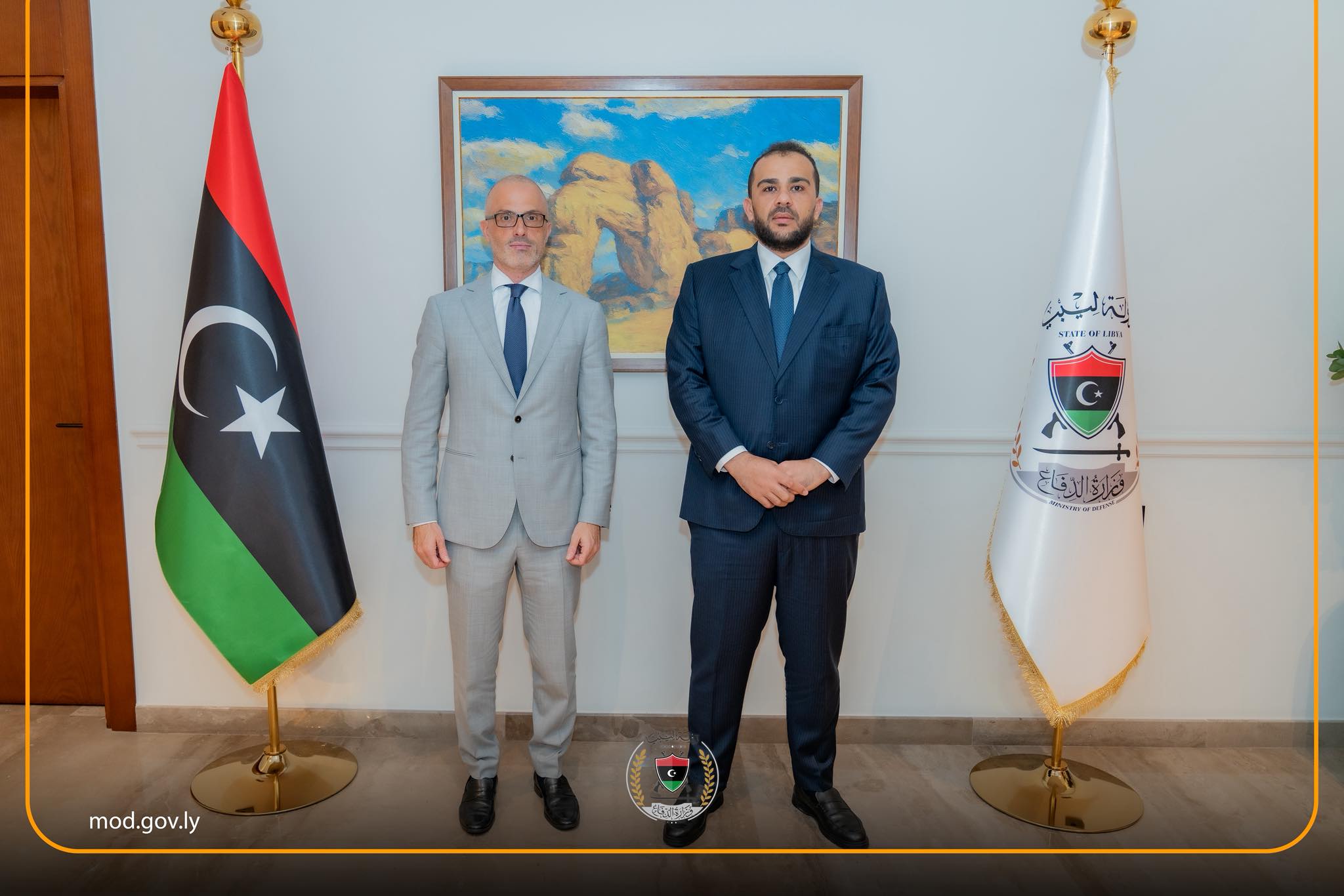
On Monday evening, the Deputy Minister of Defense of the Government of National Unity, Major General Abdul Salam Salem Al-Zoubi, received at his office in the ministry’s headquarters in the capital, Tripoli, the European Union Ambassador to Libya, Nicola Orlando, and his accompanying delegation, in a meeting described as official that discussed enhancing joint cooperation and supporting efforts for stability and security in the country.
According to what the Ministry of Defense published on its official page, the two sides discussed ways to raise the level of coordination with European Union institutions, to contribute to consolidating security and unifying efforts on issues of common interest, and to enhance Libya’s role and position in its regional and international environment.
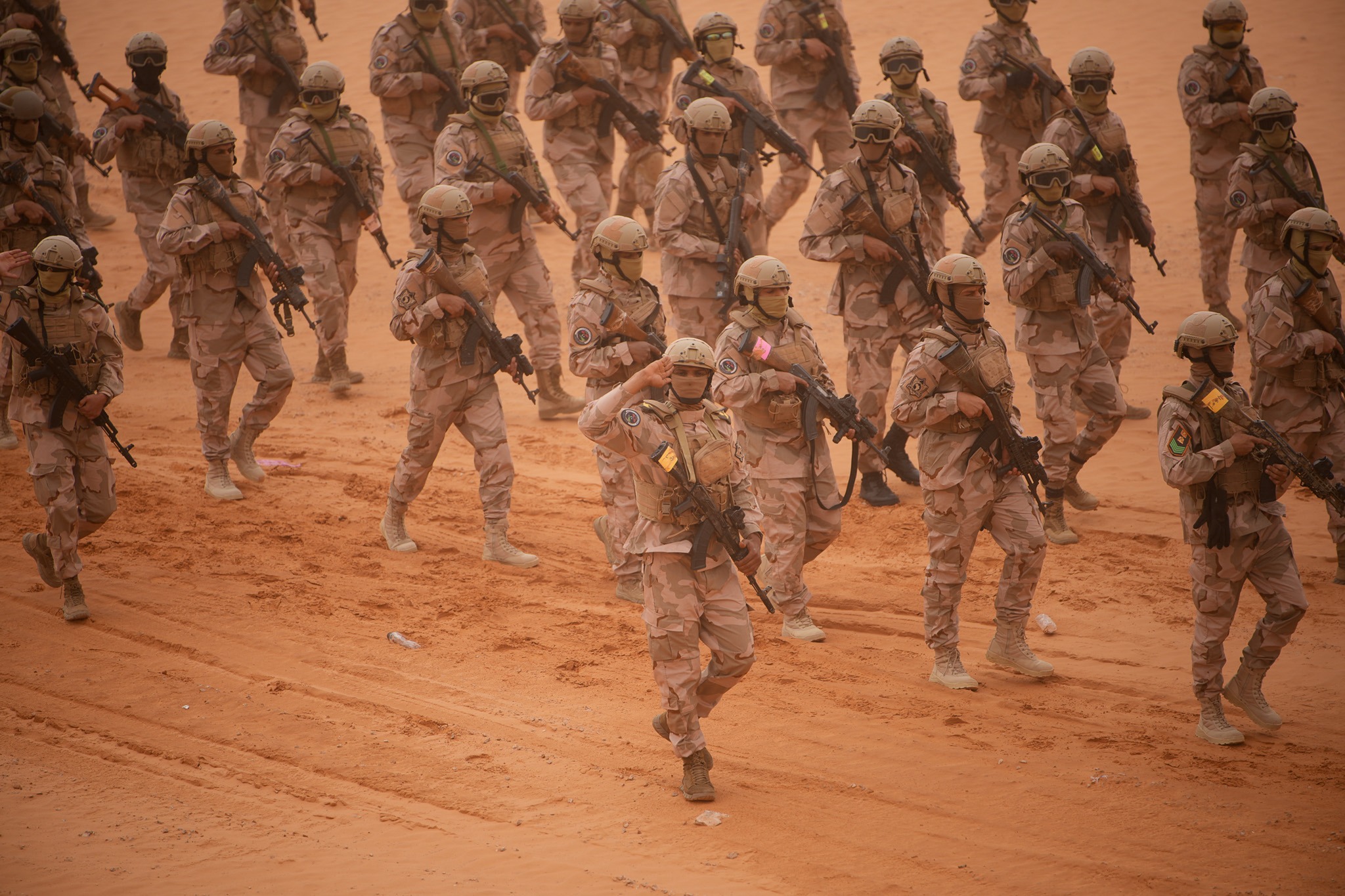
For his part, the European Union Ambassador, Orlando, congratulated the Ministry of Defense in a tweet on the success of the “Flintlock 2026” exercises, and on the steps taken to enhance the coordination of national efforts, especially in the field of land border monitoring.
Orlando affirmed the European Union’s readiness to support these priorities, pointing to discussions on current and future areas of cooperation in light of regional and international changes, including cooperation within the framework of the European Union’s “Irini” operation and its role in supporting Libyan maritime institutions.