Libya Deports 26 Illegal Egyptian Migrants via Amsaad Land Crossing
Decisive Legal Measures to Control Illegal Immigration
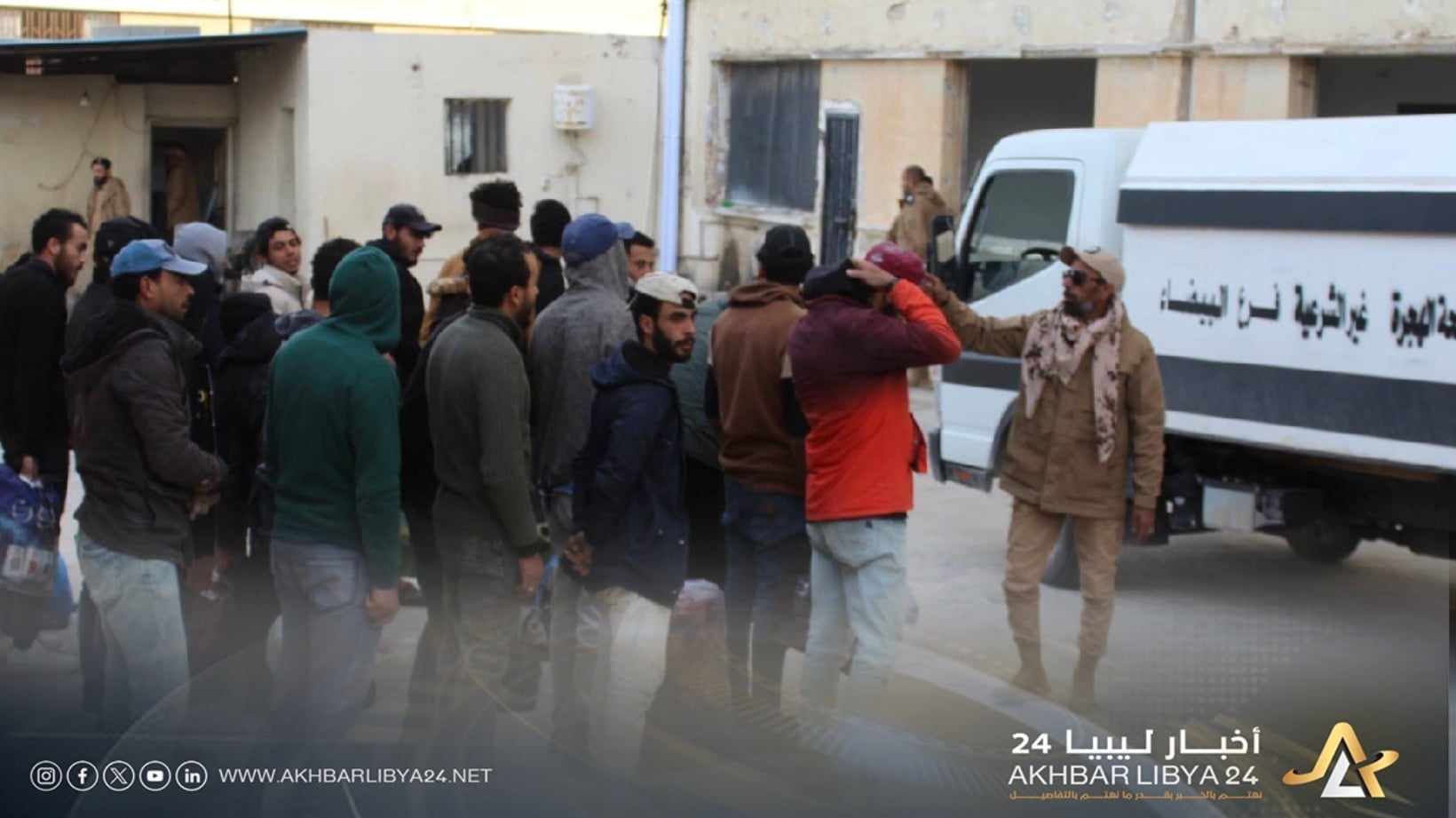
The competent authorities carried out a deportation operation for twenty-six Egyptian nationals who were present inside Libyan territory illegally. The deportation took place via the Amsaad land border crossing, as part of measures aimed at enhancing security and stability.
The operation included several categories of violators. Two female beggars along with a child were deported, in addition to twenty-one individuals against whom judicial deportation orders had been issued by the Public Prosecution. Three others who were present irregularly within the geographical area of a security branch were also apprehended and deported.
The source confirmed that all procedures were carried out in full within the stipulated legal framework and with full cooperation with other concerned parties, ensuring respect for the applicable legislation and maintaining the country’s public security.
Emphasis on Firmness in Facing Security Challenges
The security statement clarified that this step is not isolated, but rather part of a comprehensive plan being implemented by the concerned agencies to establish security control over various areas. This plan primarily aims to curb the phenomenon of illegal immigration, which constitutes a security and social burden, and to work on ensuring the application of legal provisions across all Libyan territories without exception.
Protecting the Citizen and Continuing Deterrent Efforts
The source stressed that these measures stem from the state’s responsibility to protect its citizens and resources, and to enforce the rule of law. It pointed to the continuation of intensifying field efforts, through increasing security patrols, carrying out inspection operations, and taking all deterrent measures against anyone who dares to violate the law or compromise the security of the Libyan state and the integrity of its borders.
The statement concluded by affirming that maintaining the security of the Libyan citizen and the safety of its lands remains a top priority, and that all capabilities will be employed to achieve this supreme national goal.