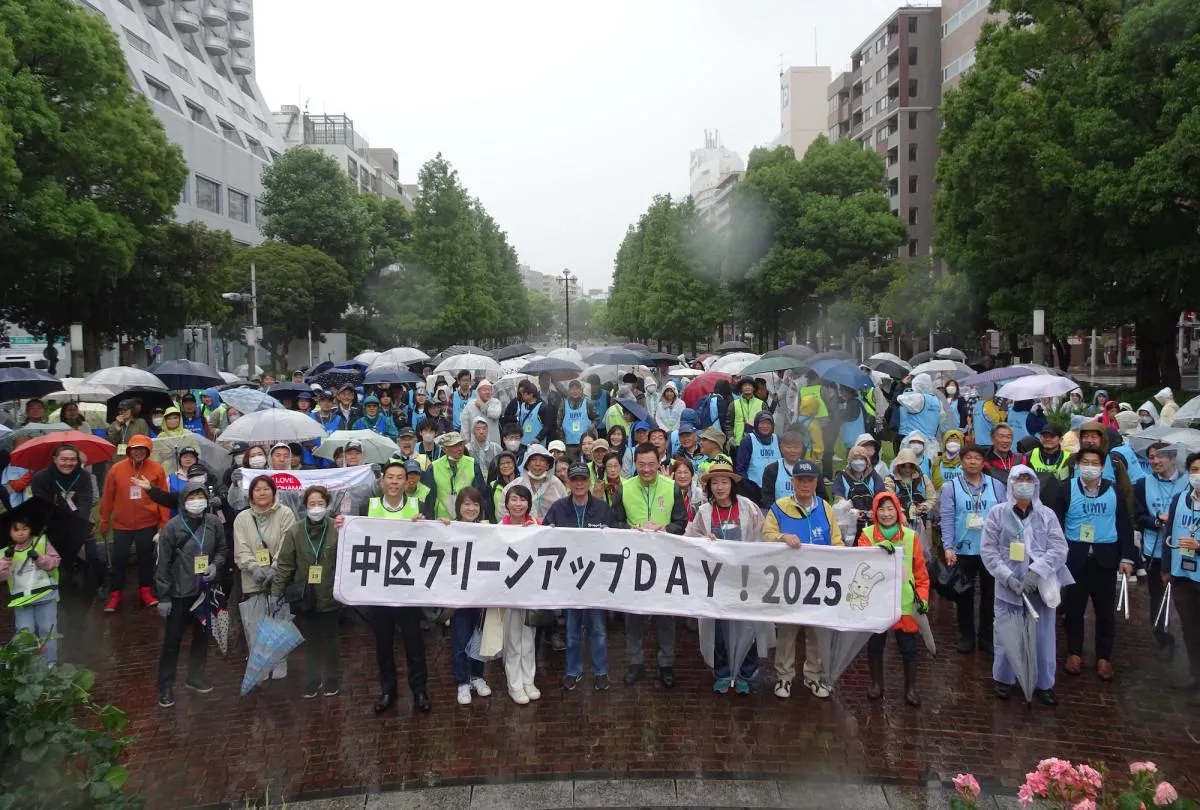
A cleaning event called “Naka Ward Cleanup DAY! 2026” will take place on May 30, starting and ending at Odori Park (Naka Ward, Yokohama).
The event aims to make Naka Ward a cleaner and more livable city, while also helping to reduce marine plastic waste, a global problem. The cleanup will happen around Kannai and Sakuragicho stations. Last year in 2025, about 380 people took part and collected 183 kilograms of trash.
Along the Ooka River water system (the Ooka River, Nakamura River, Hori River, and Horikiri River), nine waterfront facilities are being developed to increase the area’s appeal, with plans to use them for water recreation and as disaster prevention centers. The event takes place in a region where waterfront development is advancing, such as the completion of the “Ishikawacho Felice Pier” on the Nakamura River.
Yokohama City is promoting the “Yokohama Pla 5.3 Plan,” which aims to ensure stable waste treatment for the future, achieve a decarbonized society, and shift to a circular economy. This cleanup activity supports the goal of citizens, businesses, and the government working together to preserve a good environment for future generations, with the slogan “Don’t let trash flow into the sea from Naka Ward.”
On the day, participants will gather around the stone stage at Odori Park. After the opening ceremony, they will split into teams to clean specific routes around Kannai and Sakuragicho stations. The organizers will provide all necessary cleaning supplies, so participants can join empty-handed. The event will also include the SNS community “I LOVE YOKOHAMA (Hama Love),” which brings together Yokohama fans, as well as volunteer cleaning groups and environmental promotion committee members.
Gathering and registration start at 8:45 AM, with the opening ceremony at 9:00 AM. The closing ceremony is at 10:50 AM, and the event ends at 11:00 AM. No advance registration is needed; participants can join by arriving at the meeting point by 8:45 AM on the day. Drinks and a commemorative drawstring bag will be given to participants. The event will be held in light rain, but canceled in severe weather. The decision will be announced on the Yokohama Naka Ward website by 6:30 AM on the day.
Odori Park
Odori Park is a large, rectangular green space stretching over 1.5 kilometers through the heart of Sapporo, Japan. Originally established in the late 19th century as a firebreak for the city, it has since evolved into a central cultural hub, hosting major events like the Sapporo Snow Festival and the Yosakoi Soran Festival. The park features gardens, fountains, and iconic landmarks such as the Sapporo TV Tower.
Kannai Station
Kannai Station is a railway station located in Naka Ward, Yokohama, Japan, serving as a key hub for the JR East Negishi Line and the Yokohama Municipal Subway Blue Line. Opened in 1915, the station’s name comes from its location within the Kannai district, historically the administrative and commercial center of Yokohama after the port opened to foreign trade in 1859. Today, it provides access to cultural landmarks such as Yokohama Stadium and the Kanagawa Prefectural Museum of Cultural History.
Sakuragicho Station
Sakuragicho Station is a major railway station in Yokohama, Japan, that opened in 1915 as a key hub for the city’s port and industrial development. It played an important role in Yokohama’s reconstruction after the Great Kanto Earthquake of 1923 and World War II bombings
Odori Park
Odori Park is a large, rectangular green space stretching over 1.5 kilometers through the heart of Sapporo, Japan. Originally established in 1869 as a firebreak, it has since evolved into the city’s central hub for festivals and events, most famously hosting the annual Sapporo Snow Festival. The park is divided into 13 blocks and features gardens, fountains, and iconic landmarks like the Sapporo TV Tower.
Kannai Station
Kannai Station is a railway station in Naka Ward, Yokohama, Japan, serving as a key gateway to the city’s historic and cultural district. Opened in 1872 as part of Japan’s first railway line between Shimbashi and Yokohama, it is one of the country’s oldest stations, though the original building was replaced after the Great Kanto Earthquake of 1923. Today, it connects visitors to nearby attractions like the Yokohama Archives of History and the Kanagawa Prefectural Museum, reflecting its enduring role in Yokohama’s development.
Sakuragicho Station
Sakuragicho Station is a major railway station in Yokohama, Japan, opened in 1915 as part of the Yokohama Line. It served as a key gateway to the city’s port and industrial areas, and was rebuilt after being destroyed in the 1923 Great Kantō earthquake and again after World War II. Today, it is a bustling hub connecting travelers to landmarks like the Minato Mirai 21 district and the Yokohama Landmark Tower.
Ooka River
The Ooka River is a major river flowing through Yokohama, Japan, known for its scenic beauty and historical significance as a key waterway during the Edo period. It played a vital role in transporting goods and people, linking the city to Tokyo Bay and supporting local agriculture and commerce. Today, the river is lined with cherry blossom trees and popular walking paths, making it a cherished natural and cultural landmark.
Nakamura River
The Nakamura River, located in Japan, is historically significant as part of the region’s irrigation and agricultural systems, supporting local rice cultivation for centuries. It flows through areas that were once central to feudal-era settlements, with its banks serving as sites for traditional festivals and community activities. Today, the river remains a cherished natural landmark, blending cultural heritage with modern conservation efforts.
Hori River
The Hori River, located in Japan’s Ishikawa Prefecture, is a historic canal originally constructed in the early 17th century to transport goods and materials for the construction of Kanazawa Castle. It later became a vital waterway for trade and daily life in the region, and today its scenic banks, lined with cherry blossoms and traditional architecture, are a popular tourist attraction.
Horikiri River
The Horikiri River is a historic canal located in Tokyo, Japan, originally constructed during the Edo period (17th–19th centuries) to improve water transport and irrigation in the eastern lowlands. It played a key role in the development of the Horikiri Shobuen, a famous iris garden that flourished in the 18th and 19th centuries and remains a cultural landmark today. Today, the river is part of Tokyo’s urban landscape, with its banks lined by residential areas and remnants of its agricultural past.
Ishikawacho Felice Pier
Ishikawacho Felice Pier is a historic waterfront facility located in Yokohama, Japan, originally built in the early 20th century as a key port for international trade and immigration. It served as a major gateway for Japanese emigrants traveling to the Americas, earning the nickname “Pier of Tears” due to the emotional farewells that took place there. Today, it has been preserved as a cultural site and park, offering visitors a glimpse into its past through restored buildings and memorials.