Win five pairs of tickets for ten people to The Moveum Yokohama.
Reader Giveaway!
We are giving away admission tickets to the immersive art facility “THE MOVEUM YOKOHAMA” at Yamashita Pier to 5 pairs (10 people).
The application method is introduced at the end of the article.
75 Projectors at Yamashita Pier
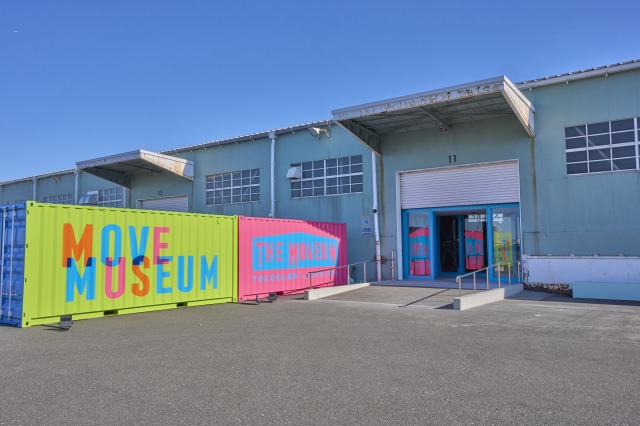
Facility exterior
Seventy-five projectors have been brought into a warehouse at Yamashita Pier, Yokohama.
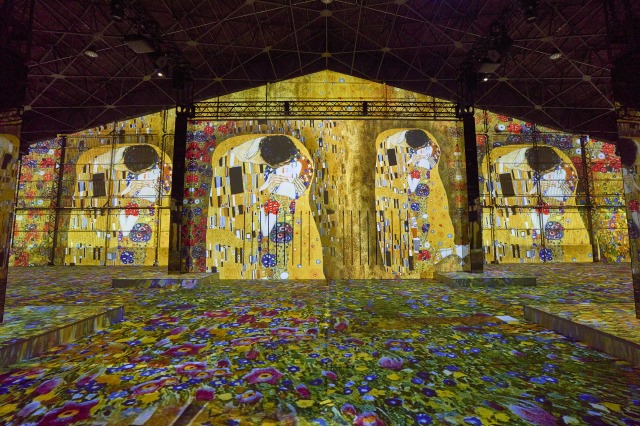
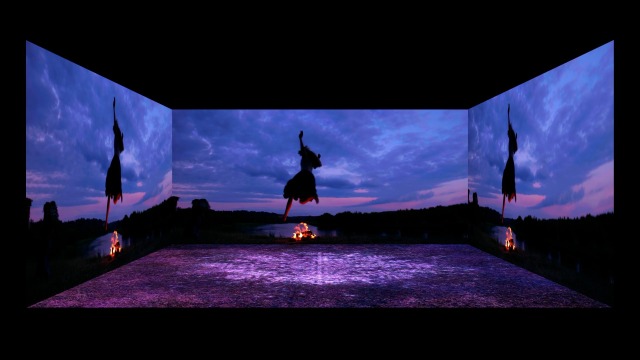
This is the immersive art facility “THE MOVEUM YOKOHAMA,” where Gustav Klimt’s golden paintings are projected across the walls and floors.
It is being held in the port area behind Chinatown, past Yamashita Park.
The event period lasts until June 28, 2026.
The project was orchestrated by the Toyota Group.
It’s a slightly unusual project where an automaker is projecting fin-de-siècle Viennese art in a Yokohama warehouse.
Let’s take a look inside.
Inside the “Museum that Moves the Heart”
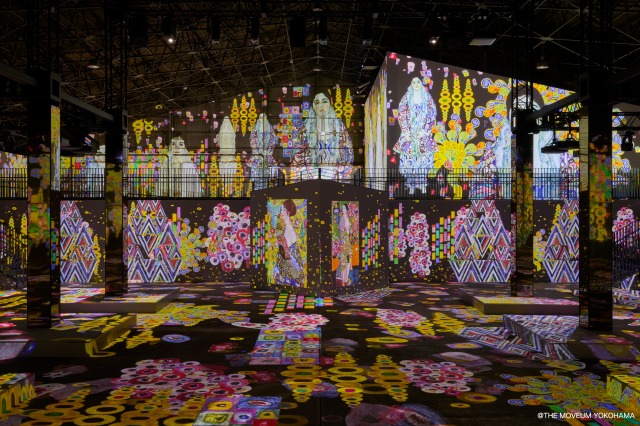
Theater interior
This facility opened on December 20, 2025.
The main exhibition is “Vienna Fin-de-Siècle Art: The Golden Age of Beauty.”
Approximately 170 works by Gustav Klimt and about 110 works by Egon Schiele have been turned into imagery and are projected 360 degrees across an approximately 1,800 square meter space.
The screening time is about 52 minutes, and a key feature is that visitors can walk freely within the space while viewing.
The facility’s name “MOVEUM” is a coined word from MOVE + MUSEUM. MOVE carries two meanings: “movement” and “emotion (to be moved).”
What was this warehouse originally?
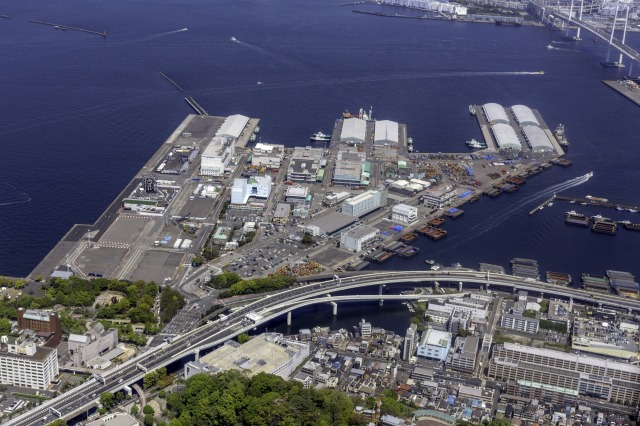
Aerial photo of Yamashita Pier
Why is the venue a warehouse at Yamashita Pier?
There’s a somewhat interesting history here.
In 1927, a passenger ship terminal (shed) built during reconstruction work after the Great Kanto Earthquake stood on this site.
It served as the gateway for the North American route, a place where people came and went from Yokohama across the Pacific.
The warehouse, built with a Showa-era truss structure, features a vast, column-free space.
This space was well-suited for the 360-degree immersive experience created by 75 projectors.
A place that once connected the world to Yokohama now brings world art to the city.
Another Exhibition
LISTEN. ONE MOMENT
From January 22, 2026, the “Coup de foudre” exhibition was added.
Its subtitle is “Masterpieces of Sculpture That Captivate the Heart ~Love at First Sight~”.
On display are 15 sculpture replicas produced by the French workshop Grand Palais Mirage.
This workshop has a long history, founded in 1794.
The pedestals are said to be made from a marble-like material created using upcycling technology for scrap materials.
Additionally, “LISTEN. ONE MOMENT” can be experienced for free without a ticket.
It is a roughly 15-minute video work documenting the world’s music culture over ten years.
Things to Know Before You Go
【Access】
About a 25-minute walk from Exit 4 of Minatomirai Line’s “Motomachi-Chukagai Station”.
Alternatively, from the “Yamashita Pier Bus Waiting Area” near the station, take the<div class
THE MOVEUM YOKOHAMA
The MOVEUM Yokohama is a contemporary art and culture complex that opened in 2020 in the city’s vibrant Minato Mirai district. It is designed as a dynamic, non-traditional museum focused on immersive and interactive exhibitions, often blending digital technology with physical art to create participatory experiences for visitors.
Yamashita Pier
Yamashita Pier is a historic waterfront pier in Yokohama, Japan, originally constructed in the 1920s to serve as a major international passenger terminal. It played a significant role in Japan’s post-World War II recovery and is named after the adjacent Yamashita Park. Today, it remains a popular scenic spot for views of the harbor and is a frequent docking point for cruise ships.
Yokohama
Yokohama is a major port city in Japan, located south of Tokyo, which first opened to international trade in 1859 after centuries of isolation. Its history as one of Japan’s first treaty ports led to the rapid development of foreign settlements and the introduction of Western culture, visible in areas like the historic Yamate district. Today, it is known for its vibrant Chinatown, the iconic waterfront at Minato Mirai, and its role as a hub of modern commerce and culture.
Chinatown
Chinatown refers to an ethnic enclave historically established by Chinese immigrants in cities outside of China, most famously in San Francisco, New York, and London. These districts originated in the 19th and early 20th centuries, often serving as vital hubs for new arrivals seeking community and economic opportunity while facing discrimination. Today, they are vibrant cultural centers known for their distinctive architecture, cuisine, and festivals, preserving Chinese heritage while evolving as popular tourist destinations.
Yamashita Park
Yamashita Park is a scenic waterfront park located in Yokohama, Japan, built on reclaimed land after the Great Kantō Earthquake of 1923. It was officially opened in 1930 and named after the nearby Yamashita-chō district. The park is famous for its beautiful promenade, the Hikawa Maru museum ship, and views of Yokohama Bay.
Great Kanto Earthquake
The Great Kantō Earthquake was a devastating 7.9 magnitude earthquake that struck the Tokyo-Yokohama metropolitan area of Japan on September 1, 1923. It caused catastrophic destruction primarily through subsequent firestorms, resulting in over 100,000 deaths and the near-total leveling of both cities. The disaster’s profound impact led to major urban reconstruction efforts, significant social changes, and the establishment of the annual Disaster Prevention Day in Japan.
Showa-era truss structure
The Showa-era truss structure refers to industrial and public buildings, such as warehouses, factories, and bridges, built in Japan during the Showa period (1926–1989), particularly in the mid-20th century. These structures are characterized by their practical steel-frame designs, which supported Japan’s rapid post-war reconstruction and economic growth. Today, many are considered valuable examples of industrial heritage, with some being preserved or repurposed as cultural sites.
Grand Palais Mirage
The Grand Palais Mirage is a fictional or hypothetical cultural site, as there is no widely recognized landmark by that exact name. It may be a creative reference blending elements of the real **Grand Palais** in Paris—a historic exhibition hall built for the 1900 World’s Fair—with the concept of a “mirage,” suggesting an illusion or ephemeral structure. Without a concrete reference, its history cannot be specified.