Tokyo governor criticizes university enrollment cap in 23 wards as “extremely irrational.”
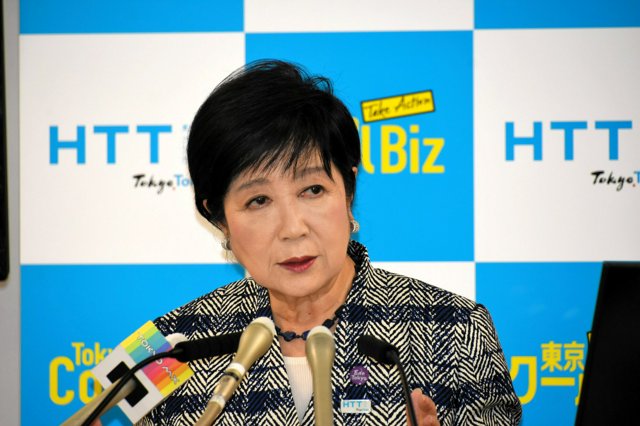
The regulation preventing universities in the 23 wards from increasing their student capacity was criticized as an “extremely irrational system.” The debate over redirecting tax revenue generated by the metropolitan government to rural areas has also become a point of contention, highlighting a clear conflict with the national government. The metropolitan government has been actively asserting its position.
The “23-ward regulation” was introduced in 2018 to curb the concentration of young people in Tokyo. In addition to limiting student capacity, it also restricts the establishment of new faculties and the integration of suburban campuses. Although the regulation was set as a temporary measure until the end of fiscal year 2028, the government established an expert panel on the 4th to begin reviewing whether to extend it.
In line with this, the governor argued, “Does limiting university capacity in the 23 wards actually contribute to revitalizing rural areas? There is absolutely no evidence for that.”
According to the metropolitan government, the proportion of students enrolling in universities outside the greater Tokyo area (the three surrounding prefectures and Tokyo itself) has remained at around 60% since 2000, more than a decade before the regulation was introduced. This is cited as evidence that the regulation has had no effect.
From February to March this year, a survey was conducted among universities with campuses in the 23 wards. Forty-one universities responded that they had been affected by the regulation. Specifically, some reported that they had postponed the establishment of new faculties to address the shortage of IT and digital-related talent.
Regarding talent in growth fields such as AI, the governor pointed out, “Estimates show a shortage of over 1.2 million people by 2040.” She emphasized, “Universities, which are central to this effort, are in a difficult situation due to this regulation. The regulation should be abolished first, and the entire nation should focus on human resource development.”
Metropolitan government official: “The pipeline between the governor and the prime minister…”
“When it comes to dividing the pie…
23 wards of Tokyo
The “23 wards of Tokyo” refer to the special wards that make up the core of Japan’s capital, each functioning as an independent municipality with its own mayor and assembly. This system was established in 1947, replacing the former Tokyo City, to create a more decentralized administration for the sprawling metropolis. Today, these wards, including famous ones like Shinjuku, Shibuya, and Chiyoda, collectively form the heart of one of the world’s largest and most dynamic urban areas.
Tokyo
Tokyo, the capital of Japan, is a bustling metropolis that blends ultramodern innovation with deep historical roots. Originally a small fishing village named Edo, it became the political center of Japan in the early 17th century under the Tokugawa shogunate, and was renamed Tokyo (“Eastern Capital”) when the imperial court moved from Kyoto in 1868. Today, it is a global hub of culture, technology, and tradition, featuring landmarks like the Imperial Palace, ancient temples, and vibrant districts such as Shibuya and Shinjuku.
greater Tokyo area
The Greater Tokyo Area, also known as the Tokyo Metropolitan Area, is the most populous urban region in the world, encompassing Tokyo and its surrounding prefectures. Its development began during the Edo period (1603–1868), when the city of Edo (now Tokyo) became the political and economic center of Japan under the Tokugawa shogunate. After World War II, the area underwent rapid reconstruction and expansion, transforming into a global hub for finance, culture, and technology.
23 wards of Tokyo
23 wards of Tokyo
The 23 wards of Tokyo form the core of Japan’s capital, each functioning as its own city with a unique history and character. Originally established in 1889 as 15 wards, the system was reorganized in 1947 into the current 23 special wards following wartime destruction and administrative changes. These wards, including well-known ones like Shinjuku, Shibuya, and Chiyoda, collectively house over 9 million people and serve as the political, economic, and cultural heart of the Tokyo Metropolis.
Tokyo
Tokyo, the capital of Japan, was originally a small fishing village called Edo before becoming the political center of the Tokugawa shogunate in the early 17th century. Renamed Tokyo (“Eastern Capital”) in 1868 after the Meiji Restoration, it rapidly transformed into a modern metropolis, surviving the Great Kanto Earthquake of 1923 and devastating firebombing in World War II. Today, Tokyo is a global hub blending historic temples like Senso-ji with cutting-edge technology, pop culture, and world-class cuisine.
greater Tokyo area
The Greater Tokyo Area, also known as the Tokyo Metropolitan Area, is the most populous metropolitan region in the world, encompassing Tokyo and the surrounding prefectures of Kanagawa, Saitama, and Chiba. Historically, the city of Edo (now Tokyo) became the political and cultural center of Japan in the early 17th century under the Tokugawa shogunate, and after the Meiji Restoration in 1868, it was renamed Tokyo and rapidly modernized. Today, the area is a global hub for finance, technology, and culture, blending historic landmarks like the Imperial Palace with ultramodern skyscrapers and vibrant neighborhoods.