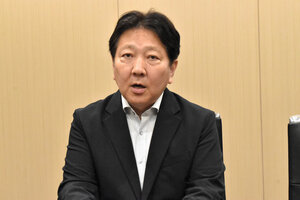
The mayoral election was held on the 7th, and incumbent Naoto Sakai (54) defeated four new candidates—Koichiro Yoshida (59), a former Tokyo Metropolitan Assembly member; Kojiro Ishikura (28), a former parts manufacturing company employee; Takehiro Morikawa (31), a staff member; and Mikio Akiike (68), a disaster prevention specialist—securing his third term. The voter turnout was 35.05% (compared to 33.72% in the previous election), and the number of eligible voters on the day was 275,286.
In the election campaign, the redevelopment project that was shelved due to soaring costs became a point of contention.
Sakai argued for rebuilding, stating, “We should renew it for the future of the city.” He highlighted his achievements over two terms and eight years, including expanded support for single-parent families and free school trip expenses. Although he did not receive endorsements from political parties, members of the House of Representatives from the Centrist Reform Alliance supported his campaign.
Yoshida appealed for utilizing the site, saying, “We must not sell the land of the Sun Plaza,” but fell short.
Ishikura and Morikawa opposed the rebuilding. Ishikura described the building as “the only option” and advocated for early resumption of operations, while Morikawa argued for “using it as a cultural hub to enhance profitability,” but their support did not grow.
Akiike criticized the district’s information provision as insufficient, saying “the issues are hard to understand,” but his message did not gain traction.
The ward assembly by-election (with one seat up for election), in which three candidates ran, was also held and votes were counted.