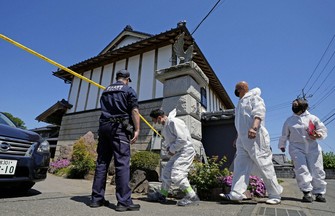
Police on Sunday arrested a man in his 20s for allegedly giving instructions to four teenagers who had already been arrested over robbery and murder in Tochigi Prefecture, north of Tokyo, investigative sources said.
The suspect was arrested at Tokyo’s Haneda airport. The police have been investigating whether there are other perpetrators who orchestrated the robbery.
Since Thursday, the Tochigi police have arrested four 16-year-olds who were believed to have been recruited for the robbery in the prefecture where a 69-year-old woman was stabbed to death and her sons were injured at her home.
Tochigi Prefecture
Tochigi Prefecture, located north of Tokyo on Japan’s main island of Honshu, is renowned for its rich cultural heritage and natural beauty. It is home to the UNESCO World Heritage site of Nikkō, featuring the ornate Tōshō-gū shrine complex dedicated to Tokugawa Ieyasu, and the serene Kegon Falls. Historically, the region thrived during the Edo period as a key post town on the Nikkō Kaidō road, and today it offers a blend of historic temples, hot springs, and scenic landscapes.
Tokyo
Tokyo is the capital of Japan and one of the world’s most populous and dynamic cities. Originally a small fishing village called Edo, it became the political center of Japan in 1603 when the Tokugawa shogunate established its government there, later being renamed Tokyo (“Eastern Capital”) after the Meiji Restoration in 1868. Today, it is a global hub for technology, culture, and finance, seamlessly blending historic temples and imperial palaces with futuristic skyscrapers and vibrant neighborhoods.
Haneda airport
Haneda Airport, officially known as Tokyo International Airport, opened in 1931 as one of Japan’s first major commercial airports. It served as Tokyo’s primary international gateway until the opening of Narita Airport in 1978, after which it shifted to mostly domestic flights. Today, it has been redeveloped into a major hub for both domestic and international travel, known for its efficiency and proximity to central Tokyo.
Tochigi Prefecture
Tochigi Prefecture, located north of Tokyo, is a region rich in history and natural beauty. It is home to the UNESCO World Heritage site of Nikkō, which features the ornate Tōshō-gū Shrine, the final resting place of the shogun Tokugawa Ieyasu. The prefecture also boasts historic castle towns like Utsunomiya and scenic landscapes such as the Oze National Park.
Nikkō
Nikkō is a historic town in Japan renowned for its lavishly decorated Shinto and Buddhist shrines and temples, many of which are UNESCO World Heritage Sites. Its most famous landmark, the Tōshō-gū shrine, was built in the early 17th century as the mausoleum of Tokugawa Ieyasu, the founder of the Tokugawa shogunate. The site is celebrated for its intricate carvings, including the iconic “See No Evil, Speak No Evil, Hear No Evil” monkeys.
<div class
Nikkō
Nikkō is a historic city in Japan’s Tochigi Prefecture, renowned for its lavishly decorated Shinto shrine and Buddhist temple complex, including the famous Tōshō-gū, the final resting place of Tokugawa Ieyasu, the founder of the Tokugawa shogunate. The site’s construction began in the early 17th century, blending intricate carvings and gold leaf against a backdrop of ancient cedar forests. A UNESCO World Heritage Site, Nikkō embodies the harmony of Japanese religious architecture and natural beauty.
Tōshō-gū
Tōshō-gū is a Shinto shrine in Nikkō, Japan, renowned for its lavishly decorated architecture and intricate carvings, including the famous “Seeing, Hearing, Speaking” monkeys. It was built in the early 17th century as the final resting place of Tokugawa Ieyasu, the founder of the Tokugawa shogunate, making it a significant historical and cultural landmark. The shrine complex is a UNESCO World Heritage Site, reflecting the power and artistry of the Edo period.
Kegon Falls
Kegon Falls is a famous waterfall in Nikko, Japan, with a drop of 97 meters, known for its stunning natural beauty. The falls were formed by volcanic activity and the erosion of the Daiya River, and they have been a revered site since ancient times, often featured in Japanese art and literature. A tragic historical note is that it was a notorious location for suicides in the early 20th century, which led to the installation of barriers and increased safety measures.
Nikkō Kaidō
Nikkō Kaidō is one of the five major routes (Edo Five Routes) established during the Edo period in Japan, connecting Edo (modern-day Tokyo) to the city of Nikkō. It was primarily built for the pilgrimage of shoguns and feudal lords to the Tōshō-gū shrine, the mausoleum of Tokugawa Ieyasu. Today, sections of the historic road remain, featuring restored inns and stone markers that offer a glimpse into Japan’s feudal travel culture.
Edo
Edo, the former name of Tokyo, was the political and cultural heart of Japan during the Tokugawa shogunate from 1603 to 1868. It grew from a small fishing village into one of the world’s largest cities, known for its strict social hierarchy, vibrant merchant culture, and iconic landmarks like Edo Castle. The Meiji Restoration in 1868 marked the end of the shogunate, leading to the city’s renaming as Tokyo and its transformation into Japan’s modern capital.
Meiji Restoration
The Meiji Restoration was a transformative period in Japanese history from 1868 to 1912, during which the feudal Tokugawa shogunate was overthrown and imperial rule was restored under Emperor Meiji. This era saw rapid modernization, industrialization, and the adoption of Western political, military, and economic systems, propelling Japan from an isolated feudal society into a major world power. The restoration also abolished the samurai class and implemented sweeping social and legal reforms that reshaped Japanese culture and governance.
Utsunomiya
Utsunomiya is the capital city of Tochigi Prefecture in Japan, historically known as a key post town on the Nikko Kaido road during the Edo period, serving travelers heading to the Nikko Toshogu Shrine. Today, it is famous nationwide for its gyoza (dumplings), with over 200 gyoza restaurants, and also features cultural sites like the Utsunomiya Castle ruins and the vibrant Futaarayama Shrine.
Oze National Park
Oze National Park, located in the mountainous region of central Japan, is renowned for its vast highland marshlands, particularly the Oze-ga-hara wetland, and its stunning displays of alpine flowers like the skunk cabbage in spring. Established as a national park in 2007, the area has been protected since the early 20th century due to conservation efforts against development, with its iconic boardwalk trails allowing visitors to explore the fragile ecosystem. The park also encompasses the volcanic Mount Hiuchigatake and pristine lakes, offering a serene natural retreat steeped in both ecological significance and a history of preservation.