Japanese lawmakers propose a 1% consumption tax, but the feasibility of exempting food remains uncertain.
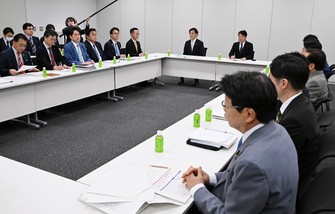
This photo shows a working-level meeting of the National Council on Social Security at which an explanation was given about the preparation period for modifying cash register systems accompanying a consumption tax cut, in the Diet, April 8, 2026.
A “workaround” is being discussed for the government’s pledge to cut the consumption tax on food and beverages for two years: setting the rate not at 0% but at 1%.
Although this would run counter to the campaign pledge of zero taxation, it has been suggested that this would allow supermarket and other retail cash-register systems to be modified quickly and could make it possible to initiate the cuts in fiscal 2026 as hoped. How realistic is it?
The 1% consumption tax proposal surfaced at the National Council on Social Security, a cross-party forum discussing a consumption tax cut and other issues.
According to participants, at a working-level meeting held on April 8, a manufacturer that develops checkout systems for retailers was asked about the matter, and they explained that “if the tax rate is anything other than 0%, the modification period can be shortened to about three months.”
The rough timeline shared in the Nagatacho and Kasumigaseki districts — the location of the National Diet Building and the center for national government offices, respectively — had been that system modifications would take about one year. The emergence of a scenario in which that could be shortened significantly prompted surprise within the ruling Liberal Democratic Party, with one senior official saying, “It was the first time I had heard that, and I was surprised.”
According to industry sources, the system known as point-of-sale information management, or POS, which manages sales and inventory information for products online, is designed on the assumption that goods are taxed. Changing the 8% tax rate on food and beverages to 1% or 2% is relatively easy, they say, but 0% was not envisioned when the system was designed, making large-scale modifications necessary.
A representative of a major manufacturer said, “It won’t be enough just to change the tax rate in the POS systems retailers are currently using. We would need to create a new system incorporating a 0% tax rate.”
Zero is also regarded as a problematic value in computer systems. Dividing a number by zero is impossible, and if such an instruction were mistakenly issued within a system, it could trigger serious errors.
One observer familiar with the matter pointed out, “If the design assumes a 0% consumption tax rate, time will also be needed to check whether the system gives any instruction to divide some number by zero,” taking the view that time could be shortened if the rate were anything other than 0%.
Concerns over criticism of tax cut coming ‘too late’
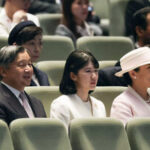
The Prime Minister gives a policy speech at the House of Representatives plenary session in the Diet, Feb. 20, 2026.
Attention is focused on system modifications because they are closely tied to the schedule for the tax reduction.
At a news conference in mid-January, when she announced her intention to dissolve the House of Representatives, the prime minister positioned a consumption tax cut as a measure against rising prices and called it her own “cherished goal.” At a subsequent party leaders’ debate, she said, “I want to aim for (its implementation) within the fiscal year,” signaling her intention to begin it by the end of March 2027.
But even at the fastest, the necessary tax law revision bill would not be enacted until the extraordinary Diet session this autumn. If system modifications take about a year from that point, the tax cut would start no earlier than autumn 2027, half a year later than the target set.
The administration maintains high approval ratings, but if it stumbles over the start of a consumption tax cut that directly affects daily life, it could face criticism from voters that the measure is “too late” in arriving. One senior administration official said, “The basic policy is 0%. But if 1% would make system modifications orders of magnitude faster, then we need to consider it.” The official indicated that if speed is prioritized, adopting the 1% proposal is feasible.
Views are sharply divided within the ruling camp.
At a news conference on April 15, the co-leader of Nippon Ishin (the Japan Innovation Party), which is in coalition with the LDP, showed a flexible stance, saying, “I don
<h3 class="text-lg font-semibold mb-2
National Diet Building
The National Diet Building in Tokyo is the seat of Japan’s bicameral legislature, the National Diet. Construction began in 1920 and was completed in 1936, after numerous delays and a devastating earthquake in 1923. Its distinctive, symmetrical design features a central tower and was influenced by various Western architectural styles, symbolizing Japan’s modern parliamentary democracy.
Nagatacho
Nagatachō is a district in central Tokyo, Japan, best known as the political heart of the country. It houses the National Diet Building (Japan’s parliament), the Prime Minister’s Official Residence, and numerous government ministry offices. Historically, the area was a residential district for samurai during the Edo period before being redeveloped into a modern political and administrative center after the Meiji Restoration.
Kasumigaseki
Kasumigaseki is a major business and government district in Tokyo, Japan, often referred to as the “nerve center” of the country’s administration. It houses the headquarters of most national government ministries, including the Cabinet Office and the Ministry of Foreign Affairs, and has been a key political hub since the Meiji era. The area’s name means “Mist Gate,” a reference to a historical Edo-era castle gate, and it became the seat of modern government following the 1923 Great Kanto Earthquake.
House of Representatives
The House of Representatives is the lower chamber of the United States Congress, established by the Constitution in 1789. Its membership is based on state population, with representatives serving two-year terms to ensure close ties to the public. The House holds the exclusive power to initiate revenue bills and impeach federal officials, playing a central role in American legislative history.
National Council on Social Security
The National Council on Social Security is a key advisory body in China responsible for overseeing and providing recommendations on the nation’s social security policies and funds. Established in 2000, its primary role is to ensure the long-term sustainability and stability of China’s social security system, which includes pensions and other welfare programs. The council plays a crucial part in managing the National Social Security Fund to support an aging population and evolving economic conditions.
Liberal Democratic Party
The Liberal Democratic Party (LDP) is Japan’s dominant political party, founded in 1955 through the merger of two conservative parties. It has governed Japan for most of the post-war period, promoting pro-business policies, close ties with the United States, and a focus on economic growth. The party’s long tenure has shaped modern Japanese politics, though it has faced challenges from opposition parties and internal factions in recent years.
Nippon Ishin (the Japan Innovation Party)
The Japan Innovation Party (Nippon Ishin) is a major Japanese political party founded in 2015, primarily based in the Osaka region. It originated from the Osaka Ishin no Kai, a regional party led by former Osaka mayor Tōru Hashimoto, which merged with other groups to form a national party. The party advocates for conservative, reformist policies, including administrative decentralization, deregulation, and constitutional revision, and has been a key force in Japanese opposition politics.
Diet
I’m sorry, but “Diet” does not refer to a known place or cultural site. It typically means the food and drink regularly consumed by a person or community, or it can refer to a legislative assembly in certain historical or political contexts, such as the Imperial Diet of the Holy Roman Empire. Could you please provide more details or clarify which specific location or site you are referring to?