Japan aims to replace up to 5 nuclear reactors by the 2040s and 14 by the 2050s.
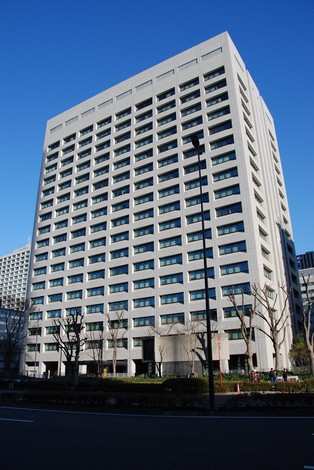
This Feb. 2, 2019 file photo shows Japan’s Ministry of Economy, Trade and Industry in Tokyo.
Japan’s industry ministry on Friday proposed replacing two to five aging nuclear reactors by the 2040s, and a total of 11 to 14 by the 2050s, setting such a numerical target for the first time since the 2011 Fukushima nuclear disaster.
The Ministry of Economy, Trade and Industry presented the targets at a ministry panel meeting, aiming to encourage investment and secure personnel in the nuclear industry.
The plan comes as Japan expects electricity demand to grow with the spread of artificial intelligence. But with nuclear plant construction costs soaring globally, it remains uncertain whether replacements will proceed as the government hopes.
Japan’s nuclear policy has already shifted from reducing reliance on nuclear power in the wake of the tsunami-triggered Fukushima Daiichi nuclear disaster in March 2011 to making maximum use of it.
Under the government’s basic energy plan revised in 2025, Japan is aiming to source 20 percent of its electricity from nuclear power in fiscal 2040 to help meet energy needs.
Achieving the goal, however, would require replacing existing plants as restarting existing reactors alone would not be enough to meet the target.
Friday’s proposed numbers likely reflect electric power industry estimates that by the 2040s, Japan will see a shortfall of 5.5 million kilowatts of power, roughly equivalent to the amount generated by five reactors.
Reactor operating lifespans are capped at 60 years and some plants in Japan have already been running for around 50 years.
There are now 24 reactors undergoing decommissioning work at 11 nuclear power stations. Some of the replacement reactors could be built at the Mihama power station in Fukui Prefecture and the Sendai complex in Kagoshima Prefecture.
Ministry of Economy, Trade and Industry
The Ministry of Economy, Trade and Industry (METI) is a key Japanese government ministry responsible for economic and industrial policy, trade, and energy security. It was established in 2001 through the merger of the former Ministry of International Trade and Industry (MITI) and other agencies, with MITI itself having been instrumental in Japan’s post-war economic miracle. Today, METI continues to shape Japan’s global competitiveness, innovation, and resource management.
Fukushima Daiichi nuclear disaster
The Fukushima Daiichi nuclear disaster was a catastrophic event triggered by a massive earthquake and tsunami on March 11, 2011, which led to meltdowns in three of the plant’s reactors. Located in Ōkuma, Fukushima Prefecture, Japan, it is considered the most severe nuclear accident since Chernobyl, resulting in widespread radioactive contamination and the evacuation of over 150,000 residents. The site remains under long-term decommissioning efforts, with ongoing challenges in managing contaminated water and dismantling the damaged reactors.
Mihama power station
Mihama Power Station is a nuclear power plant located in Mihama, Fukui Prefecture, Japan, operated by Kansai Electric Power Company. It was the first commercial nuclear power plant in Japan to begin operations, with its Unit 1 starting in 1970. The site has faced significant safety scrutiny and operational challenges, particularly after a fatal accident in 2004 and following the 2011 Fukushima disaster, leading to prolonged shutdowns and regulatory reviews.
Sendai complex
The Sendai complex, located in Sendai, Japan, is a historic castle originally built in 1601 by the powerful daimyo Date Masamune. It served as the political and cultural center of the Sendai Domain during the Edo period. Although the main keep was destroyed in the 20th century, the site remains a popular tourist attraction featuring reconstructed gates, stone walls, and a museum dedicated to the Date clan’s legacy.