Flight 645 (carrying 226 passengers and crew) took off from Runway D on May 29 when a tire issue was detected, leading to a diversion. Afterward, a metal plate was found protruding from the runway surface. An expert committee will be established on the 10th of this month to investigate the cause.
After receiving reports of a tire blowout on the JAL flight, an inspection of Runway D at Haneda, used for takeoff, revealed a section near the runway centerline had peeled up, measuring 50 centimeters wide and 15 centimeters deep. This area corresponds to the joint between the reclaimed land and the pier.
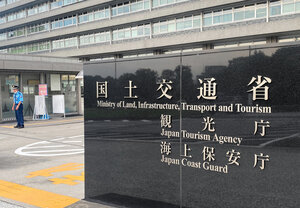
The joint was covered with rubber over a metal plate. The rubber had peeled away, and the metal plate had deformed, protruding several centimeters above the surface. An inspection by staff from the Ministry of Land’s Tokyo Airport Office earlier that same day had found no issues.
On May 25, another incident occurred on Runway D when a flight to Fukuoka experienced a tire blowout after takeoff and returned to Haneda. According to the Ministry, an emergency inspection of Runway D at that time found no abnormalities such as peeling.
According to the Ministry, incidents of metal plates protruding from Runway D are rare. Experts familiar with airport structural design will be included in discussions on the causal relationship with the blowouts and safety measures.
Haneda
Haneda, located in Tokyo, Japan, is best known for Haneda Airport (Tokyo International Airport), one of the country’s busiest aviation hubs. Originally opened in 1931 as a small civilian airfield, it served as the primary gateway to Tokyo before Narita Airport was built. Today, Haneda is celebrated for its efficiency, proximity to central Tokyo, and its role in both domestic and international travel, reflecting Japan’s post-war economic growth and modern transportation innovation.
Runway D
Runway D refers to a section of the former Tempelhof Airport in Berlin, Germany, which was once a major hub during the Cold War-era Berlin Airlift (1948–1949). Today, it has been transformed into a public park and recreational space, where visitors can walk, bike, and even garden on the historic tarmac. The site stands as a powerful symbol of resilience and freedom, preserving its aviation history while serving the local community.
Fukuoka
Fukuoka is a vibrant city on Japan’s Kyushu island, known for its rich history as a major port and gateway for cultural exchange with Asia. It was home to ancient castle towns like Fukuoka Castle and the nearby Dazaifu administrative center, which played a key role in trade and diplomacy from the 7th century onward. Today, it blends historical sites such as the Kushida Shrine with modern attractions like the bustling Tenjin district and its famous street food stalls (yatai).
Tokyo Airport Office
The “Tokyo Airport Office” typically refers to the administrative hub located at Tokyo International Airport (Haneda) or Narita International Airport, which oversees airport operations and services for travelers. Haneda, originally opened in 1931, was Tokyo’s primary domestic and international gateway before the construction of Narita in 1978, and it remains one of the world’s busiest airports. The office plays a key role in managing logistics, customs, and passenger support, reflecting Tokyo’s evolution as a global aviation center.