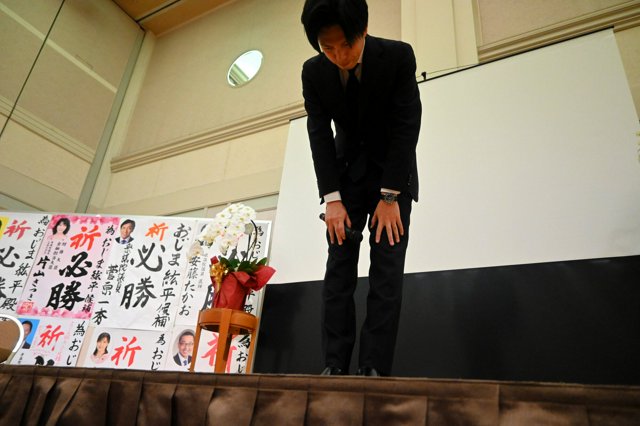
“It’s a bitter pill to swallow, everyone,” says a Liberal Democratic Party lawmaker as their recommended candidates suffer consecutive defeats in Tokyo elections.
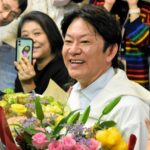
The election for the mayor of Nagareyama City was held on the 12th. Former Tokyo Metropolitan Assembly member Kohei Ojima (37), who had endorsements from the Liberal Democratic Party, the Democratic Party for the People, Tomin First no Kai, and the Tokyo Restoration Party, seemed to have a solid organizational foundation. However, the result was a major defeat, losing by 33,029 votes to Kenichi Yoshida (59), who ran as a “complete independent.” What happened?
In the final stages of the campaign, a certain opinion poll result was reportedly distributed within part of the Ojima camp. It indicated that Mr. Ojima was at a disadvantage, but according to an LDP assembly member, the reaction was lukewarm. “I told everyone to keep fighting. But they said, ‘That can’t be right.’ They were overconfident.”
There are also voices saying the camp was not united. Another LDP assembly member recalled, “There were voices saying the party should have fielded its own candidate. Some people couldn’t genuinely support Mr. Ojima.”
Komeito’s “Independent Vote”: “For candidates endorsed by LDP, Restoration Party…”
Nagareyama City
Nagareyama City is a municipality in Chiba Prefecture, Japan, historically developed as a post station town along the Edo-period water transport route of the Edo River. It is known today as a residential suburb of Tokyo while preserving historical sites like the Nagareyama Otaka Mound, a Yayoi-period archaeological site. The city’s name, meaning “flowing mountain,” is said to originate from a legend about a mountain that appeared floating down the river.
Tokyo Metropolitan Assembly
The Tokyo Metropolitan Assembly is the legislative body of the Tokyo Metropolitan Government, established in 1943 when Tokyo City was reorganized into Tokyo Metropolis. It is responsible for enacting local ordinances, approving the budget, and overseeing the administration of Japan’s capital, functioning similarly to a prefectural or city council.
Liberal Democratic Party
The Liberal Democratic Party (LDP) is Japan’s dominant and most influential political party, founded in 1955 through the merger of two conservative parties. It has held power almost continuously since its inception, shaping Japan’s post-war economic and political landscape, with its history marked by periods of rapid economic growth, close ties with the United States, and internal factional politics.
Democratic Party for the People
The Democratic Party for the People (国民民主党, Kokumin Minshutō) is a centrist political party in Japan, founded in 2018 through a merger of members from the Democratic Party and the Party of Hope. It positions itself as a liberal-conservative force, focusing on constitutional revision and economic policies, and has played a role as a minor opposition party in the National Diet.
Tomin First no Kai
“Tomin First no Kai” (都民ファーストの会, Tomin First no Tokyo) is a regional political party founded in 2017 by then-Governor of Tokyo, Yuriko Koike. Its primary purpose was to support her administration’s policies and reform agenda in the Tokyo Metropolitan Assembly, challenging the traditional dominance of national parties in local politics. The party has focused on issues like administrative efficiency, disaster preparedness, and hosting the 2020 Olympics, and it quickly became a major force in Tokyo’s local government.
Tokyo Restoration Party
The Tokyo Restoration Party is a regional political party in Japan, founded in 2012 by former Tokyo Governor Naoki Inose. It was established to promote policies focused on decentralization and the revitalization of Tokyo, often advocating for greater autonomy for the capital. While not a physical cultural site, it is a significant part of Tokyo’s modern political history, closely associated with former Governor Yuriko Koike, who led it before forming the national “Kibō no Tō” (Party of Hope).
Komeito
“Komeito” is not a place or cultural site, but a major political party in Japan. It was founded in 1964 as the political wing of the Buddhist lay organization Soka Gakkai. The party is known for its platform of “humanitarian socialism” and has been a key coalition partner of the Liberal Democratic Party for most of the period since 1999.