“Demo Calendar” Run by a Housewife – The Sentiments Behind Two Buttons
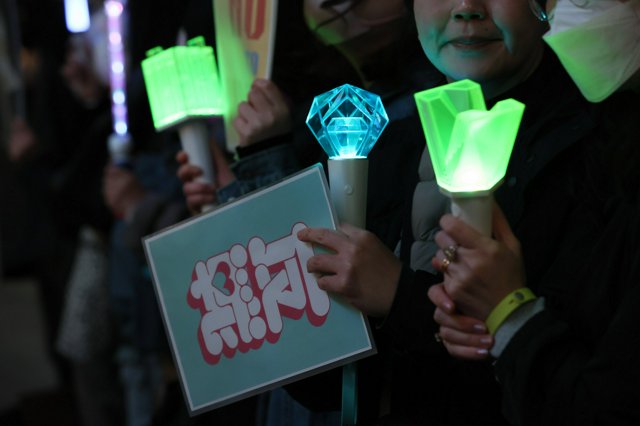
As protests against war and constitutional revision spread across the country, the number of users of the website “Demo Calendar” is increasing.
It compiles information from various regions, including dates, locations, and organizers.
The person behind it was originally indifferent to politics, and their attitude towards elections was “I’ll go if I can, that sort of feeling.” However, as the war in Ukraine continued and prices rose, they gradually began to feel that something was wrong.
The trigger for taking action was the ruling party’s overwhelming victory in the February by-elections and the Prime Minister showing eagerness for constitutional revision.
“What if Article 9 is eventually revised and Japan becomes a country that can wage war?” Hearing that an espionage prevention law was being considered, they became afraid that ordinary daily life might crumble.
“Nothing has actually changed yet,” they told themselves, and began gathering political information online.
“What can I do?” Although they were only a passive observer on social media, they started cautiously by liking posts they agreed with and sharing them.
It went viral, my palms were sweating
After seeing a certain post online…
Ukraine
Ukraine is a sovereign nation in Eastern Europe with a rich history dating back to the medieval state of Kyivan Rus, a cultural and political precursor to modern Eastern Slavic nations. It has endured periods under various empires and was a founding republic of the Soviet Union before regaining its independence in 1991. The country is renowned for its diverse cultural heritage, Orthodox Christian cathedrals like Kyiv’s Saint Sophia, and its central role in contemporary European affairs.
Japan
Japan is an island nation in East Asia with a rich cultural history spanning over a millennium, unified under its first permanent capital in Nara in the 8th century and shaped by periods of imperial rule, samurai shogunates, and rapid modernization. It is renowned for its unique blend of ancient traditions—such as Shinto shrines, Buddhist temples, and tea ceremonies—and cutting-edge technology, seen in cities like Tokyo and Osaka. Key historical sites include Kyoto’s historic monuments, Hiroshima’s Peace Memorial, and the iconic Mount Fuji, reflecting Japan’s deep historical layers and global cultural influence.
Article 9
“Article 9” refers to a clause in the post-World War II Constitution of Japan, enacted in 1947, which formally renounces war as a sovereign right and prohibits the maintenance of armed forces with war potential. It emerged from the Allied occupation and reflects a pacifist principle intended to prevent Japan from ever again engaging in military aggression. The article has been the subject of significant political debate and reinterpretation over the decades, particularly regarding the existence and role of the Japan Self-Defense Forces.
X (formerly Twitter)
X, originally launched as Twitter in 2006, is a major social media platform known for enabling real-time public communication through short posts. It was rebranded as X in 2023 following its acquisition by Elon Musk, marking a strategic shift toward becoming a broader “everything app.” The platform has played a significant role in global events, from social movements to political discourse, often serving as a primary source for instant news and public conversation.
Demo Calendar
“Demo Calendar” does not refer to a known historical place or cultural site.</
Kyivan Rus
Kyivan Rus was a medieval East Slavic state that emerged in the late 9th century, centered around Kyiv and unifying numerous tribes under the rule of the Varangian (Viking) Rurik dynasty. It became a major political and cultural power in Europe, adopting Orthodox Christianity in 988 under Prince Volodymyr the Great. The state fragmented in the 12th century and ultimately fell to the Mongol invasion in the mid-13th century, leaving a lasting legacy as a foundational predecessor to modern Ukraine, Russia, and Belarus.
Saint Sophia
Saint Sophia, also known as Hagia Sophia, is a monumental architectural marvel in Istanbul, Turkey, originally constructed as a Greek Orthodox Christian cathedral in 537 AD under the Byzantine Emperor Justinian I. It served as the seat of the Eastern Orthodox Church for nearly a millennium before being converted into an imperial mosque following the Ottoman conquest of Constantinople in 1453. In 1935, it was secularized and opened as a museum, and in 2020 it was reconverted into a functioning mosque, representing a profound symbol of both Byzantine and Ottoman history.
Nara
Nara, located in Japan’s Kansai region, served as the country’s first permanent capital from 710 to 784 AD, known as the Heijō-kyō period. It is renowned for its historic temples, including Tōdai-ji, which houses a giant bronze Buddha statue, and the free-roaming sacred deer of Nara Park, considered messengers of the gods in Shinto tradition.
Shinto shrines
Shinto shrines are sacred sites in Japan dedicated to the worship of kami, the spirits or deities of the natural world. Their history dates back to ancient Japan, with the earliest shrines being simple structures in natural settings, evolving over centuries into the distinctive architectural style seen today. They serve as centers for rituals, festivals, and community life, embodying the indigenous spiritual traditions of Japan.
Buddhist temples
Buddhist temples are sacred structures that serve as centers for worship, meditation, and community for followers of Buddhism. Their architectural styles and histories vary greatly across regions, evolving from simple shelters in ancient India (like the vihara monasteries) to the elaborate pagodas of East Asia and stupas of Southeast Asia, often reflecting local artistic traditions. Many historic temples, such as those at Borobudur in Indonesia or the Shwedagon Pagoda in Myanmar, have stood for centuries as repositories of art, scripture, and spiritual practice.
Kyoto’s historic monuments
Kyoto’s historic monuments encompass 17 UNESCO World Heritage sites, including temples, shrines, and a castle, that collectively represent the city’s over 1,000-year history as Japan’s imperial capital from 794 to 1868. These structures, such as Kiyomizu-dera Temple and Nijo Castle, are exceptional examples of Japanese wooden architecture, garden design, and the development of Buddhist and Shinto religious traditions. They have been meticulously preserved, offering a direct link to Japan’s classical cultural and artistic heritage.
Hiroshima’s Peace Memorial
Hiroshima’s Peace Memorial, commonly known as the Atomic Bomb Dome, is the skeletal ruins of a former exhibition hall that was one of the few structures left standing near the hypocenter of the atomic bomb dropped on August 6, 1945. It was preserved as a stark reminder of the devastation of nuclear warfare and was designated a UNESCO World Heritage Site in 1996, symbolizing a global plea for lasting peace.
Mount Fuji
Mount Fuji is Japan’s highest and most iconic volcano, reaching 3,776 meters and located about 100 kilometers southwest of Tokyo. It has been a sacred site in Shinto and Buddhist traditions for centuries, historically attracting pilgrims and inspiring countless artists, most famously in ukiyo-e woodblock prints. Designated a UNESCO World Heritage site in 2013, it remains an active volcano with a beautifully symmetrical cone that is a major symbol of Japan.