Rohto Pharmaceutical Co. has abolished document screening for new graduates expected to join the company in spring 2027 and says the interactive selection process it introduced in its place is producing results. Facing increasingly uniform application materials as generative artificial intelligence (AI) use spreads, the company reexamined what had been taken for granted in hiring.
As a step toward mutual understanding, it made dialogue with employees the first stage of screening. The company says that improved how well it matched with applicants and also led to a significant reduction in the time required for hiring.
Rohto Pharmaceutical had been using document screening in recent years, but more applications appeared to have been created with generative AI, making it difficult to grasp students’ individuality.
At the same time, AI has made it easier to prepare application materials, and students apply to many companies to broaden their chances of being hired. When applications flood in, companies tend to focus on how to narrow them down efficiently, and some have begun introducing AI-based screening.
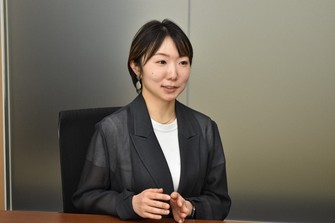
Yui Fujiwara, who handles human resources and public relations at the company, said, “I felt uncomfortable with an approach in which documents written by AI are screened by AI. Through speaking, we can grasp a person’s individuality even in a short time. We want to change the way hiring is done.”
The company has traditionally placed importance on individuality and compatibility in its recruiting.
Believing that students may become nervous in suits they are not used to wearing and may not be able to show their true abilities, Rohto encourages applicants to dress as they normally would.
The firm also has a culture that emphasizes face-to-face interaction, what it calls “live communication,” and even after online applications became commonplace, it at times deliberately accepted application documents in person.
The dialogue-based first-round screening was introduced as part of that approach. Playing on the term “entry sheet” — the first application document prospective hires submit to a firm — the company named it “Entry Meet hiring.”
In January and February 2026, it set up venues in eight locations nationwide, including Osaka and Tokyo, where the company has bases, and human resources staff conducted interviews for about 15 minutes per applicant.
Students submit documents listing information including their profiles and make reservations, but applications are accepted on a first-come, first-served basis. That also means the process is not affected by such factors as the often-cited “academic background filter,” or applicants being screened based on their university.
In addition to the interviews, employees other than human resources staff waited in the lounge before interviews to encourage interaction.
Helping out were 50 employees, from younger staff to veterans, who volunteered for reasons such as wanting to ease students’ tension and wanting to get to know them.
Fujiwara said, “More than having us explain the company culture in words, I think they were able to sense it through conversations with employees and through the way workers interacted with each other.”
Students also showed understanding, saying that compared with screening based on documents or AI, there was “a sense of acceptance” because they had gone to the interview venue themselves and taken on the challenge.
Fujiwara gave a positive assessment of the students who took part in Entry Meet, saying, “Their level of interest and their degree of matching with our company were high.”
She believes that because students had to submit documents when making reservations and take the trouble to come directly to the venue, fewer applied on pure speculation.
Under the previous document screening process, there had also been concern that decisions could not be made with confidence, resulting in too many applicants advancing to the second round, but the company says that situation has improved as well.
After completing the selection process in April, the time required to reach what the company calls “expected acceptance” (an informal offer, or “nainaitei”) fell to 33.1 hours per person from 36.8 hours last year.
The company expects to hire 30 to 40 people, which means total time saved comes to about 100 hours.
It analyzes the reason this way: “Because both sides were able to determine compatibility at an early stage, it did not take much time to narrow down the candidate