“Wonderful, isn’t it?” Wrapped in a sweet and refreshing fragrance, the Maruseppu Wisteria Festival bustles with tourists from early morning.
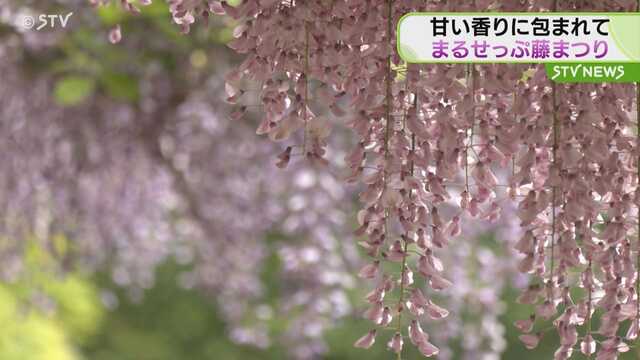
At the Maruseppu Wisteria Garden in Engaru Town, approximately 200 wisteria plants are in full bloom.
Inside the garden, the “Wisteria Festival” is being held, bustling with visitors since morning.
Purple and white wisteria flowers are blooming vividly.
This is the Maruseppu Wisteria Garden in Engaru Town.
Stretching about one kilometer, 200 wisteria plants are planted, filling the garden with a sweet fragrance.
(From Ozora Town) “It’s wonderful. This is my first time here.”
(From Asahikawa City) “I took some beautiful photos, so I’m glad.”
(From Asahikawa City) “The scent is lovely.” “I could smell it as soon as I left the parking lot.”
In conjunction with the wisteria blooming season, the “Maruseppu Wisteria Festival” is being held until around 2:30 PM today.
The Maruseppu Wisteria Garden, one of Hokkaido’s finest wisteria gardens, is scheduled to remain open until mid-month.
Maruseppu Wisteria Garden
Maruseppu Wisteria Garden, located in Hokkaido, Japan, is a stunning seasonal attraction known for its breathtaking tunnels and cascades of purple, white, and pink wisteria blooms. The garden was established in the early 20th century, with many of its wisteria trees now over 100 years old, originally planted by local farmers as windbreaks. Today, it draws visitors each spring to walk beneath the fragrant, hanging flowers, offering a peaceful and picturesque glimpse into Japan’s horticultural heritage.
Engaru Town
Engaru Town, located in the Okhotsk region of Hokkaido, Japan, developed as a key agricultural and forestry hub during the early 20th century. The area was originally inhabited by the Ainu people before Japanese settlers arrived, and it became officially incorporated as a town in 1948. Today, Engaru is known for its scenic landscapes, including the Engaru Park and its proximity to the Sea of Okhotsk, as well as its production of dairy products and potatoes.
Wisteria Festival
The Wisteria Festival, held annually at various locations such as Japan’s Ashikaga Flower Park or the Kawachi Fuji Gardens, celebrates the blooming of wisteria vines that create stunning cascades of purple, pink, and white flowers. Dating back centuries, wisteria has been cultivated in Japan since the Heian period, symbolizing love and longevity in Japanese culture. The festival draws visitors to walk beneath the iconic wisteria tunnels and enjoy seasonal illuminations, honoring this cherished botanical tradition.
Maruseppu Wisteria Festival
The Maruseppu Wisteria Festival is held in the town of Maruseppu, Hokkaido, Japan, celebrating the blooming of its famous wisteria trees, some of which are over 100 years old. The festival takes place at the Maruseppu Wisteria Park, which was developed around a historic wisteria trellis originally planted in the early 20th century. Visitors can enjoy the stunning purple flowers and the serene atmosphere, making it a cherished seasonal event that highlights the region’s natural beauty and cultural heritage.
Ozora Town
Ozora Town is a small municipality located in Hokkaido, Japan, known for its rural landscapes and agricultural heritage. It was established in 2006 through the merger of two former towns, and its name means “big sky” in Japanese, reflecting the area’s expansive views. The town is also notable for its connection to the artist and poet Kenji Miyazawa, whose works often celebrated the natural beauty of the region.
Asahikawa City
Asahikawa City is the second-largest city in Hokkaido, Japan, known for its role as a key transportation hub and its cold winter climate. Historically, it developed as a castle town during the late 19th century and later thrived as a center for the lumber and paper industries. Today, it is famous for attractions like the Asahiyama Zoo and the annual Asahikawa Winter Festival.
Hokkaido
Hokkaido, Japan’s northernmost main island, was historically known as Ezo and inhabited by the indigenous Ainu people before large-scale Japanese settlement began in the Meiji era (late 19th century). The island was officially renamed Hokkaido in 1869 and developed rapidly through agriculture, mining, and infrastructure projects. Today, it is famous for its stunning natural landscapes, ski resorts, and unique culture that blends Ainu traditions with modern Japanese influences.