
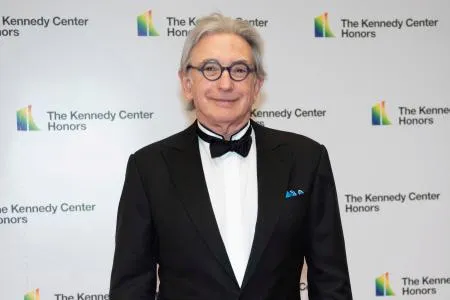
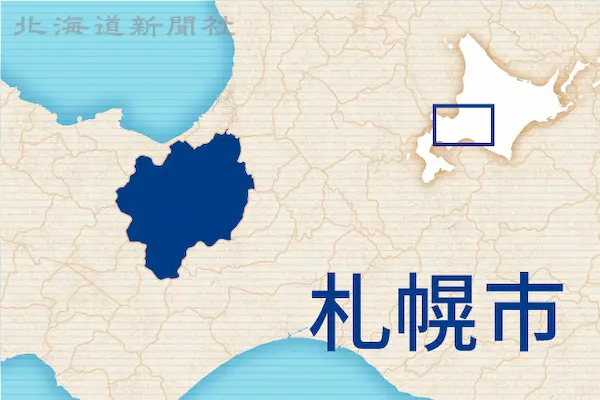
World-renowned American conductor Michael Tilson Thomas, who served as artistic director during the founding years of the Pacific Music Festival (PMF), an international educational music festival held every summer in Sapporo, died on the 22nd at his home in San Francisco, California, from glioblastoma, a malignant brain tumor. He was 81 years old.
Pacific Music Festival
The Pacific Music Festival (PMF) is a prestigious international classical music festival and academy founded in 1990 by the legendary conductor Leonard Bernstein and the city of Sapporo, Japan. Its original mission was to foster cultural exchange and train the next generation of musicians from around the world through orchestral performances and masterclasses. Today, the PMF continues this legacy, gathering young professionals and renowned artists in Sapporo each summer for concerts and educational programs.
Sapporo
Sapporo is the largest city on Japan’s northern island of Hokkaido, known for its modern layout and the annual Sapporo Snow Festival. Originally developed in the late 19th century as a planned city influenced by American grid designs, it quickly grew into a major commercial and cultural hub. Its history is marked by the 1972 Winter Olympics, which brought international attention and further development to the region.
Washington D.C.
Washington, D.C., the capital of the United States, was established in 1790 as a compromise between northern and southern states, with its location chosen by President George Washington. Designed by French architect Pierre L’Enfant, the city serves as the seat of the federal government and is home to iconic landmarks such as the White House, the U.S. Capitol, and the Lincoln Memorial. Its history is deeply tied to American politics, including events like the Burning of Washington during the War of 1812 and the March on Washington for civil rights in 1963.
San Francisco
San Francisco is a major cultural and financial hub in Northern California, known for its iconic Golden Gate Bridge and historic cable cars. Originally inhabited by the Ohlone people, the area was claimed by Spain in 1776 and later became a boomtown during the 1849 Gold Rush. The city is also famous for its diverse neighborhoods, vibrant arts scene, and the infamous Alcatraz Island prison.
California
California is a U.S. state on the West Coast, known for its diverse geography, from beaches to mountains and deserts. Its history includes Indigenous peoples, Spanish colonization, Mexican rule, and rapid growth after the 1849 Gold Rush, which fueled its development into a major economic and cultural hub. Today, it is famous for its entertainment industry in Hollywood,
Pacific Music Festival
The Pacific Music Festival (PMF) is an international classical music festival and academy founded in 1990 by the legendary conductor Leonard Bernstein and the city of Sapporo, Japan. Established with the mission of fostering global peace and cultural exchange through music, it brings together top young musicians from around the world to study and perform under renowned mentors. The festival continues to honor Bernstein’s vision, hosting annual summer concerts and educational programs in Sapporo.
Sapporo
Sapporo is the largest city on the northern Japanese island of Hokkaido, known for its modern urban planning and the annual Sapporo Snow Festival. Originally developed in the late 19th century following the Meiji Restoration, it was designed with a grid layout inspired by Western cities and quickly grew as a center for agriculture, industry, and government in the region. The city also gained international fame for hosting the 1972 Winter Olympics, the first Winter Games ever held in Asia.
Washington D.C.
Washington, D.C., the capital of the United States, was established in 1790 as a federal district separate from any state, following a compromise between Alexander Hamilton and Thomas Jefferson. Designed by Pierre L’Enfant, the city is home to iconic landmarks like the White House, the U.S. Capitol, and the Washington Monument. It has served as the center of American government and politics for over two centuries, witnessing key historical events such as the Civil War, the civil rights movement, and presidential inaugurations.
San Francisco
San Francisco is a major cultural and financial hub in Northern California, known for its iconic Golden Gate Bridge, vibrant diversity, and historic cable cars. Originally a small Spanish mission settlement, it exploded in population during the 1849 Gold Rush, transforming into a bustling port city. The city later became a center for the 1960s counterculture movement and is renowned today for its tech industry and progressive values.
California
California is a diverse U.S. state on the West Coast, known for its rich history spanning Native American cultures, Spanish colonization, and the 1849 Gold Rush that spurred massive growth and statehood in 1850. It later became a hub for the entertainment industry (Hollywood), technology innovation (Silicon Valley), and progressive social movements. Today, California is celebrated for its iconic landmarks like the Golden Gate Bridge, Yosemite National Park, and vibrant cities such as Los Angeles and San Francisco.
White House
The White House is the official residence and workplace of the President of the United States, located in Washington, D.C. Construction began in 1792, and President John Adams became its first resident in 1800. It was burned by British forces during the War of 1812, but was rebuilt and has since undergone numerous expansions and renovations, serving as a symbol of the American presidency.
U.S. Capitol
The U.S. Capitol is the meeting place of the United States Congress, consisting of the Senate and the House of Representatives. Its construction began in 1793, with President George Washington laying the cornerstone, and it has since been expanded and rebuilt, including after being burned by British troops during the War of 1812. The building stands as a symbol of American democracy and has been the site of many historic events, including presidential inaugurations and major legislative debates.
Lincoln Memorial
The Lincoln Memorial in Washington, D.C., is a neoclassical monument honoring the 16th U.S. President, Abraham Lincoln. Built between 1914 and 1922, it features a 19-foot seated statue of Lincoln and inscriptions of his Gettysburg Address and Second Inaugural Address. The site has been a powerful backdrop for historic events, most notably Martin Luther King Jr.’s “I Have a Dream” speech in 1963.
Related news

Man steals 10,000 yen from patient’s wallet in hospital in Hokkaido.
On October 18, 2025, a 60-year-old unemployed man ...

“Phone company employee demands 500,000 yen for unpaid fees.”
On December 7th, at the Hokuyo Bank Shinkotoni bra...

“Goldwin” opens new store in 4PLA on the 7th
The popular outdoor clothing brand "Goldwin" will ...
Motorcycle and car collide on national highway; male motorcyclist in critical condition unconscious at scene of gentle curve in Hokkaido.
A collision occurred between a motorcycle and a pa...
Winter Countermeasure “Wave Return Construction” Implemented for Transport Disruption in Hokkaido, Following Recent Heavy Snow and High Waves Causing Power Outages and Service Suspensions
JR Hokkaido has announced it will install "wave re...