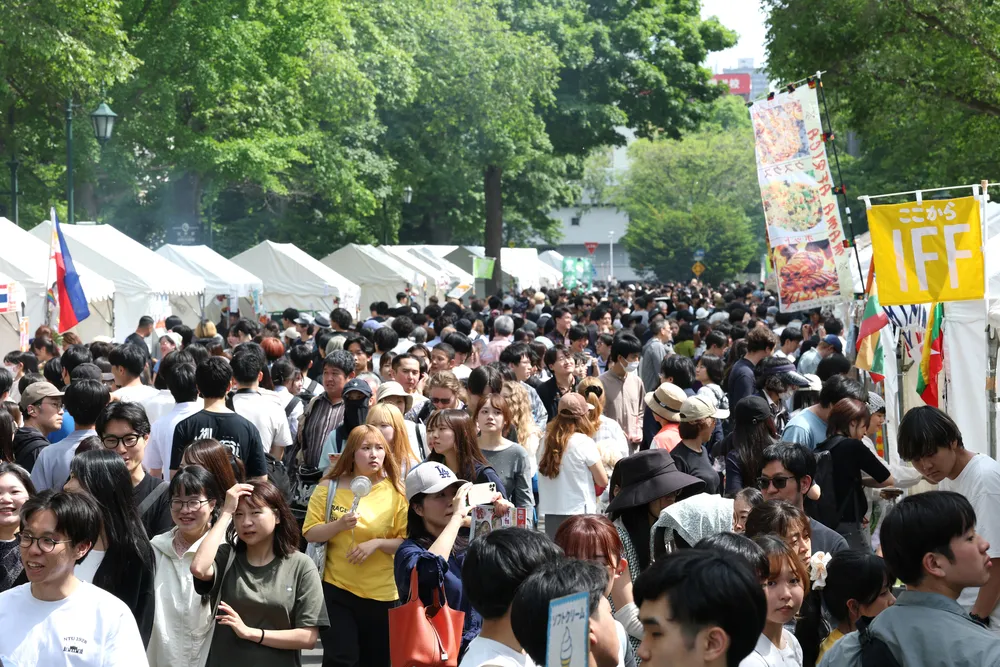
This year marks the 150th anniversary of Hokkaido University in Kita Ward, Sapporo, and the 68th Hokkaido University Festival opened on the 5th. On the first day, under clear skies, the main street, about 1.2 kilometers long, was filled with many people enjoying the greenery and dappled sunlight…
Hokkaido University
Hokkaido University, founded in 1876 as Sapporo Agricultural College, is one of Japan’s oldest and most prestigious national universities, located in Sapporo, Hokkaido. It was established with the help of American educator William S. Clark, who famously urged students to “Boys, be ambitious,” a motto that remains central to the university’s spirit. Today, the campus is known for its historic red-brick buildings and expansive green spaces, blending a rich academic heritage with modern research excellence.
Kita Ward
Kita Ward is one of the 23 special wards of Tokyo, Japan, known for its blend of residential areas and historical sites. Its history includes the development of the Oji district, which was a post town on the Nakasendo highway during the Edo period, and features the famous Asukayama Park, a cherry blossom viewing spot established in the 18th century. Today, Kita Ward is also home to important transportation hubs and cultural institutions like the Oi Racecourse.
Sapporo
Sapporo is the largest city on Japan’s northern island of Hokkaido, known for its modern urban planning and the annual Sapporo Snow Festival. The city was developed in the late 19th century following the Meiji Restoration, modeled after a grid system by American advisor Edwin Dun, and it quickly grew as a commercial and cultural hub. Today, Sapporo is famous for its beer, ramen, and ski resorts, blending its frontier history with contemporary attractions.
Hokkaido University Festival
The Hokkaido University Festival, also known as “Kogaku-sai,” is an annual cultural and academic event held on the Sapporo campus of Hokkaido University. Established in 1959, it originally began as a small student-organized gathering to showcase research and artistic activities, and has since grown into one of Japan’s largest university festivals. The event now features hundreds of booths, performances, and exhibitions, attracting over 60,000 visitors each year, and reflects the university’s spirit of openness and student-led innovation.