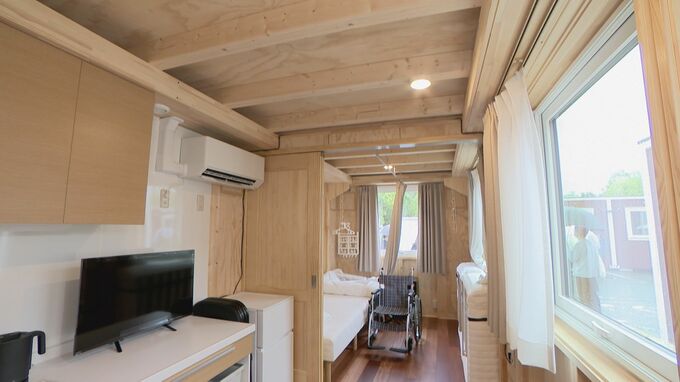
Preparations for the Asian Games are underway at Nagoya Port, where athletes will stay. On the 23rd, the inside of the container houses was revealed.
Container houses are lined up at Nagoya Port Garden Pier in Nagoya’s Minato Ward. With less than six months until the opening, the development of accommodation facilities for the Asian Games is now progressing at a rapid pace.
“There is also a slope for wheelchair users. There is one entrance on the left and one on the right, each accommodating four people. It’s built like an eel’s bed.”
Nagoya Port
Nagoya Port is a major seaport located in Ise Bay, central Japan, and serves as one of the country’s busiest and most important international trade hubs. Its history dates back to the late 19th century when it was developed to support industrial growth, particularly after the construction of the Nagoya Harbor in 1907. Today, the port is a key gateway for automobile exports and is also home to attractions like the Port of Nagoya Public Aquarium and the nostalgic port area.
Nagoya Port Garden Pier
Nagoya Port Garden Pier is a waterfront complex in Nagoya, Japan, featuring the iconic Port of Nagoya Public Aquarium and the observation deck of the Nagoya Port Building. Developed as part of the port’s revitalization in the late 20th century, the area offers scenic views, gardens, and cultural attractions that highlight the city’s maritime history. It serves as a popular recreational and educational destination, blending modern design with the industrial heritage of one of Japan’s busiest ports.
Minato Ward
Minato Ward is a special district in central Tokyo, Japan, known for its blend of modernity and history. Historically, it developed as a hub for diplomacy and commerce, hosting many foreign embassies and business districts like Shimbashi and Toranomon. Today, it is home to iconic landmarks such as Tokyo Tower, Roppongi Hills, and the historic Zojo-ji Temple.