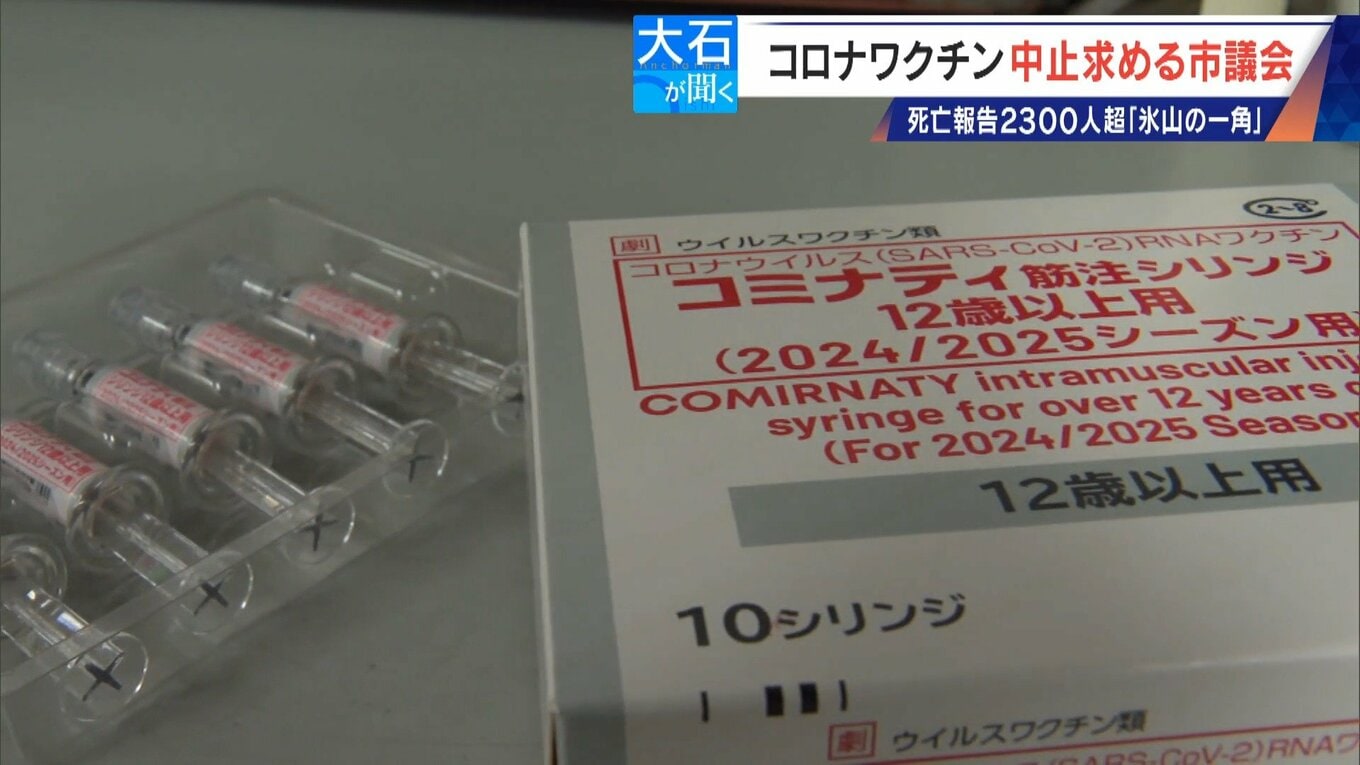
We interviewed a local city council that has expressed opposition to COVID-19 vaccination. With opinions evenly divided, we explored what the council members were thinking.
A movement questioning COVID-19 vaccination is emerging from a small port town in Tokushima Prefecture.
“There was a major development regarding COVID-19 vaccines. We crossed the Seto Inland Sea and arrived in Tokushima Prefecture.”
The visit was to Komatsushima City, Tokushima Prefecture, a quiet port town with a population of about 33,000.
But this small town has raised an issue. It happened during the March city council session.
“We ask council members in favor to stand. A majority have stood. Therefore, Petition No. 3 of Reiwa 7 is adopted.”
Approved by a vote of 9 to 7, the petition was a request to halt mRNA vaccination programs. Why is the city council speaking out now? They say there is an undeniable reality behind the numbers.
Seto Inland Sea
The Seto Inland Sea is a scenic body of water in Japan, separating Honshu, Shikoku, and Kyushu, known for its thousands of islands and calm, beautiful waters. Historically, it served as a vital maritime trade route since ancient times, connecting the Kansai region with Kyushu and facilitating cultural and economic exchange. Today, it is celebrated for its natural beauty, art islands like Naoshima, and the famous Shimanami Kaido cycling route.
Tokushima Prefecture
Tokushima Prefecture, located on the island of Shikoku in Japan, is historically known as the domain of the powerful Hachisuka clan during the Edo period. It is famous for the Awa Odori dance festival, which originated over 400 years ago to celebrate the completion of Tokushima Castle. The prefecture also features the dramatic Naruto whirlpools and the scenic pilgrimage route of the 88 temples on Shikoku.
Komatsushima City
Komatsushima is a coastal city in Tokushima Prefecture, Japan, known for its scenic beauty and historical role as a port town. During the Edo period, it flourished as a key hub for sea transportation and trade, particularly for indigo dye (awa ai), a major local product. Today, the city offers cultural attractions like the Komatsushima City Museum and natural sites such as the scenic coastline along the Kii Channel.
Seto Inland Sea
The Seto Inland Sea, located between Japan’s main islands of Honshu, Shikoku, and Kyushu, is a historic maritime route that has facilitated trade and cultural exchange for centuries. Its calm waters and numerous islands, such as Miyajima and Naoshima, are home to ancient shrines, castles, and modern art installations. Today, the region is celebrated for its scenic beauty, mild climate, and as a hub for both traditional and contemporary tourism.
Tokushima Prefecture
<div class
Seto Inland Sea
The Seto Inland Sea is a scenic body of water in Japan, separating the islands of Honshu, Shikoku, and Kyushu. Historically, it has served as a vital maritime trade route since ancient times, connecting the Kansai region with Kyushu and fostering cultural exchange. Today, it is known for its calm waters, thousands of islands, and landmarks like the Itsukushima Shrine.
Tokushima Prefecture
Tokushima Prefecture, located on the island of Shikoku in Japan, is historically known as the domain of the powerful Hachisuka clan during the Edo period. It is famous for the Awa Odori dance festival, which has roots in the 16th century and celebrates the region’s cultural heritage. The prefecture also features the dramatic Naruto whirlpools and the pilgrimage route of the 88 temples on Shikoku.
Komatsushima City
Komatsushima City, located in Tokushima Prefecture on the island of Shikoku, Japan, is a historic port town known for its role in maritime trade and its beautiful natural scenery. The city developed around Komatsushima Port, which served as a key gateway for goods and travelers, particularly during the Edo period when it was part of the salt and indigo trade routes. Today, it is also recognized for its serene beaches and annual festivals, blending its rich coastal history with modern community life.
Awa Odori dance festival
The Awa Odori dance festival is a vibrant traditional event held annually in Tokushima, Japan, as part of the Obon season. Originating in the late 16th century, it celebrates the opening of Tokushima Castle with lively, rhythmic dances performed by groups of dancers in colorful costumes. Today, it attracts millions of visitors, embodying a joyful spirit of community and cultural heritage.
Tokushima Castle
Tokushima Castle, located in Tokushima City on Shikoku Island, was originally built in 1586 by the feudal lord Hachisuka Iemasa after he was granted the domain by Toyotomi Hideyoshi. The castle served as the seat of the Hachisuka clan during the Edo period, though much of its original structure was destroyed by fires and later by the Meiji Restoration. Today, the site features reconstructed stone walls, moats, and a modern concrete keep that houses a museum, offering visitors insight into its samurai history.
Naruto whirlpools
The Naruto whirlpools are dramatic tidal whirlpools that form in the Naruto Strait between the Japanese islands of Awaji and Shikoku, caused by the rapid flow of water through the narrow channel. These natural phenomena have been a famous sight for centuries, celebrated in Japanese poetry and art, and are best viewed from boats or the Onaruto Bridge. The whirlpools are most powerful during spring tides, creating a swirling spectacle that draws tourists from around the world.
Shikoku pilgrimage route of the 88 temples
The Shikoku Pilgrimage is a 1,200-kilometer circuit around Japan’s Shikoku Island, linking 88 temples associated with the Buddhist monk Kūkai (Kōbō Daishi), who founded the Shingon school in the 9th century. Established in the Heian period, the route became a popular spiritual journey for laypeople and monks seeking enlightenment and purification. Today, pilgrims (henro) continue to walk or travel the route, visiting each temple to pray, collect stamps, and connect with centuries of tradition.
Komatsushima City Museum
The Komatsushima City Museum, located in Tokushima Prefecture, Japan, showcases the natural history, culture, and local heritage of the Komatsushima area. Housed in a former bank building dating back to the early 20th century, the museum features exhibits on the region’s maritime history, traditional crafts, and archaeological artifacts. It serves as an educational hub, preserving and sharing the stories of the city’s development from a fishing port to a modern community.