The Tangerang Regency Government cancels the agglomeration project and submits a new independent PSEL proposal.
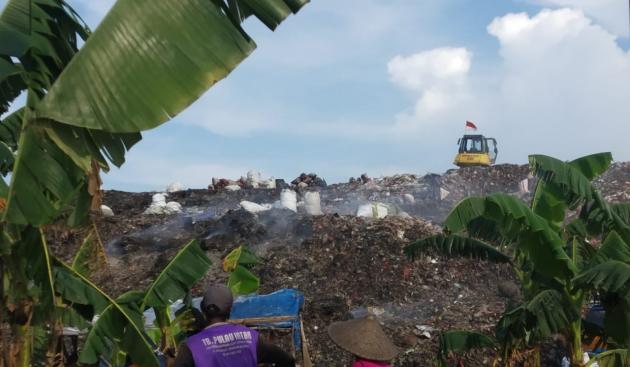
TPA Jatiwaringin in Mauk District, Tangerang Regency, April 14, 2023.
The agglomeration plan for the Waste-to-Energy Processing Facility (PSEL) in Greater Tangerang at TPA Jatiwaringin, Tangerang Regency, has been canceled.
This happened because the governments of Tangerang City and South Tangerang City withdrew from the plan.
The head of the Environmental Agency of Tangerang Regency stated that the PSEL project was initially intended as a joint program between Tangerang Regency, Tangerang City, and South Tangerang.
“Our plan was for agglomeration. But over time, changes occurred so that Tangerang City and South Tangerang ultimately went independent,” he said.
He mentioned that the reason Tangerang City and South Tangerang left the agglomeration concept was because they believed they had met the requirements set by the central government to build PSEL in their respective regions.
“Considering they were also already capable in terms of waste volume, which met the requirements for that,” he explained.
With the change in the PSEL concept, the Tangerang Regency government was forced to resubmit a proposal to build PSEL independently in its region.
“When our proposal was for agglomeration, we then changed the proposal to be independent,” he explained.
He confirmed that the national strategic waste-to-energy project in Tangerang Regency will continue.
Currently, the Tangerang Regency government is finalizing various technical preparations to speed up the realization of this national strategic project.
“The preparations cover various project support aspects, ranging from waste transport fleets, waste volume, road access, to other supporting infrastructure,” he said.
He added that the investor tender for the PSEL project at TPA Jatiwaringin will be opened in June 2026 as part of the second phase of development.
“The plan remains for us to enter the second batch. This second batch is to participate in the auction this June, we join with regions where the PSEL locations are ready,” he added.
He stated that the regional government has sent letters to the Ministry of Environment, Danantara, and the Coordinating Ministry for Food regarding project readiness.
“From the regional readiness side, starting from transportation, waste volume, road access, and so on. That will become the burden and obligation of the region. There will be consequences if, for example, the region cannot meet that,” he concluded.
TPA Jatiwaringin
TPA Jatiwaringin is a landfill site located in Bekasi, West Java, Indonesia, which has been in operation since the 1980s. Originally established to manage waste from the greater Jakarta area, it has faced significant challenges over the years, including overcapacity, environmental pollution, and health concerns for nearby residents. The site has become a symbol of the region’s ongoing waste management struggles and efforts to transition to more sustainable disposal methods.
Mauk District
Mauk District is a rural area in the state of Rajasthan, India, known for its traditional villages and agricultural way of life. Historically, it was part of the former princely state of Bikaner, and its development has been shaped by the arid landscape and local Rajput heritage. Today, the district reflects a blend of ancient customs and gradual modernization, with local crafts and farming remaining central to its identity.
Tangerang Regency</
TPA Jatiwaringin
TPA Jatiwaringin is a major landfill site located in Bekasi, West Java, Indonesia, serving the greater Jakarta area. Originally opened in the 1990s, it has since become one of the region’s largest waste disposal facilities, handling thousands of tons of garbage daily. The site has also been a focal point for waste management challenges and environmental concerns, including pollution and impacts on nearby communities.
Mauk District
Mauk District is a rural area in Mymensingh Division, Bangladesh, known for its agricultural landscape and traditional Bengali village life. While not a major tourist destination, it has a history rooted in the region’s zamindari (landlord) system and the broader cultural heritage of the Bengal delta. The district’s significance lies in its role as a quiet, agrarian community that reflects the everyday life and customs of northern Bangladesh.
Tangerang Regency
Tangerang Regency is a region in Banten Province, Indonesia, with a history rooted in the era of the Banten Sultanate, serving as a strategic area for trade and agriculture. It was formally established as a regency in 1636 and later developed into a key suburban and industrial zone supporting the Jakarta metropolitan area. Today, it is known for its cultural diversity, traditional markets, and historical sites like the old town of Tangerang.
Tangerang City
Tangerang City, located just west of Jakarta in Indonesia, has a history rooted in the 16th century as a major port and trading hub for pepper and other spices, shaped by Chinese, Dutch, and local influences. Today, it is a rapidly growing suburban center known for its industrial zones, shopping malls, and the iconic Benteng Heritage Museum, which preserves the area’s Chinese-Indonesian cultural legacy. The city also hosts the Soekarno-Hatta International Airport, making it a key gateway to the nation’s capital.
South Tangerang
South Tangerang is a rapidly growing city in Banten Province, Indonesia, established in 2008 after separating from Tangerang Regency. Historically, the area was part of the ancient Sunda Kingdom and later developed into a key suburban hub for Jakarta, known for its modern residential complexes and commercial centers. Today, it serves as a significant satellite city, blending urban development with cultural landmarks like the iconic Al-Azhom Grand Mosque.