Celebrating Earth Day, Telkomsel customers can exchange points for trees.
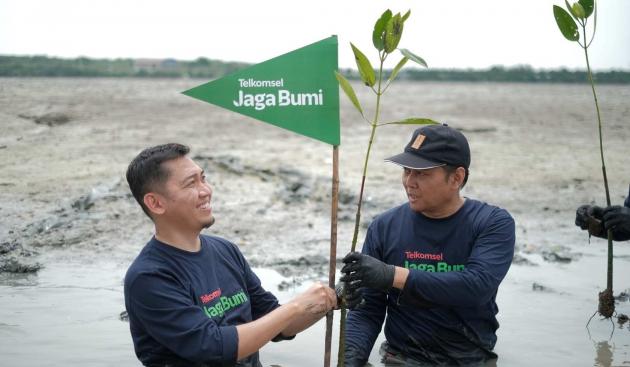
Telkomsel invites customers to help plant trees by redeeming points in commemoration of Earth Day.
Commemorating Earth Day on April 22, 2026, Telkomsel reaffirms its sustainability commitment through the Telkomsel Jaga Bumi movement.
Carrying the global theme “Our Power, Our Planet,” this initiative is designed to collectively reduce carbon emission footprints by involving the wider community through a comprehensive digital ecosystem.
The program serves as a collaborative platform to facilitate public enthusiasm for preserving the environment.
“We provide an ecosystem ranging from innovation competitions to point-for-tree exchange features, so that every individual can make a real impact on the Earth and future generations,” it was stated.
The Telkomsel Jaga Bumi Movement 2026 will focus on three main programs: the Telkomsel Jaga Bumi Future Impact Challenge, a competition for young people (ages 15–35) to create innovative solutions to climate challenges.
Registration opens from April 22 to July 2026, with the award ceremony in Yogyakarta on July 18.
Next, the Talkshow Series, a series of educational discussions with environmental experts running from May 19 to July 16, 2026.
Finally, tree planting and workshops in four strategic areas: Bogor, Palu, Pesisir Selatan, and Kulon Progo, throughout June and July 2026.
Exchange Points for Trees
One of the standout features that makes it easy for customers is the Carbon Offset program. Through collaboration with the Jejak.in platform, customers can exchange Telkomsel Points ranging from 5,000 to 50,000 points via the MyTelkomsel app to donate trees.
Interestingly, the growth of donated trees will be reported periodically directly to the customer’s email.
Not only that, Telkomsel also takes concrete steps in waste management. In collaboration with PlusTik and Liberty Society, Telkomsel recycles used SIM card packaging and starter card shells into functional products such as paving blocks, trash bins, and phone stands for outlet partners.
For customers who want to contribute directly or find out more information, program details can be accessed on the official page tsel.id/jagabumi.
Bogor
Bogor is a city in West Java, Indonesia, known for its cool climate and the Bogor Botanical Gardens. Historically, it served as the summer capital for the Dutch colonial government, who built the Bogor Palace (Istana Bogor) in the 18th century as a retreat from the heat of Batavia (Jakarta). Today, the city remains a popular destination for its historic gardens, palace, and scenic landscapes.
Palu
Palu is the capital city of Central Sulawesi, Indonesia, located on the island’s west coast. Historically, it was a small kingdom before becoming part of the Dutch East Indies, and it gained prominence as a major port and trading hub. The city is perhaps best known internationally for the devastating earthquake and tsunami that struck on September 28, 2018, causing widespread destruction and loss of life.
Pesisir Selatan
Pesisir Selatan is a regency located on the southwestern coast of West Sumatra, Indonesia, known for its stunning beaches and the iconic, towering cliffs of the Mentawai Strait. Historically, the area was part of the Minangkabau cultural
Yogyakarta
Yogyakarta is a city on the Indonesian island of Java, renowned as a center of classical Javanese art and culture. Historically, it served as the capital of the Sultanate of Yogyakarta, a powerful kingdom that resisted Dutch colonial rule, and it remains a special administrative region with its own sultan. The city is also the gateway to the nearby 9th-century Buddhist temple of Borobudur and the Hindu temple complex of Prambanan, both UNESCO World Heritage sites.
Bogor
Bogor is a city in West Java, Indonesia, known for its cool climate and the Bogor Botanical Gardens, which were established in 1817 during the Dutch colonial era. Historically, it served as the summer capital for the Dutch East Indies government, with the Bogor Palace (Istana Bogor) serving as a retreat for governors-general. Today, it remains a popular destination for its lush landscapes, historical landmarks, and role as a center for agricultural research.
Palu
Palu is the capital city of Central Sulawesi, Indonesia, located on the island’s western coast. Historically a small fishing village, it grew into an important port and trade hub during the Dutch colonial era. The city gained global attention in 2018 when it was devastated by a powerful earthquake and subsequent tsunami, which caused widespread destruction and loss of life.
Pesisir Selatan
Pesisir Selatan is a regency on the west coast of West Sumatra, Indonesia, known for its stunning beaches, traditional Minangkabau culture, and surfing spots. Historically, it was part of the Minangkabau heartland and played a role in regional trade and the Padri War in the 19th century. Today, it attracts visitors to places like the Mandeh Islands and the iconic surfing destination, the Mentawai Islands’ nearby waters.
Kulon Progo
Kulon Progo is a regency located in the Special Region of Yogyakarta, Indonesia, known for its scenic hills, beaches, and agricultural landscapes. Historically, it was part of the ancient Mataram Kingdom and later developed as a key area for Dutch colonial plantations, particularly for sugar and tobacco. Today, it is recognized for its cultural heritage sites, such as the Kiskendo Cave and traditional arts like *jathilan* dance, as well as its growing eco-tourism sector.
Bogor Botanical Gardens
The Bogor Botanical Gardens, located in Bogor, Indonesia, is a renowned tropical botanical garden established in 1817 during the Dutch colonial era. Originally developed as a research center for the Dutch East Indies government, it played a key role in introducing and studying exotic plants, including the first rubber and palm oil seedlings in Southeast Asia. Today, it serves as a major conservation, research, and tourism site, featuring over 15,000 species of trees and plants.
Bogor Palace (Istana Bogor)
Bogor Palace, located in Bogor, Indonesia, is a former Dutch colonial residence built in the 18th century, originally serving as a retreat for Governor-General Gustaaf Willem van Imhoff. It is renowned for its expansive botanical gardens, which were established in 1817 and now house thousands of plant species. Today, the palace is one of the six presidential palaces of Indonesia, used for official state functions and public visits.
Mentawai Strait
The Mentawai Strait is a body of water located off the western coast of Sumatra, Indonesia, separating the island from the Mentawai Islands. Historically, it has served as an important maritime route for trade and cultural exchange between Sumatra and the outer islands, while its powerful swells have made it a world-renowned destination for surfing since the 1990s. The strait also lies in a seismically active zone, contributing to the region’s history of significant earthquakes and tsunamis.