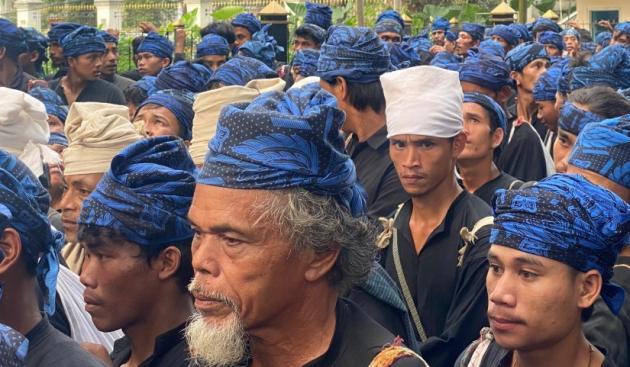
Baduy community in Banten performing the Seba Baduy tradition.
The annual Seba Baduy tradition in 2026 is taking place over three days, starting Friday, April 24, until Sunday, April 26, 2026.
This traditional event will be attended by approximately 2,000 Baduy people who come to perform rituals and maintain ties with the Banten Provincial Government.
The series of events begins on the first day with the opening of the Baduy Craft and SME Market, as well as a cultural discussion on the role of the Baduy community in preserving the ecosystem at the West Square of Serang City.
In the evening, the entertainment stage features artistic performances by Arkaistone, Hiart Dance Company, and Ubrug Seniki Cilegon.
On the second day, Saturday, April 25, 2026, the Baduy community arrives in Serang City and is welcomed through the “Rampak Seba Nusantara” Carnival.
The series of events will conclude on Sunday, April 26, 2026, with the Mumuluk tradition, or communal breakfast, followed by the release for Seba Panungtung at the Serang Regency Hall.
The Deputy Governor of Banten, Achmad Dimyati Natakusumah, officially opened the Seba Baduy 2026 series at the West Square of Serang City today.
According to him, the Baduy community is part of the larger Banten family, consistently upholding noble values of life.
“The Baduy are our brothers and sisters. They protect nature, culture, customs, discipline, live from farming, and have strong beliefs. That is what we should emulate,” he said.
He added that the simple lifestyle of the Baduy community, without dependence on modern technology, serves as an important example of maintaining balance in life and the environment.
“They are not tempted by excessive lifestyles. They focus on protecting nature, forests, rivers, and a harmonious life. This aligns with the spirit of building a green environment,” he said.
The Deputy Governor stated that the Banten Provincial Government is committed to preserving the Baduy community while respecting their customs and wishes.
He also expressed pride in the Baduy community for remaining faithful to their traditional rules and living peacefully without social conflict.
“The government is present to support the needs of the Baduy community without interfering with their customs. The main priority is to protect the environment and meet their basic needs so they can continue to live peacefully and prosperously,” he said.
Seba Baduy is a hereditary tradition of the Baduy tribe (Urang Kanekes) in Lebak Regency, carried out annually after the harvest as a form of gratitude to God.
Before conducting Seba, the Baduy community first performs a series of Seba rituals for the Lebak Regency Government.
After that, they continue their journey to Serang City to perform Seba for “Bapak Gede,” the Governor of Banten, Andra Soni.
The journey is undertaken on foot from Kanekes Village to Rangkasbitung and then to Serang City, symbolizing sincerity, simplicity, and adherence to tradition.