Pancasila Village in Surabaya Enhances Children’s Learning Enthusiasm through Neighborhood Council Partnership
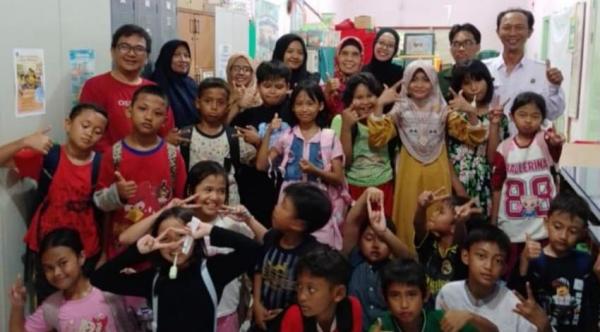
Efforts to boost children’s enthusiasm for learning continue through programs in the city of Surabaya. One regularly held activity is “Sinau Bareng Balai RW” at the RW 3 Hall in Keputran Subdistrict.
This activity invites children to learn together in a relaxed yet educational atmosphere. The program is part of community development based on Pancasila values, specifically in the fields of education and strengthening the character of the younger generation.
In its implementation, “Sinau Bareng Balai RW” involves instructors from various backgrounds, ranging from elementary and junior high school teachers to university students who also provide learning assistance.
Furthermore, this activity also receives support from the Women and Child Protection Task Force, which plays an active role in ensuring the activities are safe and child-friendly.
Their involvement is a form of concern for children’s growth and development, both in terms of education and protection.
“We want to ensure children not only gain knowledge but also feel safe and comfortable while learning. Through this activity, we also invite parents and the community to be more concerned about children’s education in their surroundings,” it was stated.
It is hoped that the “Sinau Bareng Balai RW” activity can continue sustainably and become a positive space for children to develop their potential from an early age.
With this program, children in the RW 3 area of Keputran Subdistrict are expected to be increasingly motivated to learn and able to develop their potential optimally.
Kampung Pancasila
“Kampung Pancasila” (Pancasila Village) is a community-based initiative in Indonesia designed to be a living example of the nation’s foundational philosophy, Pancasila, which promotes unity in diversity. Typically established in urban neighborhoods, these villages aim to foster harmony, tolerance, and cooperation among residents of different ethnic, religious, and social backgrounds. The concept gained momentum in recent decades as a grassroots effort to practically apply Indonesia’s national ideology to strengthen social cohesion in modern society.
Surabaya
Surabaya is Indonesia’s second-largest city, located on East Java. Historically, it is renowned as the “City of Heroes” for its pivotal role in the 1945 Battle of Surabaya, a fierce and symbolic resistance against Dutch colonial forces that helped galvanize Indonesian independence. Today, it is a major industrial, commercial, and port city, blending modern development with historical monuments like the Heroes Monument.
Sinau Bareng Balai RW
“Sinau Bareng Balai RW” is a community-based learning initiative typically held at the neighborhood association hall (Balai RW) in Indonesian communities. It functions as a regular, informal gathering where residents of all ages come together to share knowledge, skills, and support each other’s education, often focusing on homework help for children and practical skills for adults. The practice reflects a traditional spirit of communal self-help and has evolved as a grassroots response to educational needs within local neighborhoods.
RW 3 Hall
“RW 3 Hall” is a reference to Rådhuset Station (City Hall Station) on Line 3 (the blue line) of the Stockholm Metro
Kampung Pancasila
“Kampung Pancasila” (Pancasila Village) is a community-based initiative in Indonesia designed to be a living example of the nation’s foundational philosophy, Pancasila, which promotes unity, tolerance, and social justice. Typically established in neighborhoods or villages, these sites aim to practically implement the five principles through community activities, interfaith dialogue, and cooperative programs. Their history is modern, emerging as a grassroots response to strengthen national identity and social harmony in the face of contemporary societal challenges.
Surabaya
Surabaya is Indonesia’s second-largest city, located on East Java. Historically, it is famed as the “City of Heroes” for its pivotal role in the 1945 Battle of Surabaya, a fierce and symbolic resistance against colonial forces that helped galvanize Indonesian independence. Today, it is a major industrial, commercial, and port city, blending modern development with historical sites like the Heroes Monument.
Sinau Bareng Balai RW
“Sinau Bareng Balai RW” is a community-based learning initiative typically held at the neighborhood association hall (Balai RW) in Indonesian communities. It translates to “Learning Together at the RW Hall” and functions as an informal, local gathering where residents of all ages can share knowledge, skills, and discuss community issues. While not a single historical site, this practice reflects a long-standing cultural tradition of *gotong royong* (mutual cooperation) and communal self-help that strengthens social bonds at the grassroots level.
RW 3 Hall
“RW 3 Hall” is a large, modern multi-purpose arena located in the city of Oberhausen, Germany. It was opened in 1996 and is primarily known for hosting major concerts, sporting events, and family shows. The hall’s name is derived from its location on the “Rheinlanddamm” street and its function as a third major event space in the area.