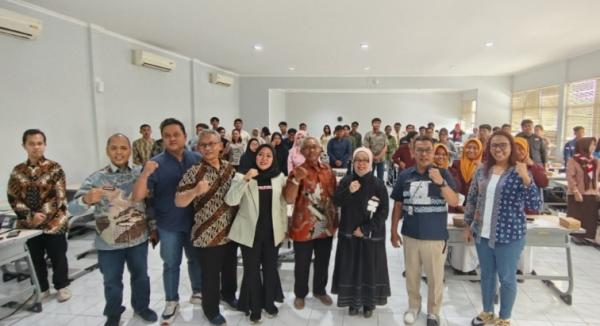
In a classroom, an unusual atmosphere prevailed. Dozens of young people from various backgrounds sat in a circle, engaged in serious discussions, occasionally debating, then laughing. They were not just attending training; they were learning to become leaders.
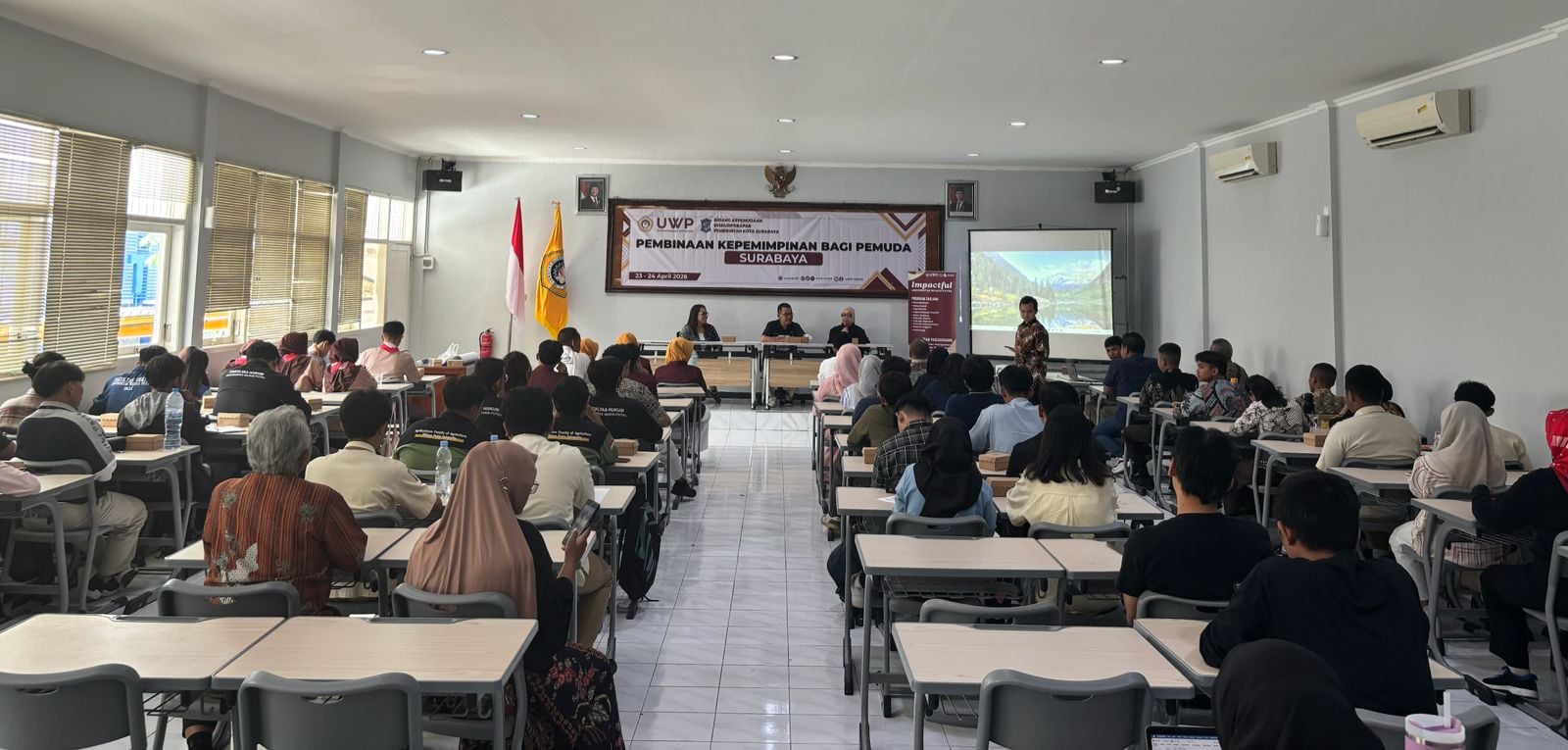
A total of 60 participants, consisting of university students and high school students from Surabaya, took part in a Youth Leadership Development activity held over two days, April 23–24, 2026. This program was initiated by the Surabaya City Culture, Youth, Sports, and Tourism Office in collaboration with Wijaya Putra University as the host.
Unlike ordinary training, this activity was not limited to theory. Participants were directly faced with simulations of real problems commonly encountered in youth environments, from managing organizations to promoting local tourism potential. This sharpened their critical thinking and decision-making skills.
The program was intentionally designed to span different educational levels. Meetings between high school and university students created a more dynamic learning space.
“High school students can learn from the experience of university students, while university students also learn to understand the perspectives of their younger counterparts. This is where leadership grows—from interaction and collaboration,” he said.
For participants, this experience felt different. Calista, a student from SMAN 12 Surabaya, said she gained a new perspective on the meaning of leadership. She was impressed by how openly university students shared their organizational experiences.
“I now understand that a leader is not just someone who gives orders, but also someone who must listen to and understand their team,” Calista said enthusiastically.
Bayu Tri, a student at Wijaya Putra University, felt the same way. He considered the simulation session the most challenging and memorable part.
“We were faced with real-life situations. We had to make quick decisions while still considering the consequences. This trained us to think more maturely,” he explained.
The Vice Rector for Student Affairs at Wijaya Putra University described this activity as an initial step in creating young leaders who are not only academically excellent but also strong in character.
According to him, cross-generational meeting spaces like this are important for building confidence and networks from an early age.
This development program is part of the Surabaya City Government’s long-term strategy to prepare young people to face the challenges of the digital era—not only technologically proficient but also possessing integrity and collaboration skills.
Going forward, the office plans to expand similar programs to more schools and youth communities. This step is also part of the effort to realize Surabaya as a City of Achievers by 2027.
Behind the discussions, simulations, and laughter of the participants lies a great hope: the emergence of young leaders who will bring real change to their city.