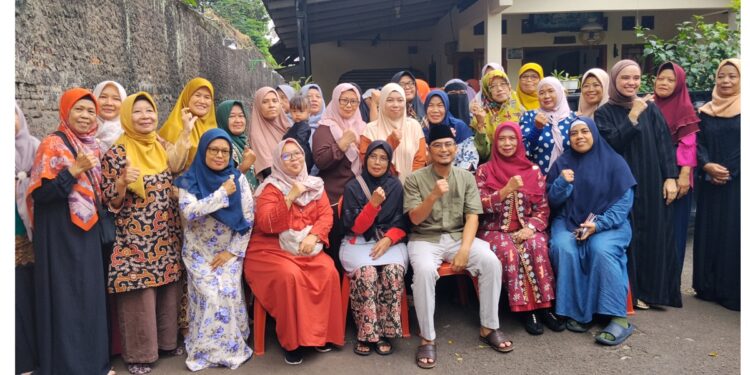
Depok (May 16, 2026) – Public awareness about sorting waste at the household level remains a major challenge in Depok City. This reality emerged during a meeting between the Chairman of the Depok City Regional House of Representatives and representatives of the Watul Khoir Waste Bank management of RW 01, Mekarsari Village, Cimanggis District.
During the meeting, the waste bank management conveyed field dynamics regarding fluctuations in resident participation and technical obstacles in domestic waste management.
Grassroots Challenges and Uneven Education
The management of the Watul Khoir Waste Bank revealed that regulations and outreach at the bureaucratic level have actually been running extensively from the village and relevant agencies. However, the main obstacle arises at the implementation stage among residents.
-
Participation Constraints: Community response in depositing sorted waste is still considered fluctuating.
-
Technical Issues: The management often receives organic waste or leftover food in dirty condition without prior cleaning, complicating the accumulation process.
-
Positive Instinct: Despite the difficulty, this activity has succeeded in forming new habits among female management who are now more sensitive to the presence of recyclable waste in their environment.
“In terms of basic facilities like scales, we are already adequate from previous assistance. Currently, our focus is on relying on the social work of the management while continuing to awaken residents’ awareness,” said Warni.
Criticism of Ceremonial Programs and Optimization of Facilities
Hearing these complaints, the Chairman of the Depok City Regional House of Representatives emphasized the need for reform in environmental guidance methods by the Environmental and Sanitation Agency (DLHK). He criticized the old pattern that tends to be ceremonial or merely to fulfill budget absorption without sustainability.
He requested the DLHK to move progressively by inserting educational material directly into RT meeting rooms and residents’ social gatherings to change the community’s mindset.
“The separation between organic, non-organic, and residual waste must be completed upstream, i.e., at the household level. This is waste we all produce, so the responsibility for its resolution also lies with us,” he asserted.
Bottom-Up System and RW Fund Allocation of 300 Million Rupiah
To support grassroots movements, the Depok City Regional House of Representatives has coordinated with the Regional Development Planning Agency (Bappeda). The strategic policy being pushed is to include waste management agenda as a mandatory activity in the allocation of the Indicative Ceiling for RW Funds amounting to 300 million rupiah.
Through this budget scheme, each area can propose the fulfillment of facilities and infrastructure needed in the field, including:
-
Procurement of special organic waste sorting buckets for households.
-
Provision of motorized cart fleets for local transportation.
-
Procurement of composters or waste shredders at the area level.
Furthermore, he emphasized the need for regulations that include incentive schemes for RTRW that successfully manage their areas independently, as well as the application of sanctions for environments deemed uncooperative in the waste sorting program. This step is considered crucial so that program sustainability does not stall when government stimulus funds run out.
Watul Khoir Waste Bank
Mekarsari Village
Depok
Watul Khoir Waste Bank
Mekarsari Village
Cimanggis District
Depok City Regional House of Representatives
Environmental and Sanitation Agency (DLHK)
Regional Development Planning Agency (Bappeda)
Related news

Prabowo Appoints Erick Thohir as Minister of Youth and Sports, Retains Position as Chairman of PSSI
Metamorphosis of Margonda: The ASRI Movement Transforms the City Center into an Aesthetic Space

“Cleaning Offal in the River Becomes an Eid al-Adha Tradition in Depok”
North Maluku Human Resource Transformation: Austria Offers Link-and-Match Vocational Education Model for Global Industry Needs