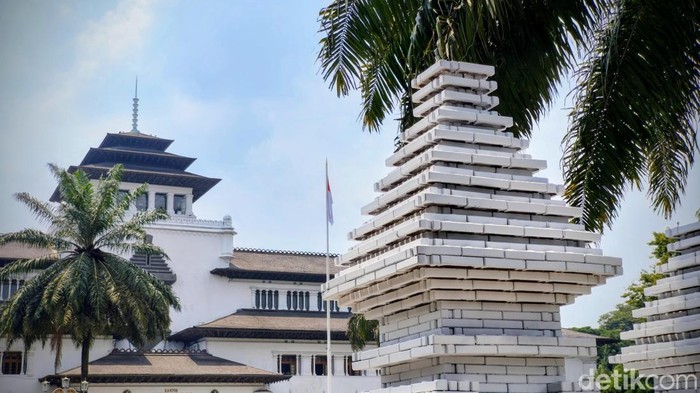
The colonial architectural icon of Bandung, Gedung Sate, has completed revitalization of its front area, dramatically transforming its facade appearance. The West Java Governor’s Office now displays a new charm with rows of clean white gates whose structure resembles temple ornaments.
The revitalization, which consumed a budget of approximately Rp3.9 billion from the 2025 Revised Regional Budget, successfully created an elegant contrast: sacred tiered white brick arrangements harmoniously blend with the remaining colonial-style black fences. This renewal was applied not only to the main gate but also to all access points to the area, making it a new visual focal point in Bandung City.
Policy Justification: Aesthetics, Identity, and Infrastructure Resilience
The renovation has deep justification, going beyond mere aesthetic function:
-
Infrastructure Resilience: The previous fence was frequently targeted and experienced significant damage due to social dynamics such as protest actions. Previous patchwork repairs were deemed ineffective, thus requiring comprehensive infrastructure strengthening.
-
Strong Visual Representation: This revitalization aims to reinforce regional identity. Gedung Sate, as a symbol of West Java, requires strong visual representation with distinctive regional character.
“So the governor’s office as West Java’s icon needs to have stronger visual representation as West Java’s distinctive identity,”
Public Response and Tourism Appeal
This architectural change has successfully attracted tourist attention. Visitors praised the aesthetics and harmony of the new design.
“More beautiful, clean white form like a temple, it fits well,” said one visitor.
The presence of these new gates makes Gedung Sate not just a government center, but also an increasingly captivating and eye-pleasing (aesthetic) tourist destination, strengthening its appeal amid the city’s hustle and bustle.