DEPOK (19/05/2026) – The penetration of heavy manufacturing technology and industry from Jiangxi Province, central China, is increasingly establishing its influence in the Southeast Asian market, particularly in Indonesia. Through advantages in low-carbon technology and cost efficiency, Jiangxi-based corporations are successfully leading strategic projects ranging from mineral downstream processing, precision circuit boards, to smart automotive components.
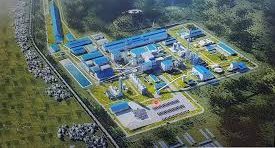
One monumental achievement is visible on Sumbawa Island, West Nusa Tenggara, where the Aman Copper Smelter facility is now fully operational and has begun gradually producing high-purity copper cathode blocks.
First Double-Flash Technology Pioneer Outside China
The Aman Copper Smelter project, one of the most advanced copper smelters in Southeast Asia, was entirely designed and built by China Nerin Engineering Co., Ltd. This processing plant marks a milestone as the first full-process copper smelting project abroad to apply original Chinese technology, namely the combination of “rotary flotation smelting + rotary flotation refining,” known as the double-flash system.
“We contribute 51 percent of global copper production capacity and have designed over 70 percent of China’s domestic capacity. Investment in Southeast Asia has been ongoing for years, where besides the copper smelter in Indonesia, we are also working on low-carbon smelting technology projects in the Philippines and copper resource recycling in Thailand,” explained Liu Yi, Deputy General Manager of China Nerin Engineering Co., Ltd.
Localization Strategy and National Economic Impact
To address the complexity of varying local copper ore grades in Southeast Asia, China Nerin has adopted a flexible approach by modifying production lines to be compatible with local minerals. A multidisciplinary team has been deployed to align Chinese environmental and energy efficiency standards with Indonesian regulations, alongside implementing local management to train the domestic workforce.
The operation of the Aman Copper Smelter in Sumbawa now records impressive industrial performance and significant economic contributions:
-
Input Capacity: Processes up to 900,000 tons of copper concentrate per year.
-
Main Output: Produces 220,000 tons of LME Grade A copper cathodes per year.
-
Valuable By-products: Produces 18 tons of gold, 55 tons of silver, and 850,000 tons of sulfuric acid annually.
-
Investment Efficiency: Cuts capital expenditure by up to 50 percent compared to similar projects from Europe or the United States.
-
Social Impact: Absorbs over 1,200 local workers and boosts regional GDP and tax revenue.
Jiangxi Corporations’ Business Octopus in Southeast Asia
The technological expansion from Jiangxi not only dominates the non-ferrous metal sector but also extends into digital business and manufacturing components in neighboring countries:
-
Electronics Sector (Vietnam): Jiangxi Hongban Technology Co., Ltd. has invested 110 million US dollars (equivalent to Rp1.92 trillion) to build a high-precision circuit board (PCB) smart manufacturing base with world-class automated production lines.
-
Chemical Sector (Thailand): Jiangxi Hongbai New Materials Co., Ltd. has injected nearly 100 million yuan (about 14.62 million US dollars or Rp257.6 billion) to accelerate the construction of a functional silane production project to strengthen the regional supply chain.
-
Automotive Component Sector (Asia-Pacific): Jiangxi Weile Technology Co., Ltd. has successfully penetrated the supply chain of elite automotive manufacturers in the Asia-Pacific region through core technology in vehicle refrigeration manufacturing. Exports of this product are projected to contribute nearly 400 million yuan (about 58.48 million US dollars) in foreign trade earnings.
This massive dominance confirms a shift in the technology power map in Southeast Asia, where the cost efficiency offered by Chinese corporations now combines with regulatory compliance and local economic empowerment.