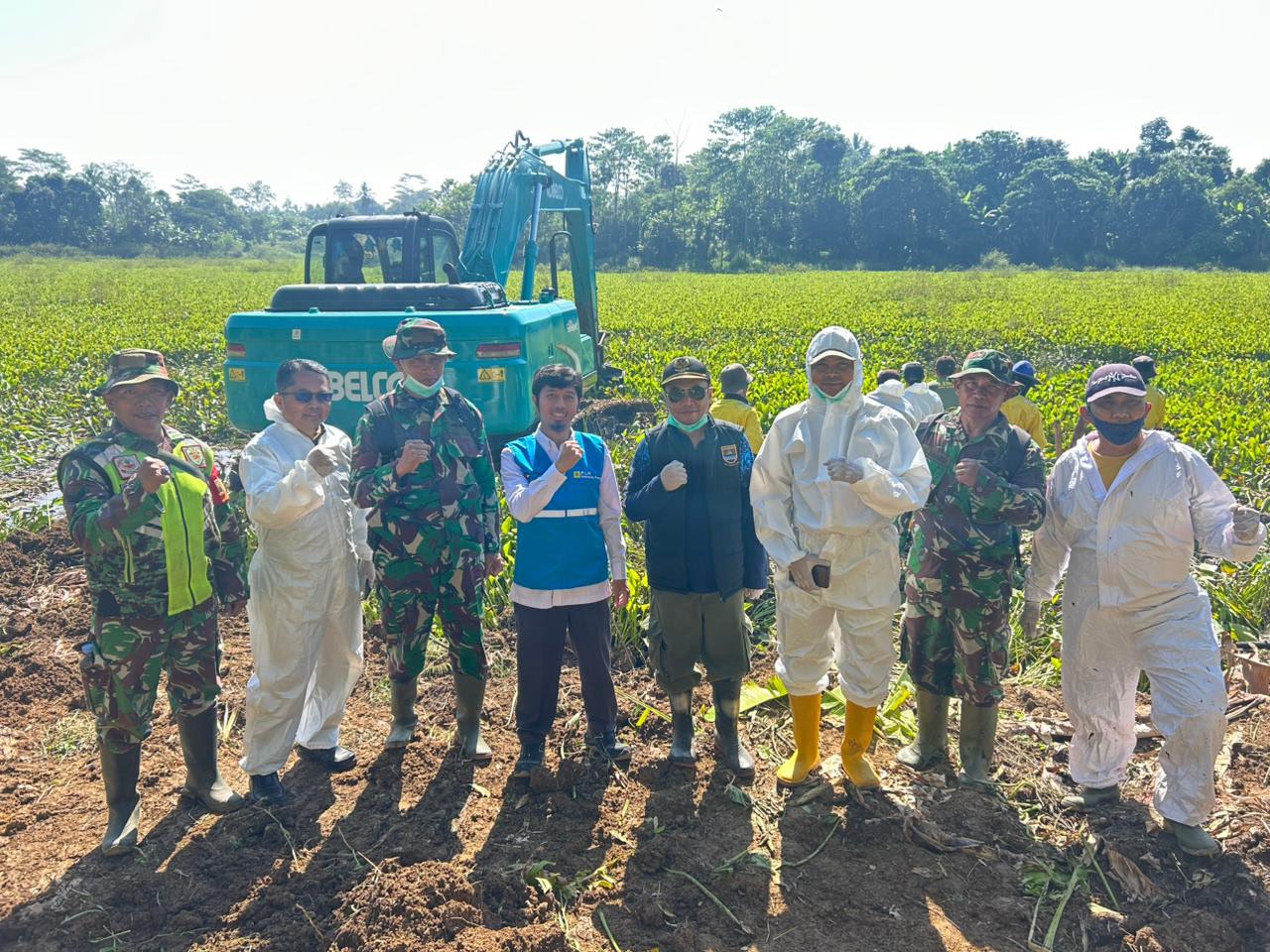
PT PLN Indonesia Power UBP Saguling carried out a cleaning activity in Karang Tanjung Village, Cililin District, on Saturday.
This was done as a commitment to supporting environmental sustainability and maintaining the comfort of residents around the power plant’s operational area.
The Senior Manager explained that the activity was conducted as a follow-up to resident reports regarding the spread of mosquitoes that had begun to disturb the surrounding community.
“The accumulation of water hyacinths is considered one of the contributing factors to mosquito breeding, so a fast and collaborative response was needed for on-site handling,” he said.
He added that the cleaning process involved various stakeholders and volunteer groups, making the activity more effective, targeted, and able to reach affected areas.
“This cleaning operation also utilized heavy equipment to maximize the process,” he said.
Furthermore, he stated that the water hyacinth cleaning involved multiple parties. Through this collaboration, PLN Indonesia Power UBP Saguling, together with stakeholders, aimed to provide tangible solutions to community complaints.
“Not only focusing on cleaning, this synergy also reflects a shared concern for environmental health, resident comfort, and the sustainability of the ecosystem around Karang Tanjung Village,” he said.
On that occasion, PLN Indonesia Power UBP Saguling expressed appreciation to all parties who participated and contributed to the activity.
“This cross-sector collaboration is expected to continue as a joint effort to protect the environment, prevent potential public health issues, and strengthen good relations between the company, government, community, and local residents,” he said.
He emphasized that with this water hyacinth cleaning activity, it is hoped that the environmental conditions in Karang Tanjung Village will become cleaner, healthier, and more comfortable for the community.
“PLN Indonesia Power UBP Saguling will continue to be present in the community through programs and real actions that benefit the environment and residents around the plant’s operational area,” he concluded.
Saguling Reservoir
Saguling Reservoir is a large man-made lake in West Java, Indonesia, created in the 1980s by damming the Citarum River for hydroelectric power generation. Its construction required the relocation of thousands of people and submerged numerous villages, agricultural lands, and historical sites. Today, it serves as a key source of electricity, irrigation, and fishing, while also facing significant environmental challenges from pollution and sedimentation.
Karangtanjung Village
Karangtanjung Village is a traditional Javanese settlement in Central Java, Indonesia, known for its well-preserved cultural heritage and historical significance. Located near the ancient city of Demak, the village is believed to have roots dating back to the era of the Demak Sultanate, one of the first Islamic kingdoms on Java. Today, it remains a living example of rural Javanese life, with traditional architecture, local crafts, and community rituals that reflect its rich history.
Cililin District
Cililin District is an administrative area located in West Bandung Regency, West Java, Indonesia. Historically, the area was known for its role in the colonial-era plantation industry, particularly for tea and coffee, due to its cool climate and fertile volcanic soil. Today, it is recognized for its natural landscapes, including lakes and hills, and serves as a transit point for travelers heading to the nearby highlands.
West Bandung Regency
Saguling Reservoir
Saguling Reservoir is a man-made lake in West Java, Indonesia, created in the 1980s by damming the Citarum River for a hydroelectric power project. Its construction led to the relocation of thousands of people and the submersion of villages, agricultural land, and historical sites. Today, it serves as a vital source of electricity and water, while also supporting fishing and tourism activities.
Karangtanjung Village
Karangtanjung Village is a traditional Javanese settlement in Central Java, Indonesia, known for its well-preserved cultural heritage and natural scenery. Historically, the village is believed to date back to the Mataram Kingdom era, with local legends and ancient structures reflecting its long-standing role as a rural community. Today, it offers visitors a glimpse into authentic Javanese village life, including traditional crafts, architecture, and customs.
Cililin District
Cililin District is an administrative region located in West Bandung Regency, West Java, Indonesia. Historically, the area developed around the Cililin market and transportation hub, playing a role in local trade and agriculture, particularly in rice and tea production. Today, it remains a notable stop along the road between Bandung and the southern coastal areas, with a mix of rural landscapes and small-town commerce.
West Bandung Regency
West Bandung Regency, located in West Java, Indonesia, was established as an independent regency in 2007 after splitting from Bandung Regency. Known for its cool climate and scenic highland landscapes, the area is home to cultural landmarks like the Tangkuban Perahu volcano and the historic Ciater hot springs. Its history is closely tied to the broader Sundanese heritage, with tea plantations and colonial-era architecture reflecting Dutch influence in the region.