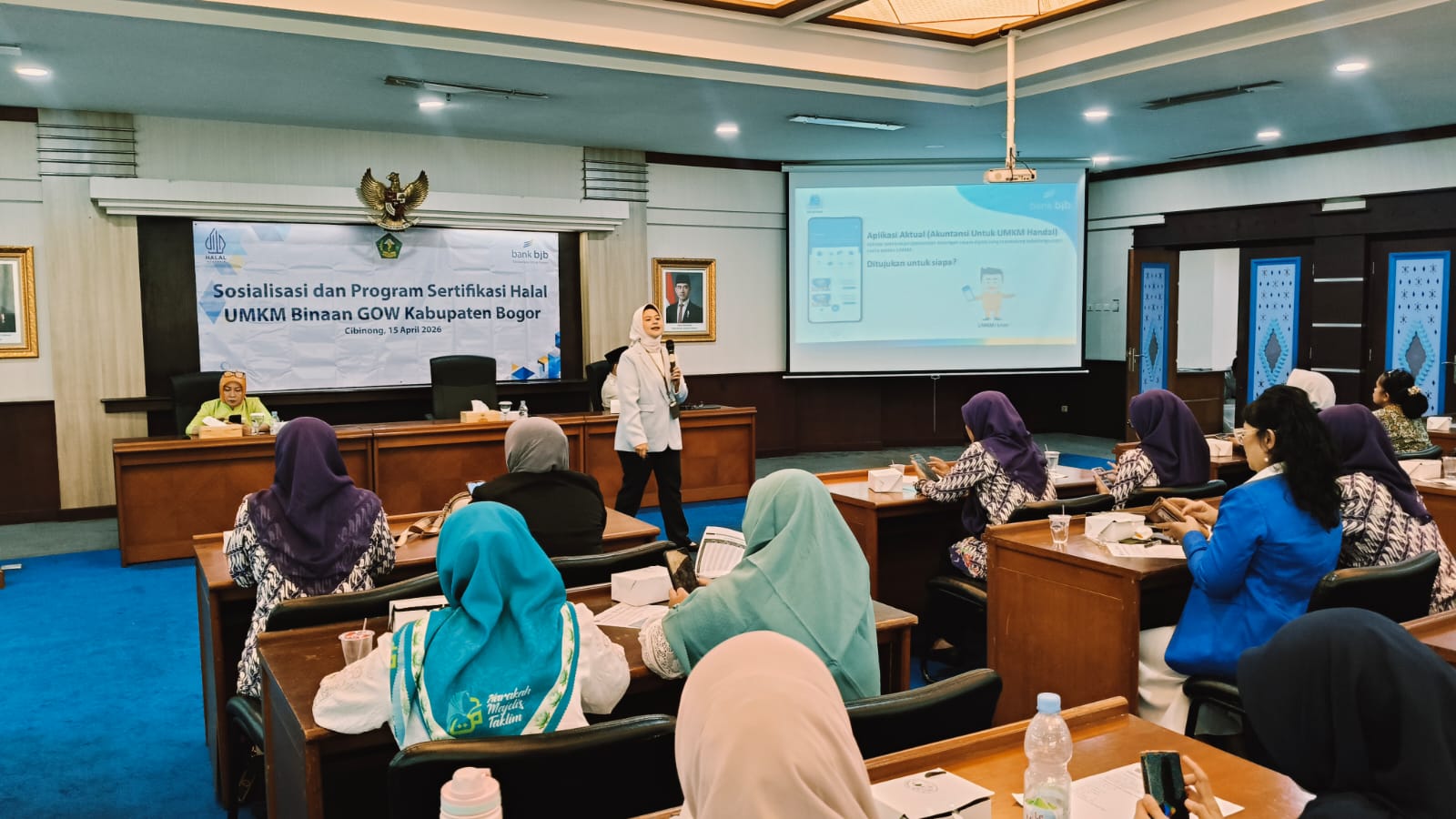
bank bjb has once again demonstrated its commitment to supporting the growth of micro, small, and medium enterprises (MSMEs), particularly in the rapidly expanding culinary sector. This support was realized through the “Business Talk: Socialization and Halal Certification Program for MSMEs Mentored by the Combined Women’s Organization (GOW) of Bogor Regency” event, held on Wednesday, April 15, 2026, in the 3rd Floor Meeting Hall of the bank bjb Cibinong Branch.
A total of 50 MSME participants mentored by the GOW of Bogor Regency took part in the event. This program is part of bank bjb’s ongoing efforts to strengthen the MSME ecosystem so it can grow and become more competitive.
The MSME sector, especially culinary, has become one of the main drivers of the regional economy. However, challenges remain in improving the quality, standards, and consumer trust in MSME products. One important aspect that is now a focus is the possession of halal certification. Through this event, bank bjb provided education on the importance of halal certification for business owners.
Halal certification not only guarantees the halal aspect of a product but also adds value that increases competitiveness in the market. Furthermore, halal certification also plays a role in building consumer trust in MSME products. This is becoming increasingly important as public awareness of safe, hygienic, and standard-compliant products rises.
bank bjb sees education as key to encouraging MSMEs to level up. Therefore, the event did not only focus on the aspect of halal certification but also included financial literacy. On this occasion, bank bjb also socialized various banking products and services that can be utilized by MSME players.
From financing access to transaction services, all are designed to support business growth. This support is expected to help MSME players increase their business capacity and expand market access.
Not only that, bank bjb also provided an understanding of the process and requirements for applying for halal certification. Participants even received direct mentoring in the certification application process. The event featured a competent resource person, the West Java Halal Product Process Mentor, who provided comprehensive explanations.
Dozens of participants listened enthusiastically throughout the event. This was reflected in the active discussion and Q&A sessions between participants and the resource person. Various questions regarding the halal certification process to business development were raised by the MSME players.
Through this event, bank bjb also strengthened its brand awareness as a strategic partner for MSME players. Furthermore, this program is also directed at increasing consumer trust in MSME products, making local products more sought after. This effort is also expected to open access to wider markets, both through marketplace platforms and modern retail.
In addition to expanding the market, this event also encourages an increase in the value and professionalism of the MSME players’ businesses. With this improvement in quality, business owners are expected to increase their revenue and business sustainability.
Moving forward, bank bjb will continue to present educational and collaborative programs to strengthen the MSME sector. With continuous support, it is hoped that MSME players can grow further, become more professional, and be able to compete in a broader market.
bank bjb is licensed and supervised by the Financial Services Authority (OJK) and Bank Indonesia (BI), and bank bjb is a participant in the deposit insurance guarantee from the Deposit Insurance Corporation (LPS).