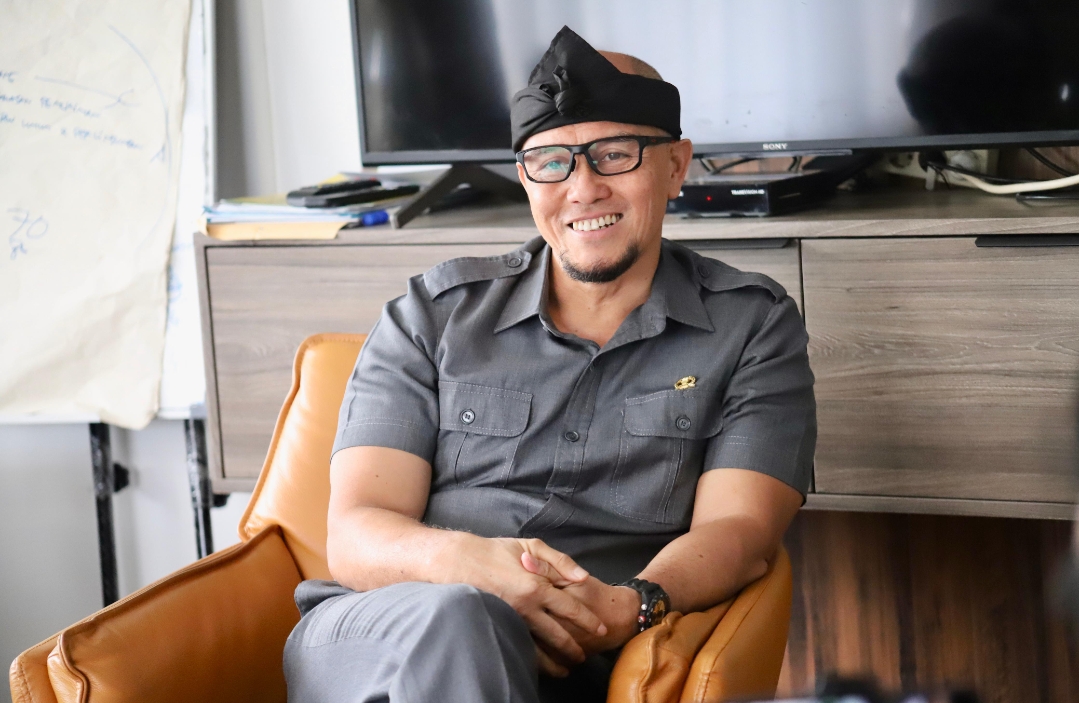
Edwin Senjaya, a leader of the United Bandung Islamic Forum, expressed anger over statements made by social media activist Permadi Arya, also known as Abu Janda, who claimed that West Java is a barbaric and intolerant province.
According to Edwin, Permadi’s remarks were excessive and hurt the feelings of West Java residents, including those in Bandung. Therefore, he supports the legal report filed by the United Bandung Islamic Forum against Abu Janda with the West Java Police.
“I support the steps taken by the forum regarding the actions of Mr. Permadi Arya. Why? Because looking at Permadi Arya’s track record, he has long been quick to express controversial opinions that discredit Muslims in this country and even appear to pit religious communities against each other,” Edwin said when contacted on Thursday, June 4, 2026.
He strongly rejects the notion that West Java is a barbaric, radical, and intolerant region. According to him, West Java is actually one of the areas that strongly upholds tolerance. This is evidenced by the Religious Harmony Index, which shows that West Java has a score of 79.43, exceeding the national average of around 77.8.
“This data shows that tolerance, equality, and interfaith cooperation in West Java have been improving and are not problematic. Even if there are isolated incidents, and we cannot deny that, they are only one or two. But that does not mean the entire province of West Java is radical, nor should all Muslims here be labeled barbaric and intolerant,” he said.
The leader of the Bandung City Regional House of Representatives emphasized that he firmly upholds the constitutional mandate that all religious communities in the country must be able to worship according to their beliefs peacefully, safely, and comfortably. Therefore, Edwin views Permadi Arya’s statements as slanderous and baseless.
“As a member of the Muslim community and a resident of West Java, I support the forum’s decision to report Permadi Arya to the West Java Police for legal processing and action. Moreover, the forum includes representatives from all Islamic organizations and other groups, such as Nahdlatul Ulama, Muhammadiyah, Persis, LDII, PAKSI, and others,” he said.
He also advised Permadi to earn money through good and dignified means, not through controversy or disparaging others. Furthermore, if he claims to be Muslim, he should demonstrate proper Islamic behavior.
“But if he is only pretending to be a Muslim and enjoys stirring up conflict, he should repent immediately, because he will eventually face consequences for his actions, whether through legal processes or from those he has hurt,” Edwin stressed.
Finally, Edwin urged residents of West Java, including Bandung, to remain calm and leave the legal process to the authorities. He fully supports anyone who wishes to also file a report against the individual.
“Of course, we can still voice our offense in good and dignified ways on social media or various forums so that it reaches him. I hear he is currently hiding in America. This is important so that he regrets his actions and does not repeat them,” he concluded.
West Java
West Java is a province on the Indonesian island of Java, known for its rich Sundanese culture and dramatic volcanic landscapes. Historically, it was home to ancient kingdoms like Tarumanagara and Pajajaran before becoming a key area of Dutch colonial control, centered around the city of Bandung. Today, it remains a vibrant cultural and economic hub, famous for its traditional arts, tea plantations, and natural wonders such as Mount Tangkuban Perahu.
Bandung
Bandung, the capital of West Java, Indonesia, is a city known for its cool climate, colonial architecture, and vibrant arts scene. Originally a tea plantation hub under Dutch rule, it earned the nickname “Paris of Java” in the early 20th century for its European-style boulevards and cafes. The city also holds historical significance as the host of the 1955 Asia-Africa Conference, a landmark event in the Non-Aligned Movement.
United Bandung Islamic Forum
The United Bandung Islamic Forum (FUIB) is a prominent Islamic organization based in Bandung, Indonesia, known for its role in promoting moderate Islamic teachings and interfaith dialogue. Established in the early 2000s, it emerged as a response to rising religious extremism, aiming to foster unity and tolerance among diverse communities. The forum actively engages in social, educational, and cultural activities, reflecting Bandung’s historical legacy as a center for peaceful coexistence and the 1955 Asia-Africa Conference.
West Java Police
The West Java Police headquarters, located in Bandung, Indonesia, serves as the main command center for law enforcement in the province. Its history is tied to Indonesia’s independence era, as the building originally functioned as a colonial police station under Dutch rule before being taken over by Indonesian authorities. Today, it continues to oversee public safety and security across West Java.
Bandung City Regional House of Representatives
The Bandung City Regional House of Representatives (DPRD Kota Bandung) is the legislative body for the city of Bandung, Indonesia, located in West Java. Its modern building serves as the venue for local lawmakers to draft regional regulations and oversee the city’s executive branch. The institution plays a key role in Bandung’s governance, reflecting the city’s development since Indonesia’s post-independence era.
Nahdlatul Ulama
Nahdlatul Ulama (NU) is the largest independent Islamic organization in Indonesia, founded in 1926 by scholars including Hasyim Asy’ari to promote traditionalist Sunni Islam. It was established partly as a response to the rise of modernist and reformist movements, aiming to preserve local religious traditions and the authority of religious boarding schools (pesantren). Today, NU remains a major socio-religious force in Indonesia, advocating for moderate Islam, national unity, and interfaith dialogue.
Muhammadiyah
Muhammadiyah is a major Islamic reformist organization in Indonesia, founded in 1912 by Ahmad Dahlan in Yogyakarta. It emerged as a response to traditional Islamic practices, emphasizing a return to the Quran and Sunnah, modern education, and social welfare. Today, it operates thousands of schools, universities, and hospitals, making it one of the largest Muslim civil society organizations in the world.
Persis
Persis, also known as Persepolis, was the ceremonial capital of the Achaemenid Empire, founded by Darius I in the 6th century BCE in what is now Iran. It served as a symbol of Persian power and cultural achievement until it was sacked and burned by Alexander the Great in 330 BCE. Today, its impressive ruins are a UNESCO World Heritage site, showcasing intricate reliefs and the legacy of ancient Persian civilization.