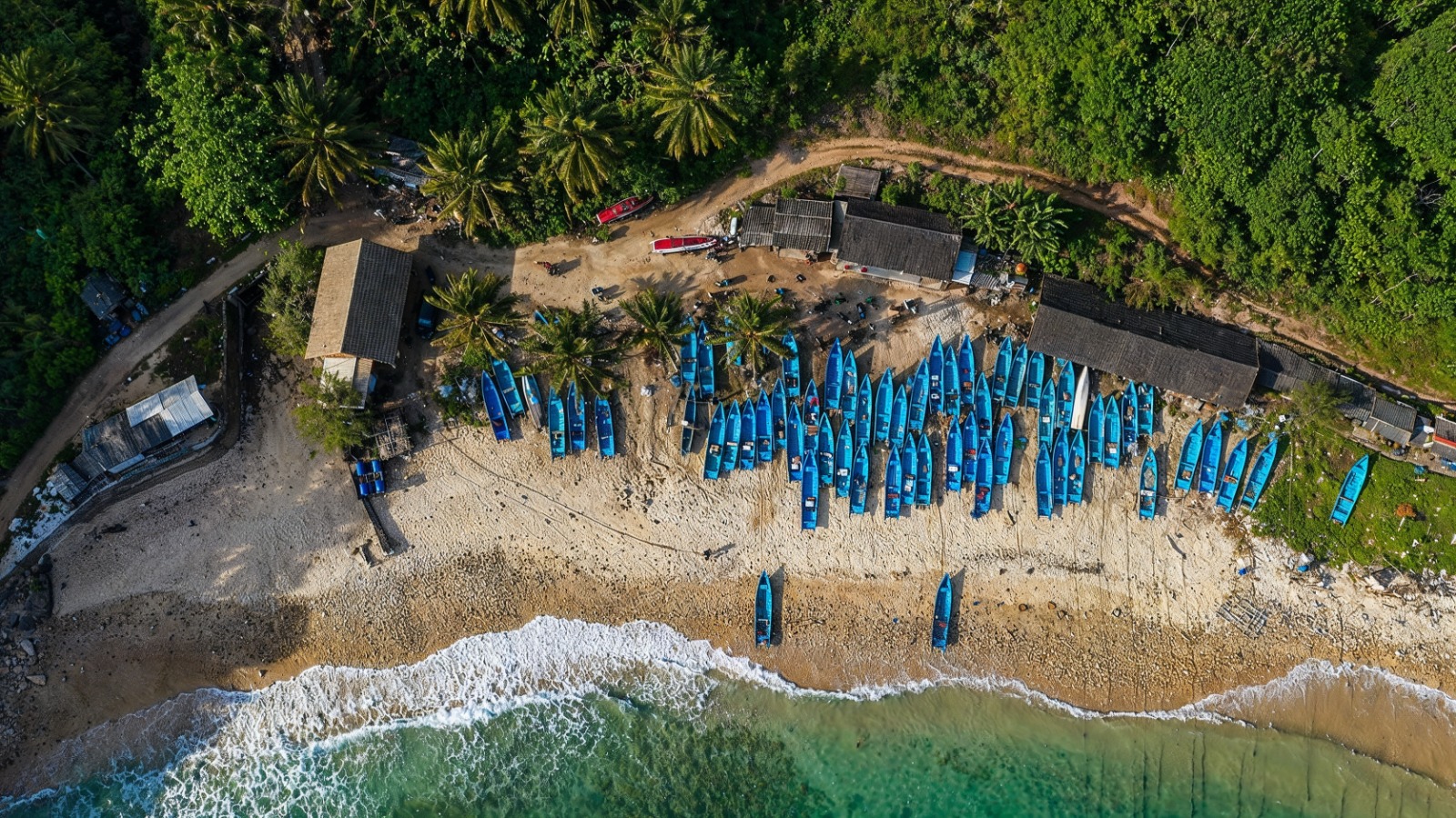
Sumberejo Village, Sudimoro District, Pacitan Regency, East Java, continues to show development as a growing village through the optimization of local potential.
Leveraging abundant natural resources and the community’s spirit of mutual cooperation, the village is developing agriculture, fisheries, livestock, MSMEs, and tourism as main pillars to drive inclusive and sustainable economic growth.
The Village Head of Sumberejo, Agung Trisno Kuncoro, stated that they are consistently accelerating the development of the village’s leading potential to improve community welfare. Currently, five main sectors are the focus of development, including the tourism sector through Congot Daki Beach, which is projected to become a leading destination and a source of new economic growth.
“The potential of Sumberejo Village includes agriculture, fisheries, livestock, and tourism. From these sectors, we are developing five leading potentials, including Congot Daki Beach, which is expected to have a broad economic impact on the community,” said Agung.
The community’s economic activities are also supported by the fisheries sector, which is one of the main livelihoods for residents. Optimal utilization of marine resources contributes significantly to community income, especially during certain seasons with abundant catches.
In other sectors, the economic dynamism of Sumberejo Village is also visible from the growth of MSMEs. Utilizing local agricultural products into value-added products is a strategy that drives economic improvement. Various processed products such as cassava chips, banana chips, and traditional herbal drinks are becoming leading commodities that are starting to reach wider markets.
The strengthening of these MSMEs is inseparable from the role of the Village-Owned Enterprise (BUMDes) Sumber Makmur Abadi, which has been a driver of the village economy. Established since 2017, the BUMDes continues to develop various business units, including printing services, which not only contribute to the Village’s Original Revenue but also make it easier for residents to access various services without leaving the village.
Along with the village’s development, access to financing through BRI’s People’s Business Credit (KUR) has also had a positive impact on increasing community productivity. This support allows business actors, including fishermen, to increase their business capacity by using more modern and efficient equipment.
Furthermore, digital transformation is also an important part of strengthening the village’s economic ecosystem. Collaboration with BRI through AgenBRILink brings easy access to financial services for the community. Various transactions such as deposits and withdrawals, payments, and the use of QRIS can now be done more practically, quickly, and transparently.
This digitalization also supports increased financial inclusion and strengthens more accountable village financial governance. This aligns with efforts to create a modern village economic ecosystem that is adaptive to technological developments.
Furthermore, through the Desa BRILiaN program, BRI actively encourages the strengthening of the village economy through an integrated approach. This program focuses on developing village capacity through four main pillars: strengthening BUMDes and village cooperatives, digitizing financial services, village economic sustainability, and village community innovation.
This support has also had a positive impact on the development of MSMEs in Sumberejo Village. Business actors now have wider access to financing, training, and market opportunities, enabling them to increase the competitiveness of local products.
Through the Desa BRILiaN program, BRI not only provides access to financing but also encourages increasing the capacity and financial literacy of village communities. Strengthening the economic ecosystem based on local potential is key to creating inclusive and sustainable growth.
With the synergy between local potential, the active role of the community, and ongoing support from BRI, Sumberejo Village is increasingly showing its transformation into an independent and competitive village. Strengthening leading sectors, utilizing technology, and developing MSMEs are important foundations for creating sustainable economic growth that provides real benefits for the village community.

Fashion bag and accessories brand Wallts is now not only available online. They have officially opened their first offline store in the center of Bandung City, precisely at Jalan Ciliwung 11. More than just