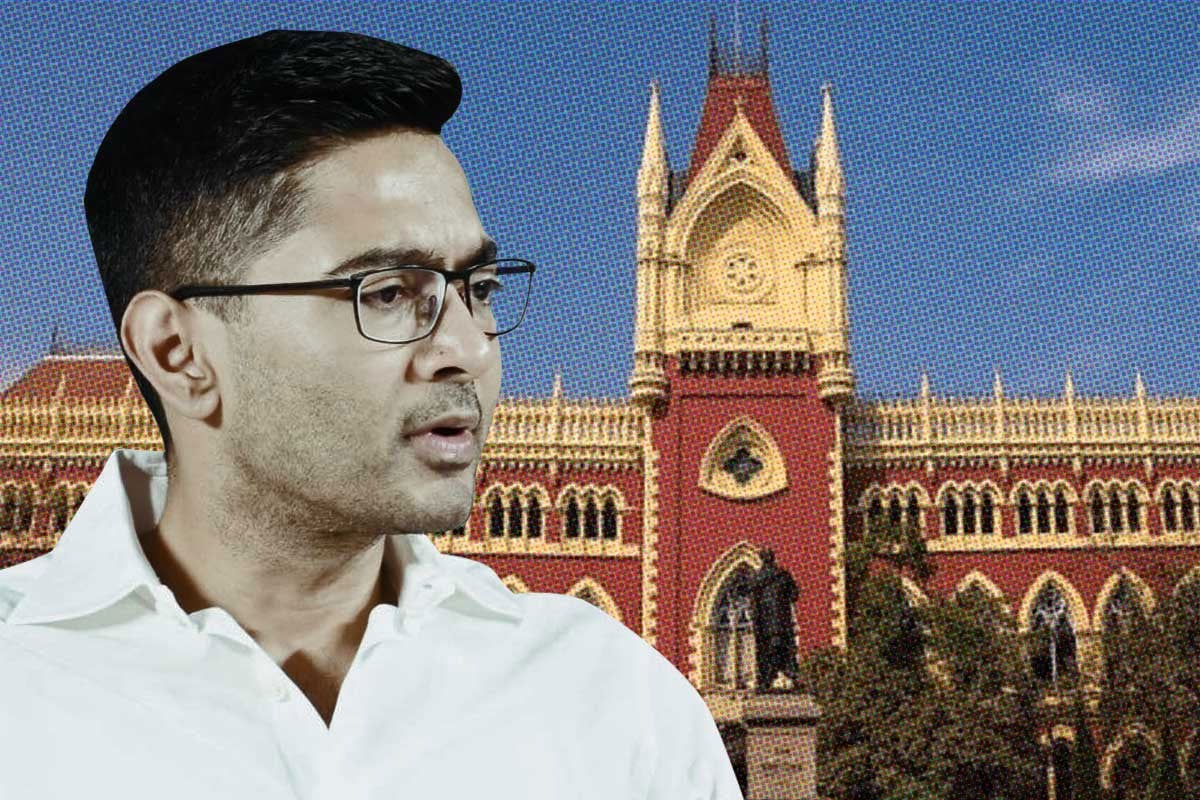
A case was filed in the Calcutta High Court regarding the illegal construction of Abhishek’s house and Lips and Bounce. The case was heard on Wednesday in the courtroom of Justice Smita Das De.
Which parts of Abhishek Banerjee’s house are illegal? How much deviation is there? How much of Abhishek’s house and the illegal portion of the ‘Lips and Bounds’ property? The municipality must submit that information within the next 7 days. Justice Smita Das De of the Calcutta High Court has given this order. The next hearing of the case will be after 4 weeks.
A case was filed in the Calcutta High Court regarding the illegal construction of Abhishek’s house and Lips and Bounce. The case was heard on Wednesday in the courtroom of Justice Smita Das De. Where are the deviations in Abhishek Banerjee’s house? In which part of the property? How much deviation? What is the illegal part or where is the Lips and Bounce property? The Justice has ordered that all information must be provided to the Kolkata Municipal Corporation. The Justice observed that during this time, the Kolkata Municipal Corporation can take other steps related to illegal construction.
Also read:
It is noted that from the municipality, it was learned that notices related to illegal construction were issued for the house at Shantiniketan on Harish Mukherjee Road, Ward 73 of Bhowanipore Assembly constituency, 121, Kalighat Road, and 188A Harish Mukherjee Road, and the house at 29-C, Harish Chatterjee Street in Kolkata. Claiming that the house at Harish Chatterjee Street is legal, Abhishek’s parents, Amit Banerjee and Lata Banerjee, approached the Calcutta High Court seeking to quash the municipality’s notice. They stated that their house at 29-C, Harish Chatterjee Street was legally constructed. Justice Smita Das De gave this order during the hearing of that case.
Calcutta High Court
The Calcutta High Court is the oldest high court in India, established on July 1, 1862, under the Indian High Courts Act of 1861. Its iconic neo-Gothic building, designed by architect Walter Granville, was completed in 1872 and stands as a prominent landmark in Kolkata. The court has served as a key judicial institution for West Bengal and the Andaman and Nicobar Islands, presiding over landmark cases in Indian legal history.
Shantiniketan
Shantiniketan, located in West Bengal, India, was established in 1863 by Debendranath Tagore and later developed by his son, Nobel laureate Rabindranath Tagore, as an experimental school rooted in nature and the arts. It grew into Visva-Bharati University in 1921, blending Eastern and Western philosophies and emphasizing holistic education. Today, it remains a UNESCO World Heritage site, celebrated for its unique cultural heritage and influence on Indian art and literature.
Harish Mukherjee Road
Harish Mukherjee Road is a historic thoroughfare in South Kolkata, India, named after the 19th-century Bengali philanthropist and social reformer Harish Chandra Mukherjee. The road is known for its cultural and intellectual heritage, having been home to several prominent figures of the Bengali Renaissance and housing landmarks like the Ramakrishna Mission Institute of Culture. Its tree-lined avenue reflects a blend of colonial-era architecture and modern urban life, preserving a legacy of education and reform.
Ward 73
Ward 73 is a designated area within the Thane Municipal Corporation in Maharashtra, India, known for its diverse residential and commercial zones. Historically, it developed as part of Thane’s urban expansion, transitioning from a semi-rural landscape into a densely populated suburb. The ward reflects the broader growth of the Mumbai Metropolitan Region, with infrastructure and housing projects shaping its modern identity.
Bhowanipore Assembly constituency
The Bhowanipore Assembly constituency is a prominent electoral district in the Kolkata district of West Bengal, India. It has a rich political history, having been represented by notable leaders, including the former Chief Minister of West Bengal, Mamata Banerjee. The constituency reflects the region’s significant role in the state’s political landscape and urban development.
Kalighat Road
Kalighat Road is a historic lane in Kolkata, India, best known for housing the ancient Kalighat Temple dedicated to the Hindu goddess Kali, from which the city of Kolkata derives its name. The area has been a significant pilgrimage site for centuries, with the temple’s origins believed to date back to the 16th century. Over time, Kalighat Road also became famous for the Kalighat school of painting, a vibrant style of folk art that flourished in the 19th century.
Harish Chatterjee Street
Harish Chatterjee Street is a notable road in South Kolkata, India, named after a 19th-century Bengali social reformer and philanthropist. It is historically significant for housing the famous Kalighat Temple, a major Hindu pilgrimage site dedicated to the goddess Kali, which dates back centuries. The street also preserves the area’s colonial-era charm, with its narrow lanes and traditional markets reflecting Kolkata’s rich cultural heritage.
Kolkata Municipal Corporation
The Kolkata Municipal Corporation (KMC) is the civic body responsible for the governance and infrastructure of Kolkata, India. Established in 1876 as the Calcutta Municipal Corporation, it is one of the oldest municipal corporations in the country, having evolved from the earlier “Justices of the Peace” system. Today, the KMC oversees a wide range of urban services, including water supply, sanitation, and road maintenance, serving the historic and densely populated city.