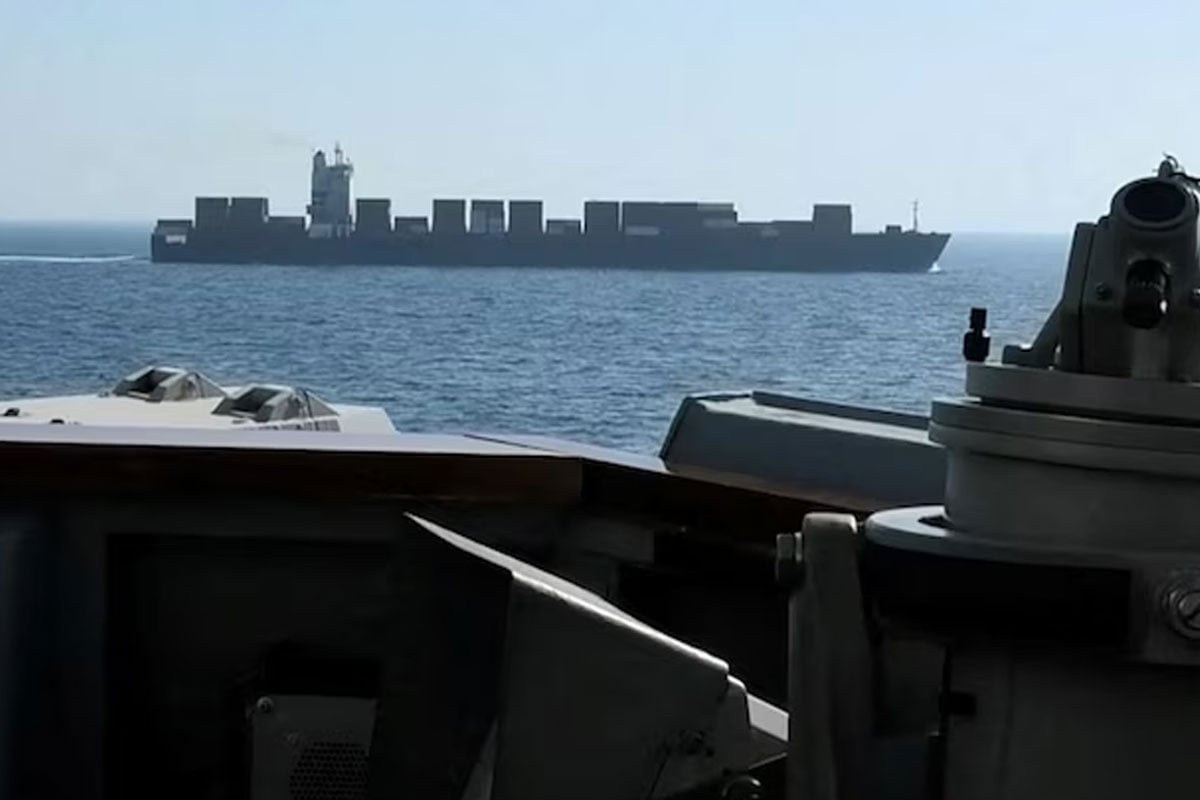
Negotiations between the United States and Iran are ongoing with the goal of establishing peace in the Middle East. Amidst this, a new draft of Iran’s proposed peace agreement has emerged. According to multiple international media reports, the new proposal specifically demands the withdrawal of US troops from areas around Iran. Additionally, it states that American dominance in the Strait of Hormuz must end. In exchange, navigation on the world’s energy artery would return to normal as before. It has been reported that Iran’s peace proposal terms have not yet been finalized.
Notably, despite face-to-face meetings, telephone conversations, and multiple proposals from both sides, the smoldering fire of the Iran-US conflict has not been extinguished. On Monday, the US launched new attacks on an Iranian missile arsenal and a boat belonging to Iran’s Revolutionary Guard. Reports indicate four people were killed in these attacks. The US military stated the strikes were carried out in self-defense, as those boats were allegedly laying mines on the seabed. Following that incident, the IRGC shot down a US drone. Iranian forces also fired at a US warplane. Tehran claims the drone and the aircraft were attempting to enter Iranian airspace.
According to reports from multiple media outlets, as a condition for a ceasefire, Iran has demanded that the situation in Hormuz be returned to its pre-war state. In exchange, all US military movements around Iran must cease. Additionally, the American patrols operating at one end of the Strait of Hormuz must be removed. This would allow ships from friendly nations to reach Iranian ports unimpeded, and similarly, Iranian vessels to reach their destinations. The question now is: will America accept these conditions?
Middle East
The Middle East is a historically and culturally rich region spanning parts of Western Asia and North Africa, often considered the cradle of civilization. It was home to ancient empires like Mesopotamia, Persia, and Egypt, and later became the birthplace of major religions including Judaism, Christianity, and Islam. Its history is marked by trade routes, cultural exchange, and significant geopolitical developments, shaping its diverse modern identity.
Strait of Hormuz
The Strait of Hormuz is a narrow, strategically vital waterway connecting the Persian Gulf to the Gulf of Oman and the open ocean. Historically, it has been a crucial chokepoint for global oil shipments, with about 20% of the world’s petroleum passing through it. Its significance has led to numerous geopolitical tensions, including conflicts between Iran and other nations over control of the strait.
Hormuz
Hormuz is a historically significant island and city in the Persian Gulf, known for its strategic role in global trade from the 13th to the 16th centuries. It was a major hub for the exchange of goods like spices, silk, and precious stones, and was famously visited by Marco Polo. The island’s colorful soil and Portuguese fortress, built in the early 1500s, reflect its rich cultural and colonial past.
Middle East
The Middle East is a historically and culturally rich region often considered the cradle of civilization, where ancient empires like Mesopotamia, Persia, and Egypt flourished. It is the birthplace of three major monotheistic religions—Judaism, Christianity, and Islam—and has been a crossroads for trade, ideas, and conflicts for millennia. Today, the region is known for its diverse cultures, vast oil reserves, and ongoing geopolitical significance.
Strait of Hormuz
The Strait of Hormuz is a narrow, strategically vital waterway connecting the Persian Gulf to the Gulf of Oman and the open ocean. Historically, it has been a crucial trade route for centuries, but its modern importance skyrocketed in the 20th century as a major chokepoint for global oil shipments. Roughly one-fifth of the world’s petroleum passes through the strait, making it a frequent focus of geopolitical tension, particularly between Iran and other regional and global powers.
Hormuz
Hormuz is a historically significant island in the Persian Gulf, once a major hub of trade and commerce from the 13th to the 16th centuries. It was a key port for the exchange of goods like silk, spices, and precious stones between Persia, India, and Europe, often ruled by local dynasties and later the Portuguese Empire. Today, the island is known for its striking red soil and salt caves, as well as its cultural heritage as a meeting point of diverse civilizations.
Persian Gulf
The Persian Gulf is a vital body of water in Western Asia, bordered by Iran, the Arabian Peninsula, and the Shatt al-Arab delta. Historically, it has been a crucial maritime route for trade and cultural exchange since ancient times, linking Mesopotamia with the Indus Valley and later serving as a key hub for the pearl trade and oil transportation. Today, it remains geopolitically significant due to its vast oil and natural gas reserves, shaping the economies and politics of the surrounding nations.
Gulf of Oman
The Gulf of Oman is a strategic body of water connecting the Arabian Sea to the Strait of Hormuz, bordered by Oman, Iran, and the United Arab Emirates. Historically, it has been a vital maritime route for trade and cultural exchange between the Middle East, South Asia, and East Africa, serving as a key corridor for the ancient frankincense trade and later for modern oil shipments. Its calm waters and deep harbors have made it a historically significant area for both commerce and naval activity.
Iran
Iran is a country in West Asia with a rich history spanning thousands of years, once the center of the ancient Persian Empire. Its cultural heritage includes iconic sites like Persepolis, the ruins of the ceremonial capital of the Achaemenid Empire, and the stunning mosques and gardens of Isfahan. Today, Iran is known for its deep literary traditions, Persian poetry, and a blend of Islamic and pre-Islamic influences.