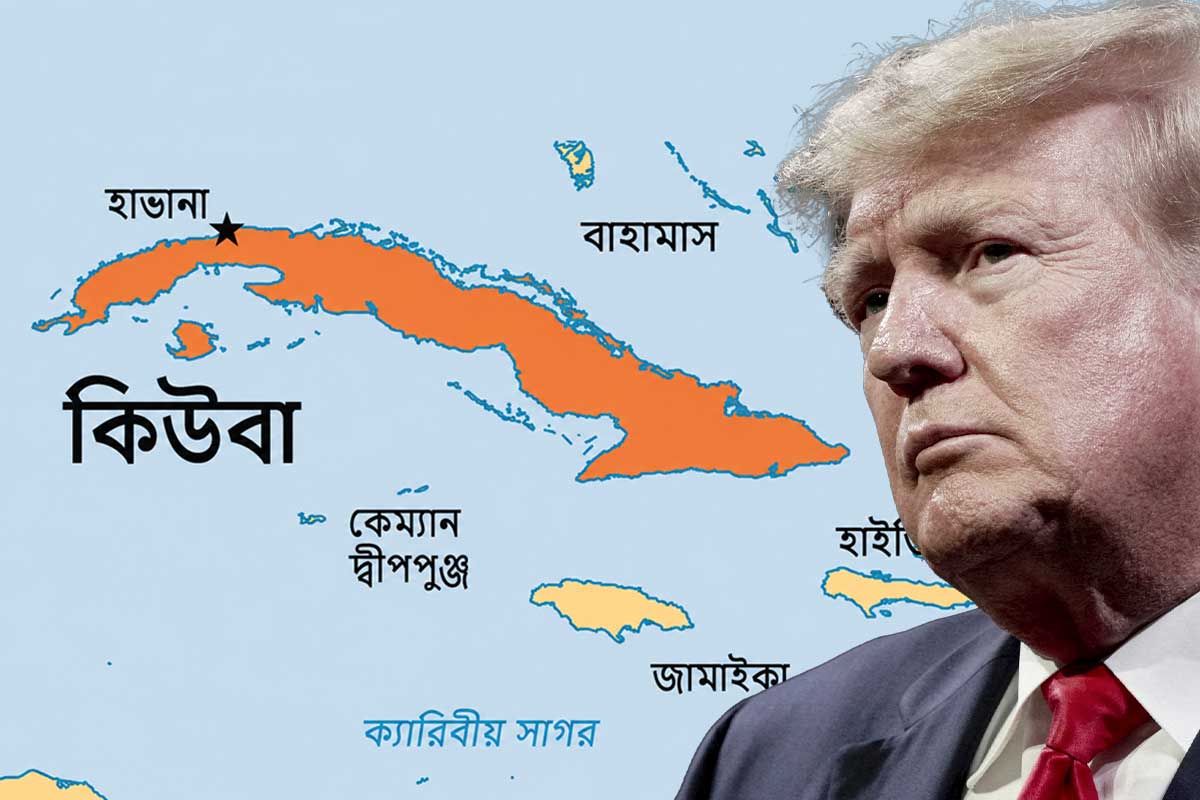
US President Donald Trump wants the communist government in Cuba to fall before the end of summer this year. To that end, America is set to increase financial pressure on the fragile government in Cuba. The goal is to create widespread instability in this Caribbean island nation, making it difficult for the communist government to survive there. Behind this demand from the Trump administration, there are not only diplomatic but also domestic political interests. It is believed that Trump will not hesitate to deploy troops there to achieve his goal.
Political circles claim that Trump actually wants to prove that during his rule, at least one of America’s declared enemies has been permanently dealt with. If the communist government in Cuba falls, it is believed that leftist and anti-imperialist movements in Latin America will suffer a major blow. This would establish American dominance over the entire Western Hemisphere. Additionally, parliamentary elections are scheduled for next November in the southern states of America. There, the general public is angry with the Trump administration due to high inflation and cost of living under Trump’s tenure, as well as incidents of harassment against immigrants. Yet this region is considered a stronghold of the Republicans. If America can take control of Cuba before the elections, it is believed that Trump could achieve a major victory here.
America is set to increase financial pressure on the fragile government in Cuba. The goal is to create widespread instability in this Caribbean island nation, making it difficult for the communist government to survive there.
According to a report from a US news outlet, besides financial pressure, plans for direct military intervention are also being prepared to bring Cuba under control. Although Trump has not yet authorized an attack on Cuba and is prioritizing peaceful regime change. To that end, no effort is being spared to strangle Cuba’s economy. In the words of a US official, ‘Once artificial pressure is applied to Cuba’s economy, the country’s governance will lose balance and a political crisis will arise. We do not want to overthrow the government yet; there is a method to this.’
The US report also stated that, in addition to blocking all imports by surrounding the country, the US military’s Southern Command conducted a military exercise last month. This is seen as preparation for a possible military operation in Cuba. However, military officials claim that America has no plans for a military operation in Cuba at the moment. They are ready to act as soon as they receive the president’s orders. Meanwhile, as time passes, the fuel crisis in Cuba has become severe. A massive food shortage has also developed. Due to the lack of electricity, factories and even medical services have deteriorated in the country.