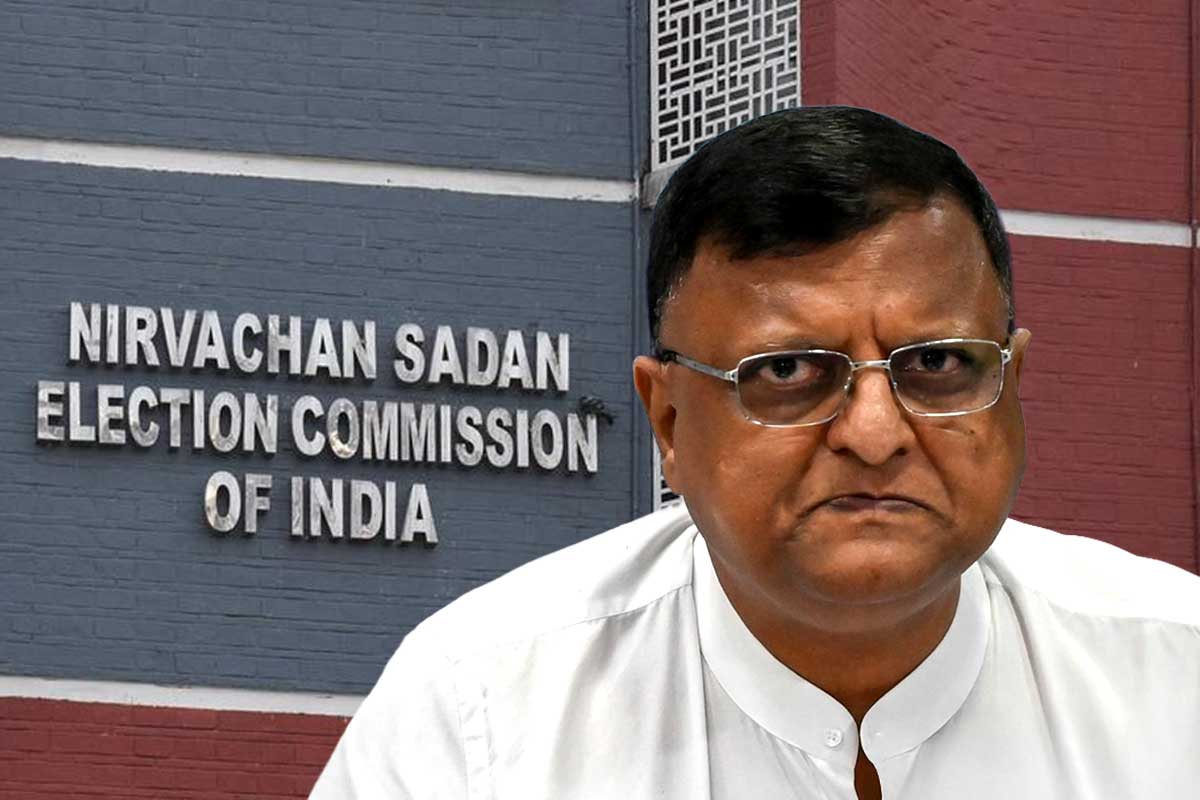
Commission actively working to ensure 100% violence-free voting; CEO Manoj holds special meeting at 4 centers.
Apart from a few scattered incidents of unrest, the first phase of elections passed largely without disruption. The commission’s efforts ensured voting in 152 constituencies across 16 districts of the state was mostly peaceful. The election commission has already stated that technology, planning, and hard work have brought this success. Now, ahead of the second phase, the CEO is ready to take strict control.
More news on this topic
The Chief Electoral Officer of Bengal, Manoj Kumar Agarwal, hit the ground over the weekend. He will visit Arambag, Bongaon, Barrackpore, and Sandeshkhali for on-site inspections. According to sources, he will hold special meetings at these four centers. Special observer Subrata Gupta and special police observer N K Mishra will accompany the CEO during patrols in the districts. Meetings are also scheduled in Barrackpore, New Town, and Krishnanagar. A meeting in Diamond Harbour is planned for tomorrow.
According to sources, commission officials are making last-minute efforts to ensure that even isolated incidents like those in the first phase do not occur. He will meet with the concerned district magistrates and police superintendents, as well as the officers-in-charge of each relevant police station. Besides assessing the current law and order situation, he will issue necessary instructions to officials to ensure security at the booth level. The main goal of these meetings is to increase the deployment and surveillance of central forces, especially at sensitive booths.
Before the second phase of elections, the commission has appointed 11 more police observers. This step is believed to be aimed at tightening election monitoring. According to sources, the election commission is determined to eliminate any possibility of the unrest seen in the first phase during the second phase.
Arambag
Arambag is a town and a municipality in the Hooghly district of West Bengal, India, known for its historical and cultural significance. It was once a part of the ancient kingdom of Bhurshut and later served as a key administrative and commercial center under British rule. Today, Arambag is recognized for its traditional handloom industry and as a gateway to the nearby historical sites like the town of Bishnupur.
Bongaon
Bongaon is a historic town in West Bengal, India, known for its role as a key trading hub and its proximity to the Bangladesh border. It was an important center during the British colonial period, particularly for the jute trade, and is famous for the annual Rash Mela festival and the terracotta temples of nearby Bishnupur. Today, it serves as a vital transit point and cultural landmark, reflecting the region’s rich Bengali heritage.
Barrackpore
Barrackpore, located in West Bengal, India, is a historic town that served as the first British military cantonment in the country, established in the late 18th century. It gained prominence as the site of the Barrackpore Mutiny of 1824, an early uprising against British rule, and later witnessed the 1857 Sepoy Mutiny’s initial spark when Mangal Pandey attacked British officers. Today, it is known for its colonial-era buildings, such as the Barrackpore Government House, and its role in India’s independence movement.
Arambag
Arambag is a town and a municipality in the Hooghly district of West Bengal, India. Historically, it was a part of the ancient Rarh region and served as a major trading hub during the British colonial period, known for its indigo cultivation and trade. Today, it is an important administrative and commercial center, with notable landmarks like the 19th-century Arambagh Rajbari.
Bongaon
Bongaon, a town in West Bengal, India, is historically significant as a major transit point during the Partition of India in 1947, when it served as a gateway for millions of refugees crossing the newly formed border. The town is also known for its proximity to the UNESCO World Heritage Site of Bishnupur and features a unique blend of Bengali culture and architecture, including several old temples and markets that reflect its rich past. Today, Bongaon remains a bustling commercial center and a key railway junction linking India to Bangladesh.
Barrackpore
Barrackpore, located in West Bengal, India, is a historic town that served as an early military cantonment for the British East India Company. It was the site of the first major rebellion against British rule in 1824, when a sepoy named Binda Tiwari led a mutiny, and later witnessed the famous Barrackpore Mutiny of 1857, a precursor to the Indian Rebellion. The town also houses the Barrackpore Government House, a colonial-era building that was once the summer residence of the Governor-General of India.
Sandeshkhali
Sandeshkhali is a region in the Sundarbans delta of West Bengal, India, known for its mangrove forests and rural communities. Historically, it has been a site of land reclamation and settlement by Bengali refugees, and more recently, it gained international attention for widespread allegations of sexual abuse and land grabbing by local political leaders, leading to major protests and legal actions in the 2020s.
New Town
New Town is a historic district in Edinburgh, Scotland, built primarily between 1767 and 1850 as a planned expansion to relieve overcrowding in the medieval Old Town. Designed in a neoclassical style by architect James Craig, it features elegant Georgian townhouses, wide streets, and formal squares like Charlotte Square. Today, it is a UNESCO World Heritage Site, renowned for its architectural harmony and vibrant cultural scene.
Krishnanagar
Krishnanagar is a historic city in West Bengal, India, known as the birthplace of the renowned Bengali poet and Nobel laureate Rabindranath Tagore’s grandfather. It served as the capital of the Nadia district during the British colonial era and is famous for its rich cultural heritage, including the Krishnanagar Rajbari palace. The city is also celebrated for its traditional clay doll craftsmanship, which has been a distinctive art form for centuries.
Diamond Harbour
Diamond Harbour is a town and a port on the eastern bank of the Hooghly River in West Bengal, India, about 50 kilometers south of Kolkata. Historically, it served as a strategic port for the British East India Company, who fortified the area in the 18th century to protect against pirate attacks and rival European powers. Today, it is a popular tourist destination known for its scenic river views, colonial-era remnants, and as a gateway to the Sundarbans.
Bishnupur
Bishnupur is a historic town in West Bengal, India, renowned for its exquisite terracotta temples built by the Malla rulers between the 17th and 18th centuries. These temples, such as the Rasmancha and the Jorbangla Temple, showcase unique architectural styles blending Bengali and Indo-Islamic influences. The town also has a rich cultural heritage, being a center for traditional music and the famous Baluchari silk weaving.