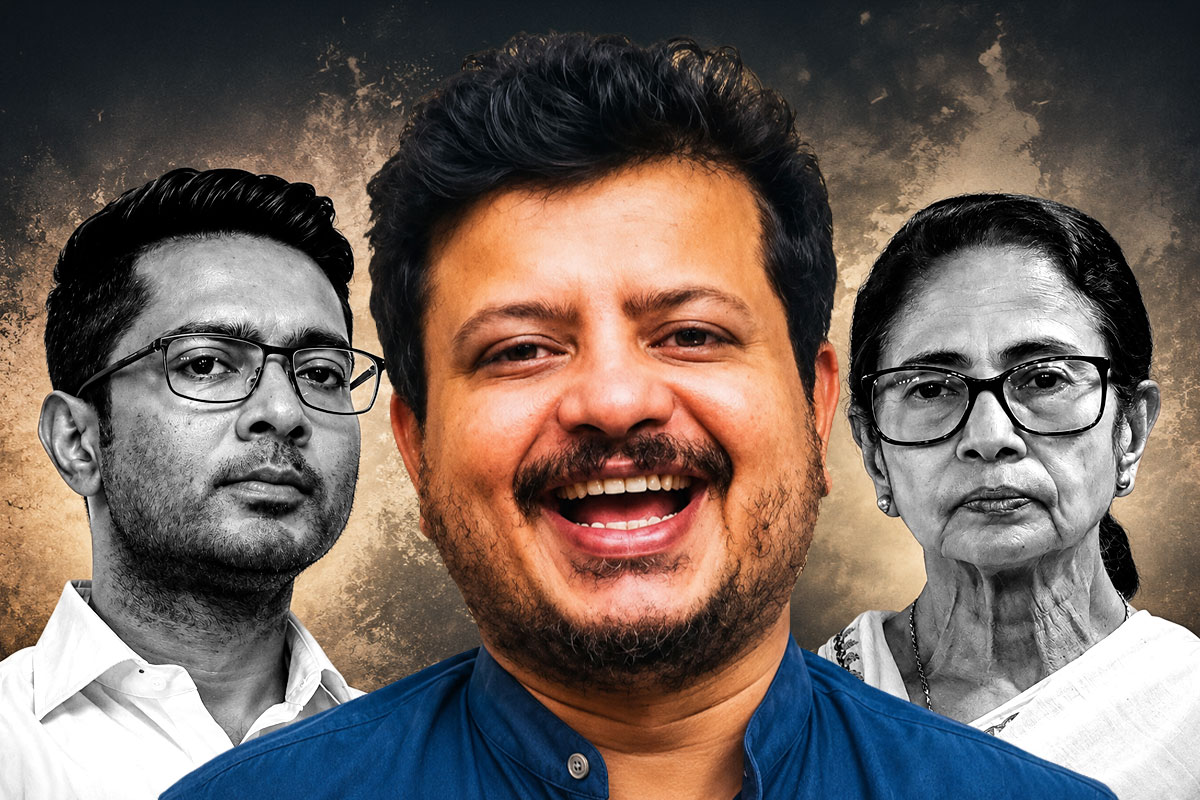
Mamata is good, Abhishek is bad. After declaring ‘rebellion’, the leader of the new Trinamool, Ritabrata Banerjee, made his position clear. Other MLAs in unison said, “We respect Mamata Banerjee as our leader. We want our leader to advise us. If we get her advice, we can work well. But Abhishek Banerjee has no connection with the Trinamool Congress parliamentary party.”
In fact, after the party’s defeat in the assembly, the day the party chief first called a meeting of MLAs, Ritabrata and his group drew a parallel line between Abhishek and Mamata. They made it clear they had no objection to accepting Mamata Banerjee as leader. But accepting Abhishek Banerjee as ‘commander’ was not possible for them. Since then, from the grassroots to the highest level, one leader after another has spoken out against Abhishek. It was clearly indicated that a majority of the party’s leaders hold Abhishek Banerjee solely responsible for Trinamool’s debacle. Perhaps capitalizing on this anger against Abhishek, Ritabrata and Sandipan have managed to bring 60 MLAs under one umbrella.
On Wednesday, the ‘New Trinamool’ officially emerged in the state; Ritabrata’s dissident faction gained the status of the Trinamool parliamentary party, and with the Speaker’s generosity, Ritabrata sat in the opposition leader’s chair. He then made it even clearer that if Mamata Banerjee wishes, they will continue to take her advice. They have respect for her. But Abhishek is absolutely not welcome. In fact, by stepping out of the main party organization, Ritabrata and his group want to bind the Trinamool parliamentary party in a separate circle, where Abhishek has no entry. Ritabrata stated clearly, “Abhishek Banerjee has no connection with the Trinamool parliamentary party. The people also have no connection with him. If there were a connection, he wouldn’t have hidden for 26 days. He wouldn’t have been beaten like a thief.” From the demeanor of Ritabrata’s group, it is clear that they will not stay in the party if Abhishek remains. If Mamata abandons Abhishek, there are indications from the rebels that their stance might soften. However, at the same time, Ritabrata’s group has also made it clear that Mamata’s role will be limited to that of an advisor. The driving force of the party will remain in their own hands. Decisions will not be taken by anyone alone, but collectively.
The question now is, why is the ‘New Trinamool’ harping on the theory that Mamata is good and Abhishek is bad? If they accept Mamata as their leader, why object to accepting Abhishek as commander? Or is making Mamata the leader entirely a strategy? An attempt to trap her? In fact, it is true that a majority of this rebel MLAs have respect for Mamata. They have no particular objection to accepting the former Chief Minister as leader. But no one can accept her ‘blind’ affection for Abhishek. Many object to the way a ‘imposed’ leader like Abhishek, solely on the strength of the leader’s affection, wielded a corporate-style stick over the entire party. So, Ritabrata and his group want to create a situation where Mamata has to choose either Abhishek Banerjee or her beloved party. In that case, Mamata will be caught in a dilemma. If she stands by her nephew, the message across the state will be that Mamata, blinded by parental affection, did not hesitate to abandon her own party. Again, if Mamata agrees to Ritabrata’s demands (which seems unlikely at present), she would have to politically destroy Abhishek. In that case, his chances of going to jail would become brighter. A new debate would begin over Mamata’s political legacy. And Abhishek would have to fight daily legal battles with the ED, CBI, and CID.
Given the situation, Mamata’s condition is now like that of the patriarch Bhishma. Before her eyes, the kingdom she built is on the verge of being destroyed in a battle for succession. Yet, she has no way to take sides. Now it remains to be seen whether she will watch everything like a silent spectator or step into this great war as a warrior and bat for her nephew.