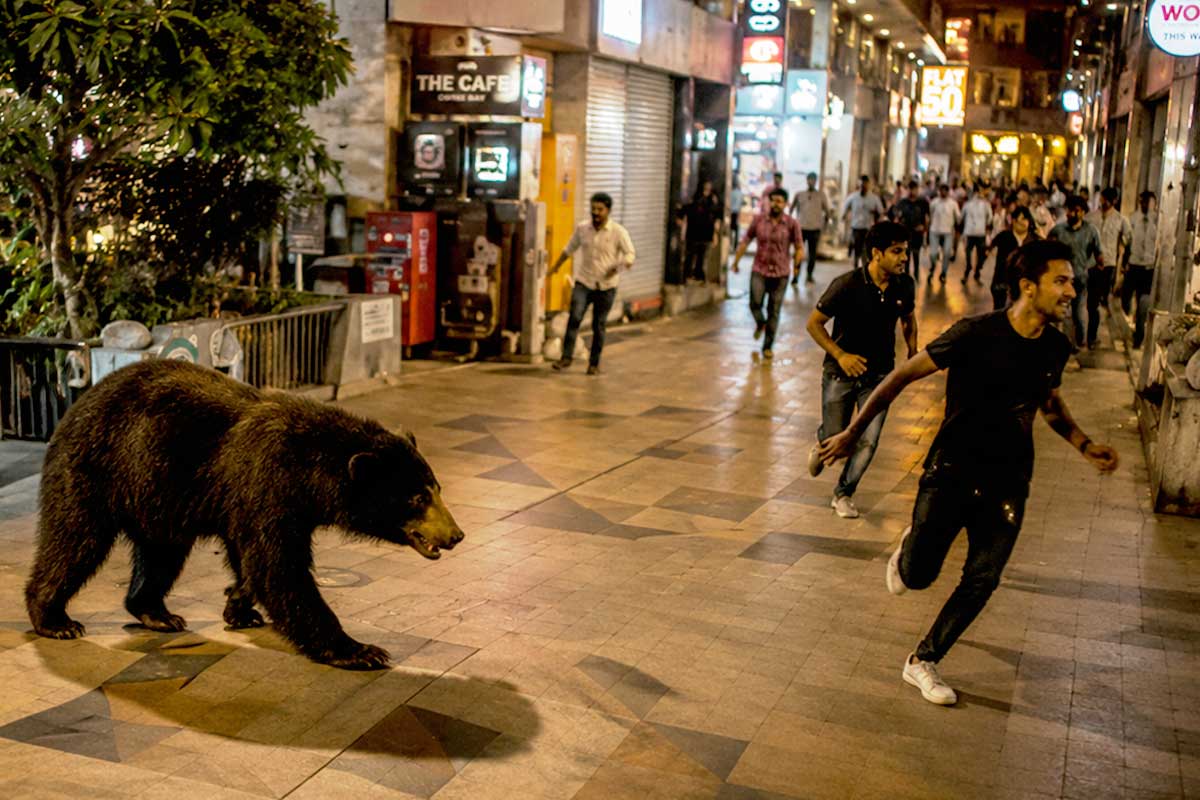
In Satyajit Ray’s Feluda story ‘The Curse of the Severed Head’, the circus tiger Sultan had escaped. A similarly thrilling incident has occurred in a city in Japan. Residents of a modern, populated city are on edge due to a bear’s mischief. The situation is so severe that the administration has closed 100 schools in the city for student safety. Alongside, police and administration officials, along with professional hunters, have launched Operation Bear.
The incident took place in a city called Utsunomiya. The city is located north of Tokyo, with a population of about 510,000. Videos of a large black-furred bear have been captured on multiple CCTV cameras. Locals claim the bear has been seen in alleys near homes, near shopping malls, in parks, and even on school grounds. The administration quickly mobilized to catch the bear. Initially, the police handled the task, but later professional hunters were brought in. However, the massive wild animal has not been spotted yet.
The bear was first seen in Utsunomiya city on Saturday. Subsequently, the bear was captured on CCTV footage in multiple locations around the city. That video footage has gone viral on social media. Some local residents claim that not just one, but somehow multiple bears have entered the city. In Fukushima, four people have already been injured in bear attacks. Overall, fear is growing in the city. Under these circumstances, the administration is active in returning the wild animal to the forest. For now, the general public is being advised not to go out on the streets unless necessary.
Utsunomiya
Utsunomiya, the capital of Tochigi Prefecture in Japan, is historically known as a castle town that flourished during the Edo period as a key post station on the Ōshū Kaidō highway. The city is most famous for its gyoza (potstickers), which became a local specialty after World War II when returning soldiers brought back recipes from China. Today, Utsunomiya blends its historical roots with modern attractions, including the Utsunomiya Castle Ruins Park and a vibrant culinary scene.
Utsunomiya
Utsunomiya is the capital city of Tochigi Prefecture in Japan, famous for its thriving gyoza (potstickers) culture, with over 200 specialty restaurants. Historically, it developed as a castle town and a crucial post station on the Nikkō Highway during the Edo period, serving travelers on their way to the Nikkō Tōshō-gū shrine. Today, it combines this historical legacy with modern attractions, including the Utsunomiya Castle Ruins Park and a vibrant food scene.
Tokyo
Tokyo, the capital of Japan, is a vibrant metropolis blending ultramodern skyscrapers with historic temples. Originally a small fishing village named Edo, it became the seat of the Tokugawa shogunate in 1603 and was renamed Tokyo (“Eastern Capital”) when Emperor Meiji moved the imperial court there in 1868. Today, it is a global hub for culture, technology, and cuisine, reflecting both its rich history and dynamic future.
Fukushima</h3
Utsunomiya Castle Ruins Park
Utsunomiya Castle Ruins Park is a historical site in Tochigi Prefecture, Japan, that preserves the remains of Utsunomiya Castle, which was originally built in the 11th century and served as the stronghold of the Utsunomiya clan. The castle was largely destroyed during the Boshin War in 1868 and later dismantled, but the park now features reconstructed stone walls, moats, and a museum that showcases the site’s feudal history. Today, it is a peaceful public space where visitors can explore the ruins and enjoy seasonal cherry blossoms.
Nikkō Tōshō-gū
Nikkō Tōshō-gū is a lavishly decorated Shinto shrine located in Nikkō, Japan, built in 1617 as the final resting place of Tokugawa Ieyasu, the founder of the Tokugawa shogunate. The shrine complex is renowned for its intricate carvings, including the famous “See No Evil, Hear No Evil, Speak No Evil” monkeys, and its vibrant gold leaf and colorful lacquerwork. It represents a blend of Shinto and Buddhist architectural styles and is part of the UNESCO World Heritage site “Shrines and Temples of Nikkō.”
Tokyo
Tokyo, the capital of Japan, is a vibrant metropolis that blends ultramodern technology with deep historical roots. Originally a small fishing village named Edo, it became the political center of Japan in the early 17th century under the Tokugawa shogunate, and was later renamed Tokyo (“Eastern Capital”) when Emperor Meiji moved the imperial seat from Kyoto in 1868. Today, Tokyo is a global hub for culture, finance, and innovation, known for its iconic landmarks like the Senso-ji Temple, Shibuya Crossing, and the Imperial Palace.